
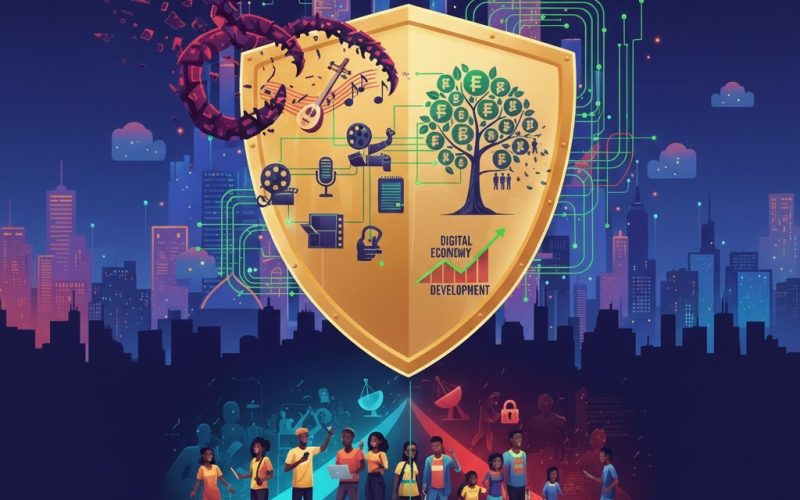
The hidden costs of online piracy for African creativity, livelihoods and consumer safety
By Demeke Kebede
A free film, a live football match or the latest episode of a favourite series can be only a click away. For many viewers, websites and applications offering free access to entertainment seem like a convenient way to avoid subscription fees. But there is a question worth asking before pressing play: if the content is free, who is paying the price?
Imagine switching on your television one day and finding that your favourite programme has no new episodes. The live sports you follow are no longer available, and the radio has fewer new songs to bring you. It may sound far-fetched, but a creative industry cannot keep producing content if the people behind it are unable to earn a return on their work.
Creating and bringing content to audiences takes much more than a camera, a studio or an internet connection. It involves writers, actors, musicians, journalists, producers, directors, editors, technicians, rights holders and many others. It also requires investment in equipment, production, distribution, broadcasting rights and the people who make the whole process possible.
Piracy weakens this system. When films, programmes, music or live sports are shared through unauthorised websites and applications, audiences are directed away from legitimate services and the people who have invested in the content lose revenue. The impact does not stop with major broadcasters or media companies. It reaches independent filmmakers, musicians, local production houses, technical crews, small businesses and young professionals trying to build careers in the creative sector.
This matters greatly in Africa. Across the continent, film, television, music and other creative industries have the potential to create jobs, attract investment and tell stories that reflect our experiences and identities. But talent alone is not enough. Creators need opportunities to earn from their work, producers need confidence to invest in new projects, and audiences need access to content through channels that support the people who make it.
When creative work is repeatedly consumed without permission or payment, the resources available for future production can shrink. Smaller producers and emerging artists are often the least able to absorb those losses. Over time, this can mean fewer original productions, fewer opportunities for new talent and less investment in stories made in and about Africa.
Live sports show the issue in another way. A live broadcast is not simply a match appearing on a screen. It depends on the acquisition of broadcasting rights, production facilities, cameras, technical teams, transmission infrastructure and many hours of work. Illegal streaming services benefit from that investment without contributing to the system that makes the coverage possible. If that system is undermined, the consequences can reach broadcasters, sports organisations, production workers and, eventually, audiences.
Research by the European Union Intellectual Property Office (EUIPO), published in 2024, examined online copyright infringement across several types of content, including television, between 2017 and 2023. Its findings underline that unauthorised access to audiovisual content remains a significant challenge. The issue is not limited to a handful of websites; it is part of a much wider digital problem.
There is another side of piracy that deserves more attention: the risks to consumers. Unauthorised streaming websites and applications may expose users to malicious advertisements, malware, spyware, phishing attempts and fraudulent links. Some are designed to collect personal information, compromise devices or lead users to pages that attempt to steal passwords and financial details. A service that appears to cost nothing may expose someone to losses that are far greater than the price of a legitimate subscription.
The Audiovisual Anti-Piracy Alliance (AAPA) has also drawn attention to the cybersecurity risks associated with audiovisual piracy applications. Its 2022 research found malware-related risks among the applications it examined. The findings should not be taken to mean that every unauthorised application contains malware, but they are a reminder that downloading software from unknown sources can put devices and personal information at risk.
For that reason, I believe the conversation about piracy should be broader than the protection of broadcasters and copyright owners. It is also about consumer safety, jobs, investment and the future of the creative economy. Respecting intellectual property is not simply a commercial concern. It helps ensure that creators are recognised for their work, that legitimate businesses can continue investing and that audiences can enjoy content through safer and more sustainable services.
No single organisation can address piracy alone. Broadcasters, creators, production companies, rights holders, regulators, law enforcement agencies, technology platforms and consumers all have a part to play. Public awareness is essential because people may not always realise that a free stream can carry consequences for both the creative industry and their own digital security.
Industry initiatives such as Partners Against Piracy (PAP), which brings together stakeholders across Africa, contribute through public awareness, collaboration and advocacy for respect for intellectual property. These efforts are important, but lasting progress also depends on everyday choices made by audiences.
Consumers can help by choosing authorised platforms, avoiding suspicious websites and applications, protecting personal information and reporting suspected piracy. These may seem like small steps, but collectively they help support creators and reduce exposure to unsafe online services.
The real cost of piracy is not only what it takes away today. It is also what it may prevent us from creating tomorrow: the next African film, the next local television series, the next hit song or the next opportunity for a young creative professional. When we choose how and where to access content, we influence the future of the industry that produces it.
So, free for you, but who pays the price? In the end, the cost is shared by creators, workers, businesses and audiences. If we value our stories, music, films and sports, we should also value the people and investment that bring them to us.
Choose legitimate platforms. Respect creativity. Report piracy. Protect yourself.
