
Prime Minister Abiy Ahmed recently convened with a group of esteemed businessmen, recognized as “honest” taxpayers, at his office to address pertinent economic concerns.
These individuals sought clarification from Prime Minister Abiy Ahmed on various issues, including security challenges, foreign exchange shortages, tax relief, access to credit, policy inconsistencies, and the government’s economic priorities.
In response, Prime Minister Abiy outlined his administration’s efforts over the past five years to bolster the economy and outlined future strategies.
He acknowledged the inadequacies in tax collection, revealing that Ethiopia captures less than one percent of its generated wealth, despite projecting an annual production of 10 trillion birr by 2023, with a mere 510 billion birr collected in taxes.
The Prime Minister addressed the swift policy changes and emphasized plans to broaden property rights, extending ownership opportunities to foreign investors to enhance economic competitiveness.
He assured stakeholders that policies would continue to evolve to foster investor confidence and spur economic growth.
Highlighting the importance of private sector participation, Prime Minister Abiy disclosed that 85 percent of the 540 billion birr loans provided by banks in 2023 were allocated to private enterprises, although he acknowledged the need for further support.
Addressing foreign exchange concerns, the Prime Minister revealed Ethiopia’s substantial import expenditure of $75 billion over five years, underscoring the government’s efforts to incentivize business through tax exemptions totaling 85 billion birr.
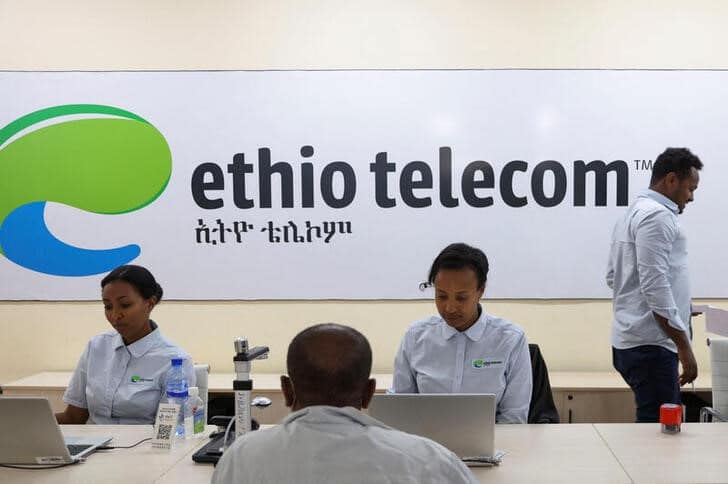
Regarding capital market development, Prime Minister Abiy announced plans to launch the market within two months, starting with the public offering of a 10 percent stake in Ethio Telecom.
Additionally, he pledged government support to tackle Addis Ababa’s housing shortage, proposing the construction of affordable and adaptable housing units to address the deficit of one million homes.
In a bid to encourage investment in critical sectors, the Prime Minister urged entrepreneurs to establish companies for real estate and construction materials production locally, rather than seeking individual land acquisitions.
He also emphasized the potential for medical investment to stem the outflow of funds, noting Ethiopia’s annual loss of $one billion due to medical tourism.
Prime Minister Abiy’s engagement with key stakeholders reflects a concerted effort to address economic challenges, promote investment opportunities, and stimulate sustainable growth in Ethiopia.
Through strategic initiatives and policy reforms, the government aims to create a conducive environment for private sector participation and economic prosperity.
