

According to international studies, in Ethiopia, more than 3,000 children are born with cleft lip and palate annually.
Over two decades ago, Smile Train, an organization dedicated to supporting children with cleft lip and palate, initiated its operations in Ethiopia.
This endeavor, in collaboration with Life Box, another international health institution, aims to deliver safe surgical services.
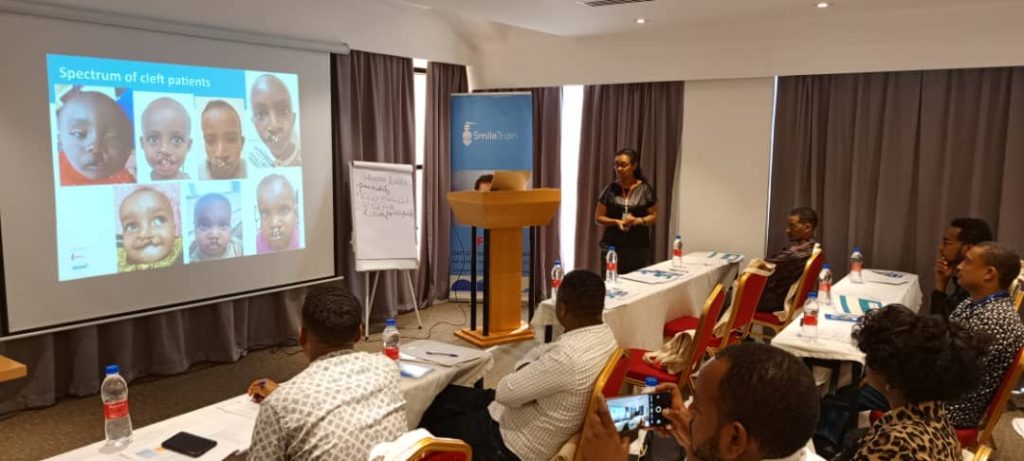
Together with a local organization called Team Cleft, they provide crucial training to medical professionals responsible for treating children with cleft lip and palate.
Dr. Bethel Mulgeta, the manager of the Smile Train East Africa program, oversees operations involving over 20 private and public hospitals across Ethiopia.
Globally, Smile Train has extended surgical services to approximately 1.8 million children with cleft lip and palate, with over 37,000 children in Ethiopia receiving free treatment.
Efforts are underway to enhance surgical capabilities, including providing material support to optimize hospital facilities for surgical procedures, Dr. Bethel said.
She added that, cleft lip and palate surgeries are exclusively performed by Ethiopian medical experts. Presently, children with cleft lip receive surgical intervention within three months, while those with cleft palate are treated within nine months.
Alarmingly, studies indicate that more than 60 percent of untreated children with cleft palate succumb to complications associated with speech and feeding difficulties.
Abaynesh Mengiste, a surgical fellow and anesthesiologist at the Cure Hospital in Addis Ababa, collaborates with Smile Train, Life Box, and Team Cleft to train surgeons and provide free treatment to affected children.
She emphasizes the multidisciplinary approach required for successful treatment, highlighting the holistic support necessary for children facing weight loss, psychological distress, discrimination, and speech impediments.
Dr. Yigeremu Kebede, a plastic surgery specialist with extensive experience in various medical institutions, emphasizes the societal stigma faced by children with cleft lip and palate.
He stresses the importance of raising awareness about the treatability of these conditions to combat misconceptions.
Despite the progress, delayed presentation of affected children remains a significant challenge in Ethiopia, hindering timely intervention and exacerbating treatment effectiveness.
Dr. Yigeremu attributes the occurrence of cleft lip and palate to factors such as insufficient folic acid intake during pregnancy and maternal vulnerability to chronic diseases.
He underscores the need for continuous professional training to ensure effective teamwork during and after surgeries.
Contrary to misconceptions associating these conditions with divine punishment, he emphasizes that cleft lip and palate are treatable conditions arising from irregular fetal development.
Previously concentrated in Addis Ababa, treatment accessibility has expanded to various regions in Ethiopia, addressing only a fraction of the affected population.
Dr. Yigeremu highlights the prevalence of cleft lip and palate, affecting 0.4 percent of newborns in Addis Ababa hospitals alone.
