
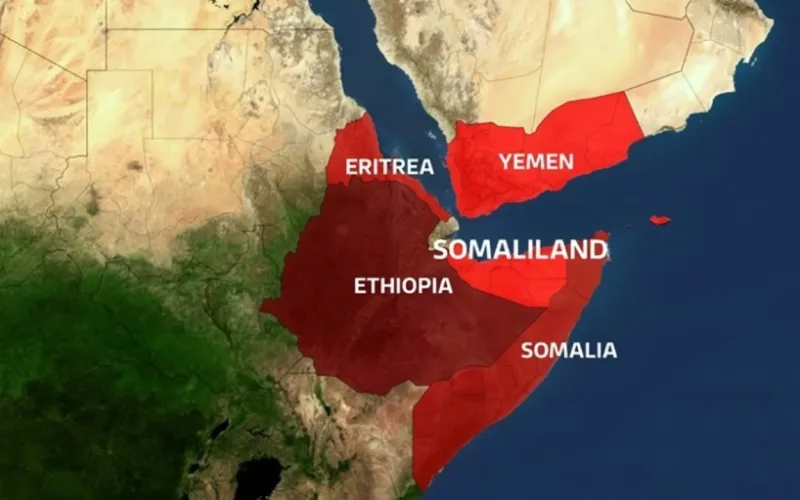
Ethiopia maintains its stance on the port agreement with Somaliland, reaffirming its position through a statement from Nabiyu Tedla, spokesperson for the Ministry of Foreign Affairs, who addressed current diplomatic matters.
Mr. Tedla touched upon various issues, including the ongoing Ethiopian-Eritrean border dispute, emphasizing the commitment to resolve it through a joint committee involving border communities.
Recent statements from Eritrea’s Ministry of Information asserted the sealing of the border as an irreversible measure, prompting questions regarding Eritrean control over certain Ethiopian territories.
Prime Minister Abiy Ahmed, responding to concerns raised during discussions with the Tigray community, assured that the matter would be resolved through dialogue.
Regarding the port agreement with self-governing Somaliland, signed four months prior in Addis Ababa, questions arose about potential shifts in Ethiopia’s stance due to pressure from Somalia and other nations.
Mr. Tedla clarified that Ethiopia’s position remains unchanged regarding the agreement.
Efforts to repatriate 70,000 Ethiopians facing hardship in Saudi Arabia continue, with 12 flights per week facilitating their return.
Negotiations for Ethiopia’s accession to the East African Community progress positively, particularly in trade aspects, with upcoming discussions focusing on business services.
The East African Community Alliance, established 24 years ago to enhance economic cooperation among member states, recently welcomed Somalia as its eighth member.
Ethiopia’s potential accession is anticipated to expand the alliance’s influence, accommodating a population of 300 million and fostering an influential economic network in Africa.
However, fundraising efforts in Geneva, Switzerland, aimed at collecting $1 billion in aid for Ethiopians affected by drought and conflict, fell short of the intended target.
The Ministry of Foreign Affairs cited competing humanitarian needs globally as a factor hindering fundraising success, signaling ongoing challenges in meeting Ethiopia’s humanitarian requirements.
However, this move has sparked significant outrage and opposition in Somalia, which considers Somaliland as part of its own territory.
Last Thursday, Somalia declared that the Ethiopian ambassador must vacate Mogadishu within 72 hours, and the consular offices in Hargeisa and Garowe would be shuttered, with their staff required to depart Somalia within two weeks.
Somaliland, which considers itself autonomous, and Puntland, another semi-autonomous region, have both voiced their opposition to Somalia’s decision to close the consulates in Hargeisa and Garowe.
