
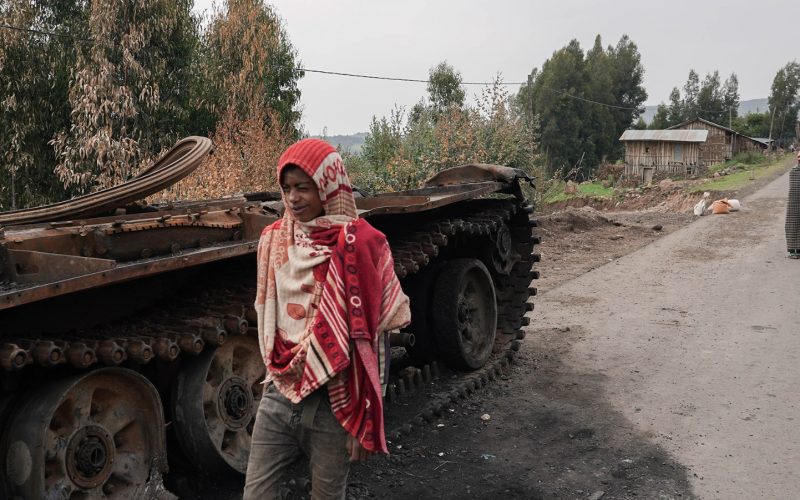
The ongoing strife between the Tigray and Amhara regions has resulted in the displacement of more than 50,000 individuals, as per a recent report from the United Nations Human Rights Commission.
Since April 13, 2024, residents from the Raya and Alameta areas have been compelled to flee their homes due to recent clashes along the border.
The report from the United Nations Human Rights Commission paints a grim picture of the challenges faced by those affected by the conflict.
Many displaced people have sought shelter in facilities located in Kobo, Woldia, and Sekota towns.
Urgent humanitarian aid, including water, food, and other essentials, is desperately needed to support the displaced population. However, the report also highlights dwindling resources from donor institutions and countries, adding strain to local communities as they strive to offer assistance.
In response to the crisis, the Ethiopian Disaster Prevention and Preparedness Commission has dispatched personnel to the affected areas.
Their mission includes ensuring that evacuees receive adequate shelter, medical care, and other essential support.
The displacement of individuals from the Raya and Alamata areas occurred following the incursion of Tigray People’s Liberation Front (TPLF) militants into the region about a week ago.
Alarmingly, it’s reported that 70 percent of the displaced population comprises children and women, emphasizing their vulnerability in conflict situations.
Despite the challenges posed by the conflict, efforts are underway to restore normalcy. Transport services between Kobo and Alamata, previously suspended due to security concerns, have been reinstated, facilitating the movement of goods and people in the region.
The conflict in northern Ethiopia originated from an attack on the northern command of the national defense forces in the Tigray region by TPLF militants in November 2020.
Although a ceasefire agreement brokered by the African Union in Pretoria, South Africa, brought an end to the two-year-long conflict, full implementation has remained elusive.
Recent clashes in the Raya area, claimed by both the Tigray and Amhara regions, have reignited tensions.
Residents fled their homes out of fear for their safety following the arrival of TPLF militants in the area.
In response to the escalating situation, the government of the Amhara region has accused the TPLF of launching a fourth invasion.
However, the President of the Tigray Region Interim Administration, Mr. Getachew Reda, has emphasized that the responsibility for the events unfolding in South Tigray lies with the federal government and the Tigray Interim Administration.
He asserts that the conflict is not merely a territorial dispute between the TPLF and the Tigray and Amhara regions but a broader issue requiring coordinated action at various levels of governance.
