

Ethiopia has initiated the transport of livestock to Djibouti via railway for the first time, marking a significant expansion in the utilization of the Adama-Djibouti railway.
Previously used solely for importing goods into Ethiopia, this railway is now being leveraged to enhance the country’s livestock export capacity.
According to Takele Uma, CEO of the Ethio-Djibouti Railway Joint Stock Company, this new service is expected to bolster Ethiopia’s ability to export high-quality meat products to international markets while simultaneously easing traffic congestion on key trade routes.
By utilizing the Adama-Djibouti railway for livestock transportation, Ethiopia aims to streamline its export processes, improve efficiency, and ensure the safe and humane transport of animals.
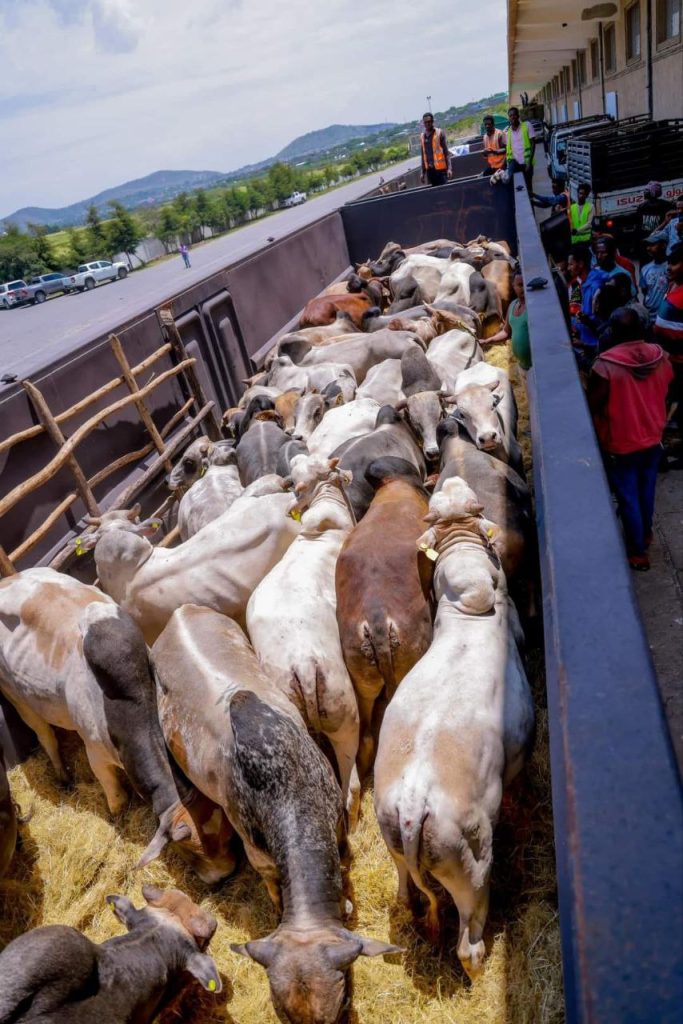
The official launch of the livestock train service from Adama to Djibouti marks a strategic shift in Ethiopia’s efforts to modernize its livestock trade.
The CEO highlighted that the introduction of this service will significantly enhance Ethiopia’s capacity to export livestock, while also playing a critical role in combating illegal trade.
Rail transport offers a more secure and controlled environment, ensuring that livestock reach their destinations in better condition, which in turn increases the quality of the meat products destined for foreign markets.
A study published last year on illegal livestock trade revealed that Ethiopia loses more than $630,000 daily due to the unauthorized export of over 1,200 domestic animals.
This alarming figure highlights the scale of illegal trade and its devastating impact on the national economy.
At a national conference organized by the Ethiopian Chamber of Commerce and Sectorial Associations, key research findings on sectors vulnerable to illegal trade were disclosed.
These sectors include livestock, pharmaceuticals, textiles, and the logistics system. The studies examined legal frameworks related to the illicit activities and offered insights into the growing scale of illegal livestock and drug trade in Ethiopia, which has reached critical levels.
During the conference, Dr. Alebachew Neguse, Director General of Enterprise Development at the Ministry of Industry, presented a comprehensive study addressing the challenges and solutions surrounding livestock export marketing.
He noted a worrying trend: foreign currency earnings from livestock trade have drastically declined over the past eight years.
Previously, livestock exports generated up to $150 million annually, but in the 2023/24 fiscal year, that figure plummeted to just $17 million.
Dr. Alebachew attributed this decline to a combination of evolving strategies in illegal trade, inadequate monitoring and control mechanisms, and deficiencies in implementing a technology-driven and legally compliant trade system.
He also pointed out gaps in legal agreements with destination countries concerning the export of live animals, which have exacerbated the issue.
The recent study, conducted at three key exit points in Ethiopia, confirmed that over 1,200 domestic animals are smuggled out of the country daily.
With each animal valued at approximately $530, the country loses more than $630,000 every day, amounting to $19 million in monthly losses.
This staggering loss underscores the urgent need for comprehensive reforms in Ethiopia’s livestock export industry.
Ethiopia’s new livestock transport service via railway is a crucial step toward addressing these challenges, improving the quality and security of exports, and safeguarding the nation’s economic interests.
