
Somalia Accuses Ethiopia of Flooding and Weaponizing Tribal Militias
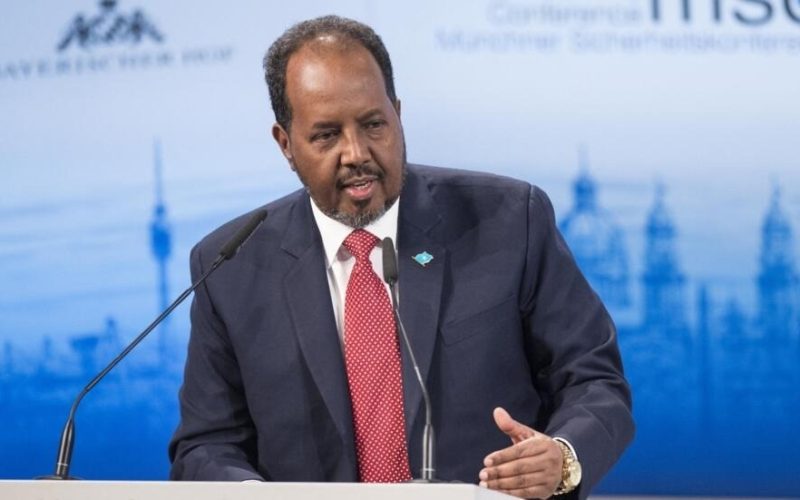
Somalia’s President, Hassan Sheikh Mohamud, has accused Ethiopia of deliberately releasing water from its dams, causing severe flooding in parts of Somalia.
In an interview with The Economist, President Mohamud stated that Ethiopia’s actions are intentional and aimed at destabilizing Somalia through environmental and security threats.
According to the president, Ethiopia’s release of dam water has led to significant flooding, especially in areas already vulnerable to seasonal rains.
The Somalia government has submitted evidence, including photos of flooded regions, as part of their complaint to regional and international bodies.
“We believe this flooding is not a natural disaster but a deliberate action by Ethiopia,” President Mohamud emphasized during the interview, suggesting that the Ethiopian government is exploiting its water infrastructure to create chaos in Somalia.
In addition to the environmental allegations, President Mohamud accused Ethiopia of arming tribal militias near the shared border between the two countries.
He expressed grave concern that these weapons could end up in the hands of al-Shabaab, the notorious militant group that has been a persistent threat to Somalia’s stability.
“Ethiopia is transferring weapons to local militias, and we fear that these arms could strengthen al-Shabaab, exacerbating the conflict,” President Mohamud stated.
He also accused Ethiopia of encouraging tribal leaders and opposition figures within Somalia to resist the deployment of Egyptian troops, further fueling tensions between the two nations.
Tensions between Ethiopia and Somalia have escalated since Ethiopia signed a port agreement with Somaliland in January 2024.
Somaliland, a self-declared independent region that is internationally recognized as part of Somalia, has been a contentious point in Ethiopian-Somali relations.
Somalia views the agreement as a violation of its territorial integrity and sovereignty.
As a result, Somalia has taken the matter to the United Nations Security Council, the African Union (AU), and the Intergovernmental Authority on Development (IGAD). These institutions have urged both countries to seek a peaceful resolution through diplomatic dialogue.
In retaliation to the port agreement, Somalia has strengthened its military cooperation with Egypt and Turkey, raising concerns in Addis Ababa.
Ethiopia, which is already wary of Egypt’s involvement due to the ongoing Nile water dispute, views this growing alliance as a threat to its national security.
Somalia’s Foreign Minister, Ahmed Moalim Fiki, recently escalated the rhetoric by warning that if Ethiopia continues to implement the port agreement with Somaliland, Somalia might consider supporting Ethiopian rebel groups.
“If Ethiopia proceeds with the agreement, we may engage with the militants and rebels fighting against the Ethiopian government,” Fiki stated.
Although he clarified that Somalia has not yet made contact with these groups, he indicated that the option remains on the table if diplomatic efforts fail.
Minister Fiki added, “We are hopeful that a peaceful solution can be found, but if Ethiopia insists on moving forward with this agreement, there may be no choice but to support the rebels.”
Ethiopia and Somalia have a long and complex history of conflict, having fought two conventional wars in the late 20th century.
Both nations are known to have supported insurgent movements within each other’s borders during the 1970s and 1980s. This historical backdrop of mistrust continues to shape their contemporary diplomatic relations.
During his recent visit to Addis Ababa, U.S. Horn of Africa Envoy, Ambassador Mike Hammer, urged Ethiopia and Somalia to resolve their differences through dialogue.
Hammer emphasized the importance of maintaining regional stability, calling on both nations to de-escalate tensions and prioritize peaceful negotiations.
The international community remains concerned about the potential for these disputes to escalate into a broader regional conflict, especially given the volatile nature of the Horn of Africa.
