
Trade Union Urges Reduction of Employment Taxes to Alleviate Worker Burden
The Confederation of Ethiopian Trade Unions (CETU) has called on the government to reduce employment taxes for workers as part of broader economic reforms to address the rising cost of living.
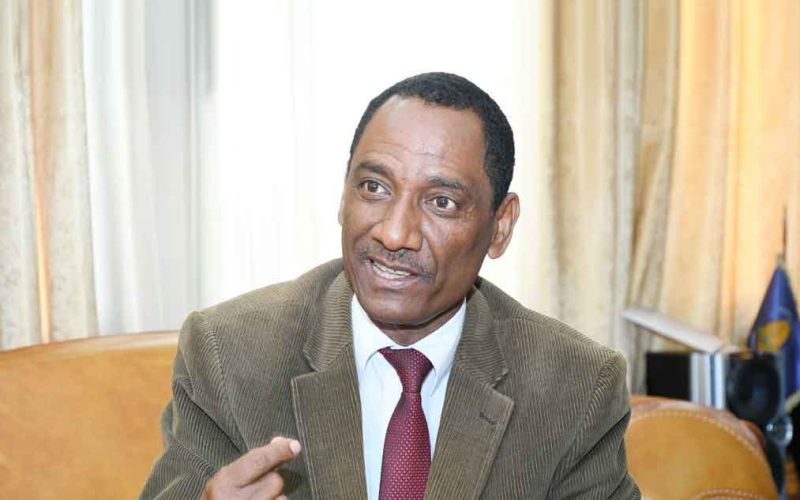
In a letter to Prime Minister Abiy Ahmed, CETU President Kasahun Folo emphasized the urgent need for measures to support employees on fixed wages.
Mr. Kasahun highlighted that the sharp depreciation of the Ethiopian Birr and the escalating cost of living have disproportionately affected salaried workers.
He noted that low-income earners, particularly those employed in industrial parks and service industries, face severe hardships. “Workers are toiling day and night in hotels and factories, yet many are struggling to afford basic necessities,” he said.
Despite repeated discussions with Prime Minister Abiy Ahmed on the deteriorating living conditions of workers, Mr. Kasahun expressed frustration that these talks have not yielded tangible results.
As a result, CETU has renewed its appeal, urging the government to consider economic measures such as lowering employment taxes to ease financial pressures on workers.
In addition to tax reductions, CETU has persistently advocated for the establishment of a national minimum wage to protect low-income workers.
However, the union says its calls have gone unanswered, leaving many employees vulnerable to the worsening economic situation.
In response to rising living costs, the Ethiopian government announced a salary increase for public sector employees two months ago.
The adjustment is expected to benefit 2.3 million federal and state government workers, 56,000 appointees, as well as members of the police, defense forces, and security agencies.
Finance Minister Ahmed Shide stated during the announcement that the salary adjustment aims to cushion low-income earners against the rising cost of living.
With the adjustment, the minimum government salary increased from 1,100 Birr to 4,760 Birr, marking a 332.7% rise. The maximum government salary increased by 5%, from 20,468 Birr to 21,491 Birr.
Despite these increases, the reality remains grim for many workers. Nearly 48% of government employees earn less than 6,000 Birr (approximately $55) per month.
Combined with the steep decline in the purchasing power of the Ethiopian Birr, these salaries are insufficient to cover basic expenses.
The Ethiopian Birr has depreciated significantly, losing over 100% of its value. Since the adoption of a market-determined exchange rate, one US dollar now exchanges for approximately 120 Birr.
This devaluation has driven up the cost of goods and services, leaving many workers unable to make ends meet.
“The economic challenges have created immense financial strain on workers,” said Mr. Kasahun. “We have repeatedly urged the government to establish a minimum wage and implement reforms to protect employees, but there has been no response.”
CETU has reiterated its demand for immediate reforms, including tax reductions, the introduction of a national minimum wage, and broader measures to combat the cost-of-living crisis.
The union stresses that without swift government intervention, the livelihood of millions of Ethiopian workers will continue to deteriorate.
“Workers are the backbone of the economy, yet their needs are being overlooked,” said Mr. Kasahun. “It is time for the government to act decisively to safeguard their well-being.”
