
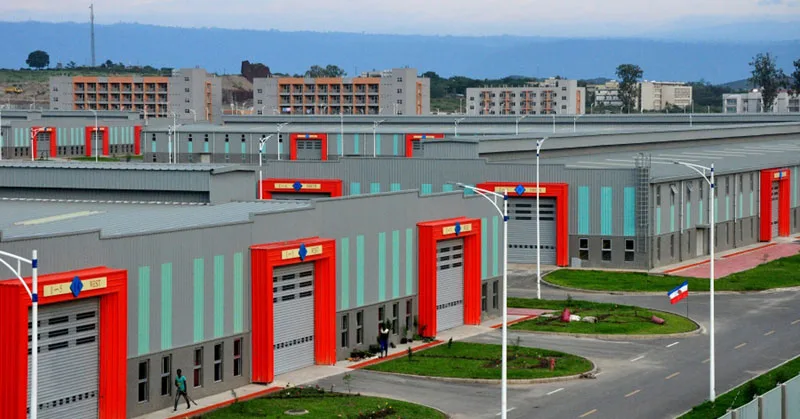
Ethiopia Transforms 10 Industrial Parks into Special Economic Zones
The Ethiopian Investment Commission (EIC) has announced the decision to elevate 10 industrial parks that meet the required criteria to the status of Special Economic Zones (SEZs). This move aims to foster increased economic activity and foreign investment in Ethiopia.
In line with this, the Industrial Parks Development Corporation (IPDC) has revealed that 10 of the 13 industrial parks, along with the Dire Dawa Free Trade Zone, under its management, have now been upgraded to SEZs.
These newly designated SEZs include Adama, Bahir Dar, Bole Lemi, Debre Berhan, Hawassa, Jimma, Kilinto, Kombolcha, Mekelle, and Semera Industrial Parks.
The upgrade is made possible by Proclamation No. 1322/2016, which was approved and enacted by the House of People’s Representatives.
This proclamation allows for the transformation of industrial parks into Special Economic Zones, aimed at boosting the country’s economic development.
The transition of these industrial parks to SEZs is expected to play a crucial role in stimulating private sector participation across various industries.
It will also strengthen Ethiopia’s efforts to attract foreign direct investment (FDI) and foster economic clustering, which is critical for the country’s long-term growth.
Ethiopia’s industrial parks were originally established with the primary goal of boosting foreign trade and FDI inflows.
As of May 2024, Ethiopia now has 13 industrial parks, and companies operating within these zones have been permitted to supply up to 50 percent of their products to the domestic market, a significant policy shift. Prior to this, companies were only allowed to focus on export markets.
Zeleke Temesgen, Deputy Commissioner of the Ethiopian Investment Commission, clarified that companies operating in the parks were initially restricted to export products exclusively to international markets.
However, to alleviate the pressures faced by some investors, the government decided to allow them to redirect 50 percent of their products to the domestic market. This policy change is expected to create new opportunities for local consumers and businesses while easing challenges for foreign investors.
One key factor influencing this decision is the impact of the U.S. sanctions imposed on Ethiopia in the wake of the conflict in northern Ethiopia two years ago.
Among these sanctions was Ethiopia’s suspension from the African Growth and Opportunity Act (AGOA), which had a particularly negative effect on the country’s industrial parks.
As a result, many companies that relied on the U.S. market for exports have been forced to seek alternatives, potentially relocating their operations to other countries.
The suspension from AGOA was largely due to allegations of human rights violations during the conflict, and the Ethiopian government has strongly opposed these sanctions.
In its appeal to the U.S. government, Ethiopia argued that the cancellation of AGOA benefits would lead to the loss of jobs for over five million Ethiopians, particularly those employed in industrial parks.
The government further stressed that many of these workers were not involved in the conflict and would suffer disproportionately from the sanctions.
Foreign companies operating in Ethiopian industrial parks have expressed concerns over the AGOA ban, as their primary market destination had been the U.S.
The suspension has not only affected their ability to export goods to the U.S. but has also created difficulties in finding new markets in Europe and Asia.
As the sanctions continue to impact the industry, Ethiopian authorities are seeking to navigate these challenges while promoting the long-term viability and growth of its industrial parks.
