
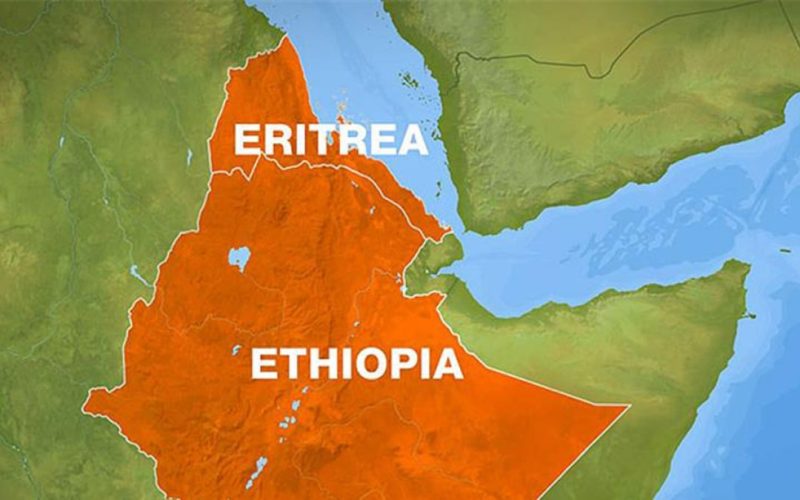
Eritrea has accused Ethiopia of being the primary source of regional instability in East Africa, rejecting recent allegations made by former Ethiopian President Mulatu Teshome (PhD).
In a statement shared on his X page, Eritrean Information Minister Yemane Gebremeskel dismissed the claims made by Mulatu in an opinion article published by Al Jazeera.
Mulatu warned that “Isaias Afwerki’s government is moving to provoke another war in northern Ethiopia,” and urged for diplomatic intervention to prevent further conflict in East Africa.
In his article, Mulatu alleged that “war is the main business of the Eritrean government,” accusing President Isaias Afwerki of engaging in cross-border conflicts over the past three decades.
He also accused Eritrea of “taking advantage” of the Tigray war by sending troops into the region, causing destruction, and argued that the Pretoria Agreement, which ended the Tigray conflict, has become an “obstacle” for President Isaias.
Furthermore, he claimed that Isaias seeks continuous unrest in the Tigray region and is collaborating with dissatisfied TPLF leaders who oppose the Pretoria Agreement.
Responding to these accusations, Eritrean Information Minister Yemane Gebremeskel described Mulatu’s assertions as “false” and “outdated propaganda.”
He countered that Ethiopia itself is the main source of regional turmoil and presented ten points to substantiate his claims.
Yemane argued that Eritrea’s involvement in the Tigray war was justified, asserting that the TPLF was preparing a major offensive against Eritrea and that the Ethiopian federal government had formally requested Eritrean support.
He also emphasized Eritrea’s role as a safe haven for Ethiopian Defense Forces fleeing TPLF attacks and highlighted Eritrea’s “irreplaceable” support during Ethiopia’s most challenging periods.
He dismissed Mulatu’s assertion that Eritrea seeks to undermine the Pretoria Agreement, describing it as “an internal matter of the Ethiopian government” and insisted that Eritrea has no interest in interfering with Ethiopia’s internal affairs.
Yemane further stated that Eritrean troops have been redeployed within Eritrea’s internationally recognized borders, rejecting accusations that Eritrean forces remain in disputed areas like Badme.
He accused those who refuse to accept the Eritrea-Ethiopia Border Commission’s ruling of spreading misinformation.
Beyond rebutting Mulatu’s claims, Yemane also accused the Ethiopian government of launching a “groundless and intensified campaign of harassment” against Eritrea.
He alleged that Ethiopia’s objective may be to gain access to ports through military means if necessary.
According to Yemane, Ethiopia has “distorted” the agreement it signed with the self-governing Somaliland region and continues to escalate tensions across the Horn of Africa.
He also pointed to the ongoing conflict in the Amhara region as further evidence of Ethiopia being the root cause of instability in East Africa.
“Ethiopia will not resolve its internal challenges by blaming Eritrea,” Yemane remarked, rejecting the former president’s call for international diplomatic pressure on President Isaias.
Relations between Ethiopia and Eritrea, which had been suspended for 20 years, were restored in 2018 after Prime Minister Abiy Ahmed (PhD) came to power.
However, tensions have resurfaced in recent months. In November 2024, regular telephone services between the two countries were suspended, reversing a communication link that had been reestablished in July 2018.
Additionally, Ethiopian Airlines ceased flights to Asmara in September 2024, citing the “difficult and unpredictable situation” in Eritrea.
The escalating diplomatic row underscores the fragile relationship between the two neighboring countries and raises concerns about renewed conflict and broader regional instability in the Horn of Africa.
