
Ethiopians Rescued from Myanmar Share Stories of Betrayal and Suffering
Ethiopians who were trapped in Myanmar by illegal brokers are facing serious challenges, according to returnees.
Many of those freed from detention with the assistance of the Thai government report being unable to work and suffering from the traumatic experience they endured.
Recently, the voices of Ethiopians who had been enslaved and subjected to injustice in Myanmar have begun to emerge. These individuals are calling for help, describing their dire situation and the need for urgent intervention.
After various efforts from the victims’ families, activists, and the media to bring the issue to the attention of decision-makers, 77 Ethiopians were repatriated to their home country in two separate rounds over the past few days.
The returnees, who asked to remain anonymous for their safety and the safety of their families, shared that they were deceived into traveling to Myanmar by people they knew and trusted.
One returnee recounted how, after graduating from university, he started a business in Hawassa with the help of his family. He then traveled to Myanmar at the urging of a former university friend.
“He was someone I trusted a lot. We would occasionally talk on Telegram,” said the returnee. “He told me he was living in Bangkok, working for a company, and earning at least 120,000 birr a month. I was excited and asked him if there were job opportunities. After he assured me there were, I sold my machines and headed to Bangkok. But when I arrived, someone else greeted me. I was met by strangers at the airport. They told me not to worry, saying they were my employers and that I should follow their instructions. They assured me I would not be harmed. Once we crossed into Myanmar, they destroyed my passport and imprisoned me for four months without pay or rest,” he added.
Another returnee shared a similar story, explaining that he was deceived by someone he knew. This person promised that the organization he was working with would pay $3,000 for every person they brought in. The returnee was also told that if he brought new people, he would receive a $3,000 commission for each.
The returnee, who endured severe physical and emotional distress for nearly 10 months, said that his family had believed he was dead. However, he miraculously survived and was able to return to Ethiopia.
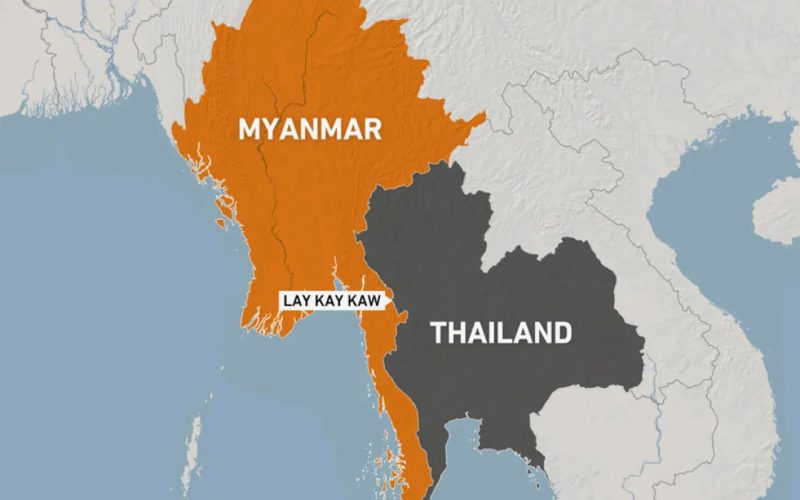
According to the returnees, nearly all of the detainees in Myanmar, including the Ethiopians, had entered the country through Bangkok.
Under growing international pressure, the Thai government has released some of these individuals as part of its efforts to address the situation.
One returnee explained that he had entered Myanmar after a three-day journey through Thailand with strangers in search of better opportunities.
He revealed that his family had sold their house and borrowed money to support his journey, and he had left his job to pursue what he thought would be a better life. However, upon arrival, he was forced to work 17 hours a day without rest.
“I was desperate, waiting for death,” he recalled. “But with the help of the Thai government, some Ethiopians, including myself, were released from detention.”
He went on to describe how they were freed after being deemed unable to work. The authorities separated those they believed could still work, moved them to different locations, and continued to exploit them.
This returnee also shared that, in addition to the immense mental strain, he developed kidney disease from the physical demands of the work. He lost 350,000 birr in the process.
“There are still more than a thousand Ethiopians in Myanmar,” he continued, “being held in unknown places and enslaved. We must make every effort to help them, including through government intervention.”
International and local media have reported that citizens from various countries, including Ethiopia, have been forced to work for scam companies in Myanmar.
These companies lure people under the pretense of offering high-paying jobs, only to coerce them into working for fraudulent operations. The returnees confirmed that they were tricked into traveling for work opportunities that turned out to be fronts for illegal activities.
Once transported to camps along the Thai border, victims were forced to use false identities and participate in criminal enterprises such as money laundering, cryptocurrency mining, and illegal gambling.
The Ethiopian Ministry of Foreign Affairs has repeatedly stated that it is working to assist its citizens who were lured to Thailand and Myanmar by human traffickers.
In response to the situation, the ministry has coordinated efforts to bring back those trapped abroad.
While the returnees stated that some of the victims were known to them, the Ministry of Foreign Affairs has not provided specific details on whether it is actively pursuing efforts to hold the traffickers accountable, in addition to repatriating the victims.
In a recent statement, the ministry confirmed that 77 Ethiopians had been repatriated from Myanmar over two rounds this week. It also emphasized that efforts to assist more Ethiopians would continue through the Ethiopian embassies in Thailand and Japan.
