
CETU Opposes Government’s Plan to Deduct Funds from Employees for National Disaster Response
A draft proclamation requiring both government and private institutions to collect revenue for a “disaster risk response fund” was submitted to Ethiopia’s parliament last week.
The bill proposes the establishment of a national fund dedicated to disaster risk reduction, response, and recovery.
However, the Confederation of Ethiopian Trade Unions (CETU) has voiced strong opposition to the proposal, particularly its provision to collect money from employees’ salaries without a minimum wage law in place.
CETU has criticized the government’s decision to introduce a bill that would deduct funds from employees without first implementing the Minimum Wage Proclamation, which was passed by parliament in June 2018 but has yet to be enforced.
According to CETU, this move appears to be based on the assumption that employees will not challenge it, which they consider unfair and exploitative.
The Confederation has called the proposed establishment of the Ethiopian Disaster Risk Reduction and Management Commission a direct threat to workers, particularly given the current economic challenges faced by many Ethiopians.
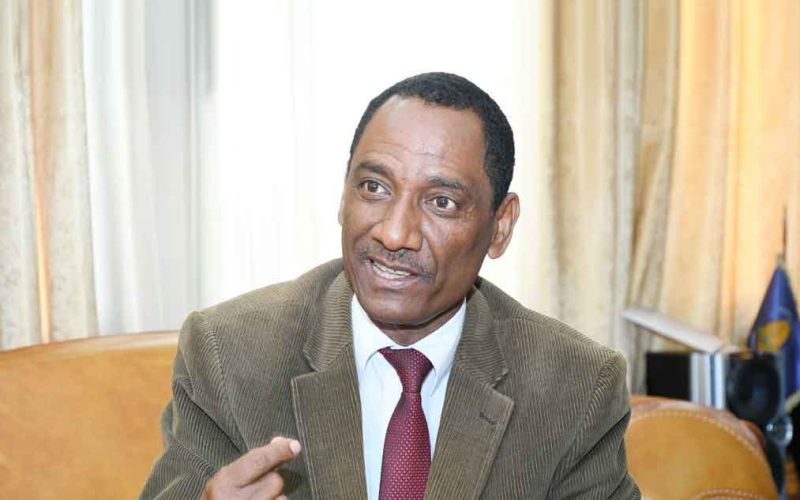
Mr. Kassahun Folo, President of CETU, spoke to Arada FM, emphasizing that while there is nothing inherently wrong with creating the commission, the government’s plan to cut workers’ wages in a time of rising living costs is an act of arrogance.
He argued that it is inappropriate to introduce such deductions from salaries before addressing the pressing issue of setting a minimum wage for Ethiopian workers.
The draft proclamation for the Ethiopian Disaster Risk Reduction and Management Commission, which was presented to the House of Representatives, specifies 15 different sources for revenue collection to fund disaster response.
One of the key provisions includes deducting a portion of employees’ net salaries, which CETU argues is unfair given the country’s economic hardships.
The bill also outlines that funds may be raised from other sources, such as government activities, private sector contributions, and donations from international aid organizations.
CETU has also expressed dissatisfaction with the government’s failure to address the excessive payroll taxes that employees already bear.
The union views the introduction of this new bill as an infringement on the rights of workers and a sign that the government itself is not adhering to the laws it has passed.
With the cost of living skyrocketing and the nation grappling with both man-made and natural disasters, CETU believes that further deductions from workers’ salaries would push employees into an even more precarious financial situation.
The draft proclamation submitted to parliament on March 18, 2025, outlines several mechanisms for collecting funds for disaster risk management.
These include contributions from the federal government and city administrations of Addis Ababa and Dire Dawa, which are expected to allocate portions of their annual budgets to the fund.
Additionally, the bill provides for contributions from aid organizations, charities, individual donors, and domestic fundraising efforts.
The proposed disaster risk response fund aims to support activities related to disaster prevention, response, and recovery at all stages—before, during, and after a disaster.
However, CETU argues that the burden of funding these initiatives should not fall disproportionately on employees who are already struggling to make ends meet.
While the establishment of a disaster risk management commission may be necessary for Ethiopia’s long-term resilience against disasters, CETU believes that the proposed method of funding—especially through deductions from workers’ salaries—will exacerbate the economic hardships faced by many Ethiopians.
The National Trade Union is calling for a fairer approach that includes the implementation of a minimum wage law before any further financial burdens are placed on employees.
