
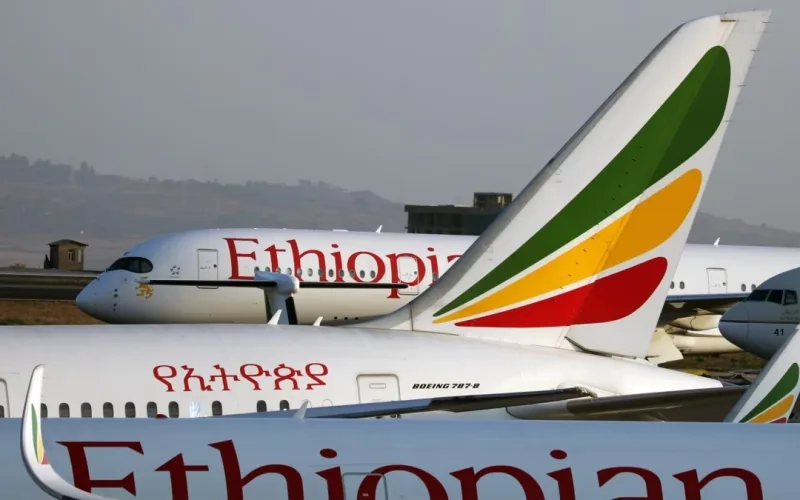
Ethiopian Airlines has announced impressive financial and operational performance over the past nine months, generating $5.6 billion in revenue—a notable 8% increase compared to the same period last year.
CEO Mesfin Tasew shared the update during a recent press briefing, highlighting significant growth across various segments of the airline’s operations.
According to Mesfin, the airline carried approximately 14.5 million passengers during the reporting period, marking a 13% increase from the same timeframe in the previous year.
This growth reflects the airline’s ongoing recovery and expansion following the global disruption of air travel caused by the COVID-19 pandemic.
To support its expanding operations, Ethiopian Airlines added 10 new aircraft to its fleet in the past nine months. Among the new additions are three Airbus A350-1000s, which are among the most advanced and fuel-efficient long-haul aircraft in the world.
The airline also launched four new destinations during this period, further strengthening its global network.
Looking ahead, the airline announced the launch of new direct flights from Addis Ababa to Sharjah, United Arab Emirates, starting Sunday, June 1, 2025. In addition, Ethiopian Airlines plans to inaugurate two more international routes in June and will take delivery of two Airbus A350-900 aircraft to support the new services.
CEO Mesfin Tasew also revealed updates on the airline’s ambitious infrastructure plans. Preparatory work is underway for the construction of a new international airport in Bishoftu, a town located southeast of Addis Ababa.
The airport, to be located in an area called Abu Sera, will be constructed in two phases over five years. The first phase alone is expected to cost $6 billion.
Once completed, the new airport will have the capacity to handle 100 million passengers annually, significantly surpassing the current 25 million passenger capacity of Bole International Airport.
The design contract for the new airport has been awarded to Design Dar, a reputable engineering and architectural firm.
The planned airport will feature a single runway capable of accommodating four aircraft simultaneously, and the overall facility will be able to accommodate up to 270 aircraft. In terms of connectivity, a high-speed rail and road link will connect the new airport with Bole International Airport, ensuring seamless passenger and cargo transfers.
This major development signals Ethiopian Airlines’ long-term vision to become the leading aviation hub in Africa and a key player in the global aviation industry.
