
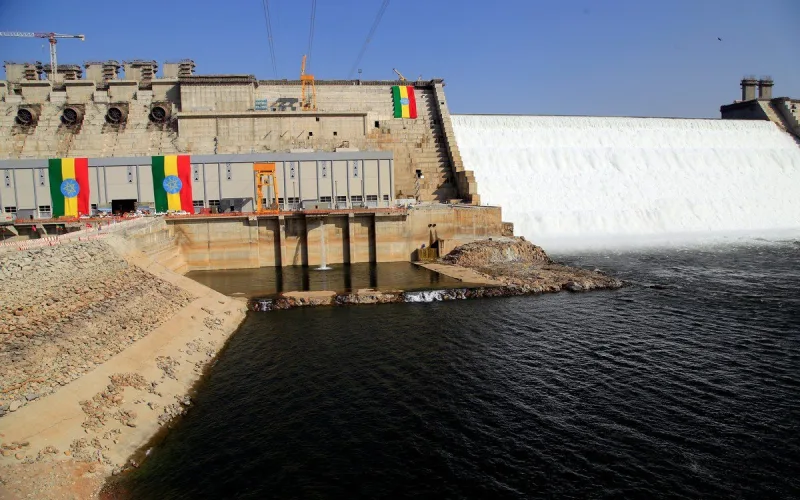
The Ethiopian government has strongly dismissed recent claims by former U.S. President Donald Trump regarding financial support for the Grand Ethiopian Renaissance Dam (GERD).
In a statement issued by the Public Coordination Office for the GERD, officials emphasized that the dam’s construction has been entirely funded by Ethiopians.
President Trump, speaking on his social media platform Truth Social last week, claimed that the United States had provided financial assistance for the construction of the GERD.
In response, Aregawi Berhe, CEO of the GERD Public Coordination Office, described the statement as “baseless and unfounded.”
“The Grand Ethiopian Renaissance Dam has been under construction since 2011, powered by the wealth, knowledge, determination, and financial contributions of the Ethiopian people and government,” Aregawi stated.
He also suggested that Trump’s comments were politically motivated and reflected broader geopolitical interests rather than facts on the ground.
The GERD, Africa’s largest hydropower project, has now reached 97.6% completion. Initially estimated at a cost of 80 billion Ethiopian birr when its foundation stone was laid 15 years ago, the project has since cost more than 180 billion birr.
An additional 80 billion birr is projected to be required to finalize the remaining work.
To date, the Ethiopian public has contributed over 20 billion birr toward the project through bonds, donations, and other fundraising efforts.
The government aims to raise another 1.6 billion birr in the current fiscal year.
The dam currently holds approximately 42 billion cubic meters of water, with plans to increase its capacity to 74 billion cubic meters upon completion.
Two of the dam’s turbines are already operational, generating 540 megawatts of electricity. When fully completed, GERD will feature seven power-generating units and is expected to be a cornerstone in Ethiopia’s ambition to become a regional power hub.
Prime Minister Abiy Ahmed recently announced that the official inauguration of the GERD is scheduled for September 2025.
Despite the project’s national significance, the GERD has remained a source of diplomatic tension between Ethiopia and downstream countries Egypt and Sudan.
Both countries have raised concerns over water security and potential disruptions to the Nile River flow.
Thirteen years of tripartite negotiations have so far failed to produce a binding agreement.
Egypt accuses Ethiopia of unilateral actions and undermining regional water-sharing agreements, while Ethiopia argues that Egypt seeks to maintain colonial-era water allocation treaties that do not reflect current realities or Ethiopia’s development needs.
