
By Samuel Getachew
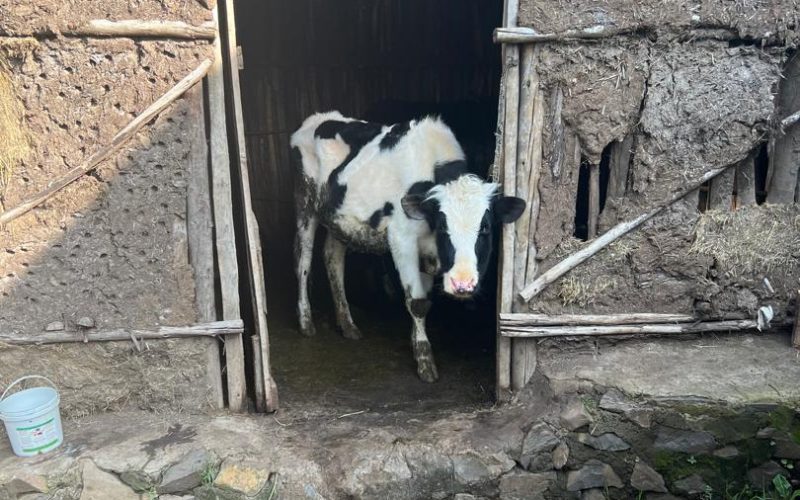
MISRAKE, ETHIOPIA: Near the monasteries of the historic Debre Libanos churches two hours away from Ethiopia’s capital, Ababa, the village of Misrake, in the Oromia region, appears as remote as it comes.
It is a mixture of dotted mud huts and farmers who in the past decade adopted a new style of farming that is beginning to yield massive results.
“We often used to wait for the rainy season to farm which was often once a year and eat the little we have and hope for a miracle”, Eshetu Kebe said.
“And we relied on Teff (Ethiopia’s whole grain) exclusively but nowadays, but I am now producing onions all year long that we take to the market and make a hefty profit and we invest it back on our family”, he added.
To the approximately 500 people that live here, this development has meant education for the children, solar power that was a lofty dream for not too long ago for many of the villagers that has allowed their children to study with light, instead of candles that was once their reality.
It has also encouraged young people to follow in the footsteps of their parents and accept farming as an attractive profession far from the reality of such farmers who used to work hard but earn barely enough to survive on.
For Kebe; his brisk business in farming has allowed him to send his children to a medical school, in the hospitality sector and some to follow him in farming and a profession that has given him and his family rare opportunity and he is heartened that young people are no longer running away to the cities for greener pastures.
Nowadays, this farming village that was reeling in abject poverty in the past has transitioned into some prosperity for many, including for Teshome Tadesse who moved from the business district of Dire Dawa after working as a public servant.
To him, he saw something in farming in his ancestral land that few could identify then and he says, his friends who went to university with him laughed at him when he announced his move.
Once in his village, he helped introduce new ways of farming including irrigation that he learned elsewhere, in a bid to tame the negative impacts of deforestation that has been a recurring problem in Mesrake and shift to a new method of farming called ‘Climate-Smart Agriculture’.
Learning to adapt to a variety of crops instead of one is what has inspired many to follow in order to navigate an obsolete farming culture that needed to evolve and change, including conserving the soil and harvesting rain water that often used to overwhelm the village.
“With such a method in place, we are now able to overcome the water shortages that were once a recurring issue in the community “, he says.
Many here know that they are a prime victim of the effects of climate change that have limited their livelihoods including rains that come irregularly forcing them to adapt to using crops that are drought resistant.
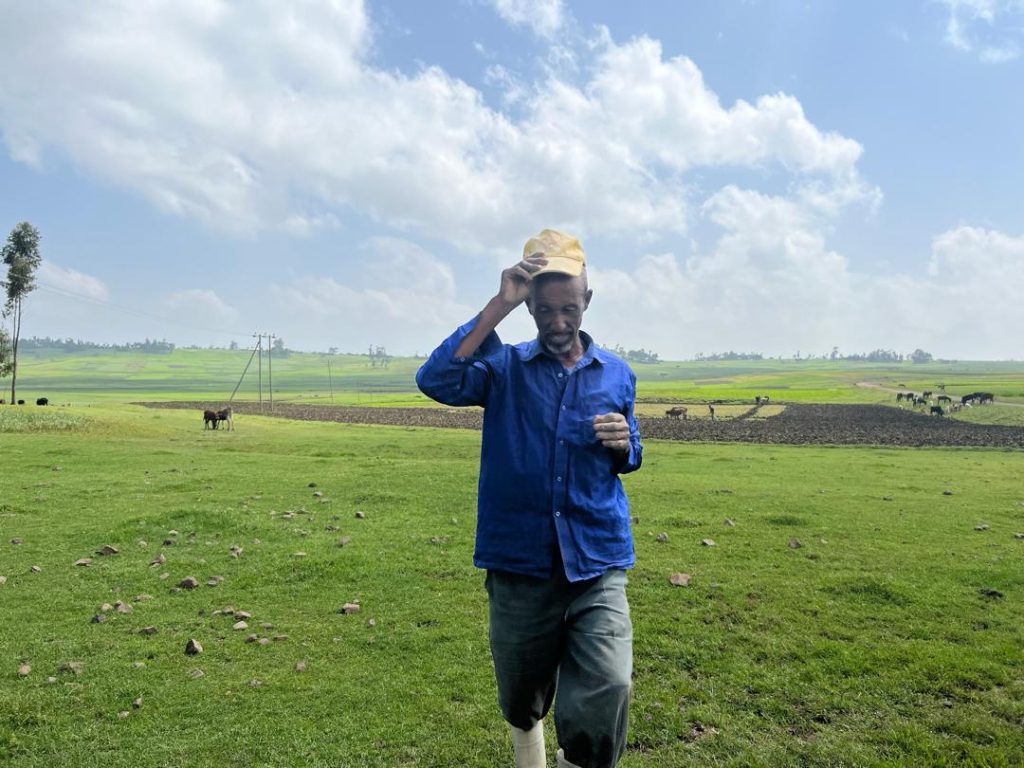
A 31-year-old farmer, Henok Selesshi moved from the nearby town of Debre Tsege after being unemployed for a long time.
He had been contemplating a life outside of Ethiopia – even paying smugglers to take him out of the country – but now he is finding much of his future in farming that is sustainable for him and his family.
“Many farmers now work in unison with others, finding out their own solution to issues like soil degradation, understanding why much of our crops failed in the past and also conserving rainfalls for days where we face drought”.
Many have also taken part in the Green Legacy Campaign, led by the Ethiopian government in Addis Ababa to help plant millions of trees annually. Provided seedings with the local administration that is an hour away from this village, many say, thousands of trees have been planted as a strategy to combat climate change.
Sheway Tezazu, who is a farmer who has taken part in the tree-planting community effort says, in addition to planting Teff, she is also planting maize and cowpeas depending on the season, allowing her to farm all year-around instead of just seasonal planting of Teff that most farmers are used to.
“I am busier on the farm, it has become a family ritual to farm and that has also allowed us to sell in the market, save money and see a future beyond poverty and plant trees to benefit not just myself, but the community as a whole”, she proudly says.
For the first time, she added, the family donated to the Ethiopian Renaissance Dam, the nation’s publicly funded project that has a capacity to produce 5.15 gigawatts of electricity to a nation where millions are out of electricity, including Misrake that is due to be inaugurated this year.
“To see us come from a once village of dead-ends to one that is becoming not just self-sufficient and be in position to be part of a national dream such as this dam that will afford us electricity for the first time and donate financially is something that makes me proud to be an African farmer”, she concluded.
