
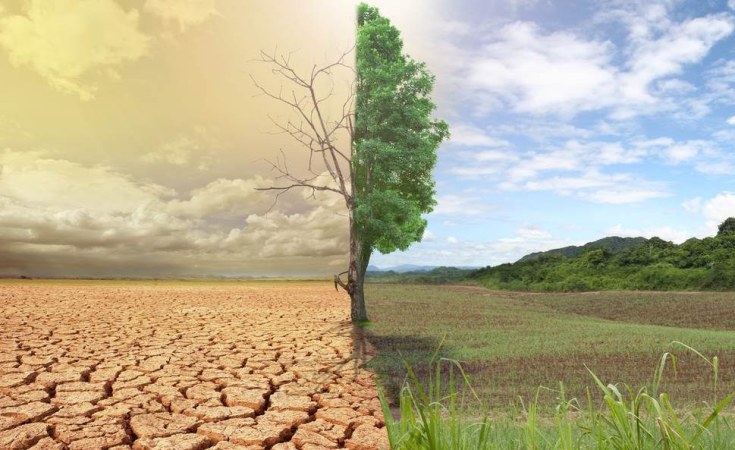
Ethiopia’s Temperature Rising Rapidly Amid Minimal Global Emission Contribution
Ethiopia’s average temperature is rising by more than 1 degree Celsius annually, driven largely by the impacts of climate change.
Despite this alarming trend, the country’s share of global greenhouse gas emissions is estimated at just 0.04 percent.
According to officials, efforts to mitigate climate change have been hindered by the failure of developed nations to deliver on their financial commitments, repeatedly promised at international climate conferences.
These remarks came ahead of the Second African Climate Change Conference, which Ethiopia is hosting this week in Addis Ababa.
The Ministry of Water and Energy announced that a pre-conference event and exhibition—taking place today and tomorrow—are being held to pave the way for the main conference.
Speaking at the opening session, Engineer Sultan Wali, Minister of Water and Energy, stressed that the impacts of climate change are becoming increasingly evident both in Ethiopia and worldwide.
He noted that in recent years, Ethiopia’s average temperature has risen between 1 and 1.5 degrees Celsius annually.
The minister warned that African nations, which heavily rely on agriculture, are facing erratic and unpredictable rainfall patterns that disrupt farming activities.
He added that floods, once occurring every decade or more, are now happening with greater frequency and inflicting severe damage.
He further highlighted that prolonged and repeated droughts, severe shortages of groundwater and surface water, rising health risks such as malaria, and other recurring challenges are among the climate-related problems increasingly affecting Ethiopia.
While Ethiopia bears the brunt of these consequences, its contribution to global carbon emissions remains negligible at 0.04 percent.
A research paper presented at the event revealed that 82 percent of the world’s energy demand is still met by fossil fuels such as oil and coal—major contributors to climate change. In contrast, the global growth rate in renewable energy use is only around 2 percent.
Engineer Sultan urged African countries to unite in advocating for homegrown climate protection methods and technologies at the upcoming African Climate Change Conference.
He also emphasized the need for African nations to jointly demand that the financial and technical assistance pledged by developed countries be delivered without further delay.
