
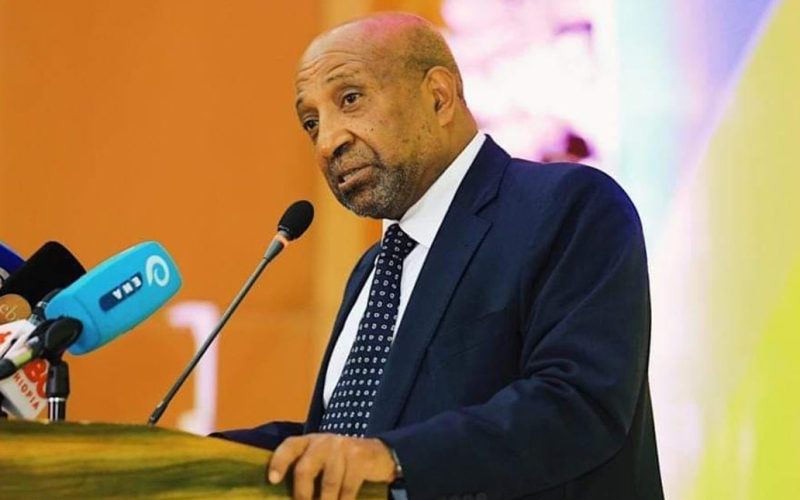
Public Universities Could Be Converted into Boarding Schools if They Fail to Meet Standards, Says Education Minister
Ethiopia’s public universities risk being converted into large-scale secondary boarding schools if they fail to meet required academic standards, according to Education Minister Prof. Berhanu Nega.
The minister made this announcement during a discussion forum jointly organized by the Ministry of Education and the Education and Training Authority on the implementation of the re-registration process for higher education institutions.
Prof. Berhanu emphasized that ensuring quality education has been a top priority over the past four years. He noted that private institutions have been repeatedly informed about the re-registration standards for the last three years, and those failing to meet the requirements will not be allowed to continue operations in the sector.
He further revealed that similar evaluations will soon be conducted on public universities, signaling that both private and public institutions will be held to the same quality benchmarks. Failure to comply could lead to closures or restructuring, including repurposing campuses into secondary boarding schools.
According to a report by The Reporter, authorities are currently weighing the implications of maintaining underperforming public universities versus converting them into institutions that better serve the country’s education needs.
During the forum, private higher education institutions requested an extension, arguing that meeting the new standards is costly and time-consuming.
The latest figures from the Education and Training Authority highlight the scale of the challenge facing Ethiopia’s higher education sector.
Out of 290 private higher education institutions registered in Addis Ababa under the new criteria, only three institutions successfully met the minimum standards.
Initially, none of the institutions passed the first round of evaluation, prompting the revision of criteria and the introduction of multiple assessment rounds.
According to Hiwot Assefa, Executive Director of Institutional Licensing at the Authority, after these adjustments, three institutions operating across three campuses in Addis Ababa met the required standards in 17 academic programs, thereby securing their licenses.
In addition, 25 institutions were granted a 12-month grace period to meet the revised requirements, while 37 campuses received specific prerequisites to achieve compliance across 146 educational programs.
However, 85 institutions failed to register entirely and were consequently removed from the system.
The Ministry of Education underscores that this rigorous reform process aims to enhance the quality of higher education in Ethiopia, ensuring students receive relevant and globally competitive training.
