
Ethiopians Call for Dual Citizenship to Be Addressed in National Dialogue
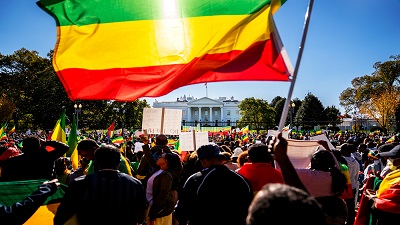
Ethiopians at home and abroad are urging the Ethiopian National Dialogue Commission to include dual citizenship as a key topic in the upcoming national dialogue.
The Commission, which was established to resolve long-standing conflicts and political disputes through inclusive dialogue, has been actively gathering public agendas from citizens both inside the country and within the Ethiopian diaspora.
Chief Commissioner Professor Mesfin Araya announced that Ethiopians living abroad—particularly in Europe, North America, Canada, South Africa, and other countries—have submitted the issue of dual citizenship for consideration.
The request was raised during the Commission’s agenda-gathering sessions conducted among diaspora communities.
In his statement outlining the Commission’s 2024/25 performance and plans, Professor Mesfin said the agenda collection process was carried out effectively through various platforms, including public consultations, institutions, and individual submissions.
He emphasized that the diaspora community presented detailed input advocating for the recognition of dual citizenship, highlighting its significance for national unity, economic engagement, and political inclusion.
The Commission extended invitations to all Ethiopians and people of Ethiopian descent—both within the country and abroad—to participate in the consultations.
As a result, several successful agenda-setting forums were held across regional states, city administrations, and at the federal level, with the exception of the Tigray region, which has yet to be included in the process.
Professor Mesfin described the agenda-gathering efforts as transparent and democratic, and noted that another major task carried out during the year was the selection of representatives for the upcoming National Dialogue Assembly.
Around 4,500 representatives are expected to participate in this assembly, scheduled to begin in the Ethiopian New Year.
“This assembly will serve as an inclusive platform where women, youth, persons with disabilities, pastoralists, farmers, intellectuals, and political leaders can deliberate as equals,” said Professor Mesfin.
He stressed that the dialogue will mark a historic moment in Ethiopia’s nation-building journey and could help lay a strong foundation for the country’s future.
He emphasized that the National Dialogue Assembly will be one of Ethiopia’s most significant undertakings in the new year—comparable in national importance to the Grand Ethiopian Renaissance Dam (GERD).
“Just like the Renaissance Dam, the national dialogue should become a landmark event where we forge consensus on our most critical and foundational national issues,” he said.
According to the IOM, over three million Ethiopians in the diaspora are living abroad, with the United States, Saudi Arabia, the UAE, South Africa, and Germany being the main countries where Ethiopians reside.
The Ethiopian Constitution prohibits dual citizenship, requiring members of the diaspora to renounce foreign citizenship in order to reclaim their Ethiopian nationality.
