
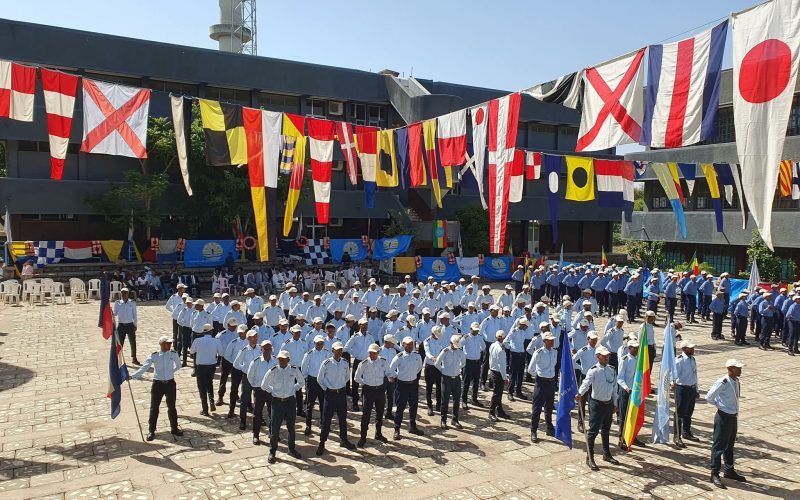
Ethiopia Trains Over 5000 Maritime Engineers, Strengthens Role in Africa’s Maritime Development
Ethiopia has announced that it has trained more than 5000 marin engineers and 2,600 of this trained by Bahirdar University.
Many of whom are now employed in international markets, underscoring the country’s growing contribution to global maritime industries despite being landlocked.
According to Bahirdar University, one of Ethiopia’s leading institutions in maritime education, its graduates are currently serving in various positions across the world.
University President Mengesha Ayene (PHD) revealed that 26 of these professionals are working in senior-level roles as consultants and experts within some of the world’s largest maritime institutions.
Mengesha explained that the university recruits graduates of mechanical and electrical engineering from various Ethiopian universities for intensive six- to nine-month maritime training programs.
The training, which meets international standards, is also open to foreign citizens, positioning Ethiopia as an emerging hub for maritime education in Africa.
He added that Bahirdar University has been running its maritime training program for over 12 years in partnership with YCF Manning Limited and the Ethiopian Maritime Authority, with the goal of further expanding its capacity and global recognition.
These developments were highlighted during the ongoing African Maritime 2025 Conference being held in Addis Ababa, where maritime experts, business leaders, government representatives, and international guests are discussing Africa’s maritime future.
The conference aims to promote policy dialogue, foster partnerships, and showcase Africa’s growing contribution to the global maritime economy.
France Joubert, CEO of YCF Manning Limited and Chair of the African Maritime Forum, stated that the conference would play a pivotal role in helping African nations build a modern, competitive, and inclusive maritime workforce.
He praised Ethiopia’s leadership and its strong commitment to maritime education through institutions such as the Ethiopian Maritime Training Institute (EMTI) and the Bahir Dar University Maritime Centre of Excellence.
The conference, jointly organized by YCF Manning Limited, the Ethiopian Ministry of Transport and Logistics, and the Ethiopian Maritime Authority, reflects Ethiopia’s increasing engagement in continental maritime affairs despite its landlocked status.
Ethiopia has been without direct access to the sea since Eritrea gained independence in 1993 following a referendum.
In recent years, however, the issue of seaport access has re-emerged as a key national discussion, with growing public interest in securing alternative maritime routes.
While some Ethiopians have voiced claims over Eritrea’s Assab Port, Eritrea has strongly rejected these assertions, emphasizing that any such move would infringe on its sovereignty.
Meanwhile, Ethiopia has been rebuilding its naval capacity as part of its broader national defense modernization efforts.
The country has been training naval officers, establishing maritime institutions, and receiving technical support from countries such as Russia and France.
Just three months ago, Ethiopia inaugurated its Naval Force Headquarters in Addis Ababa, marking a significant step toward reviving its maritime and naval capabilities after more than three decades.
