

The Evolution Of The AFCON Trophy : Africa’s Story Told In Metal, Memory And Millions Of Voices
From a modest silver chalice to a golden globe watched across the continent, the AFCON trophy has evolved alongside Africa itself reflecting its triumphs, unity and unbreakable spirit.
Africa’s Trophy, Africa’s Story
Few objects in African sport carry as much symbolism as the Africa Cup of Nations trophy. Beyond the metal and craftsmanship, it is an archive of dreams, a vessel for collective memory, and a witness to the unforgettable nights that have shaped African football from Khartoum to Addis Ababa, Accra to Cairo, Yaoundé to Abidjan.
Across its three major eras, the AFCON trophy mirrors the continent’s own journey: the struggle for unity, the rise of independent nations asserting their identity, and a modern wave of continental pride broadcast in high definition to millions.
To follow the evolution of the trophy is to follow the evolution of African sport a story rooted in culture, rivalry, pride and legacy.
The First Era (1957–1962): Silver, Hope And A New Continent

When the inaugural AFCON began in Sudan in 1957, Africa was stepping out of colonial shadows and into its own narrative.
Egypt, Sudan and Ethiopia the first three CAF members laid the groundwork for what would become Africa’s most cherished sporting event.
The first trophy was a simple silver chalice: slender, understated, and symbolic of a continent taking its first confident steps.
Egypt claimed the earliest titles in 1957 and 1959. Then came a moment etched forever in East African folklore. In 1962, Ethiopia lifted the trophy in Addis Ababa, with Emperor Haile Selassie himself presenting the cup an iconic image of football intersecting with national identity and pride.
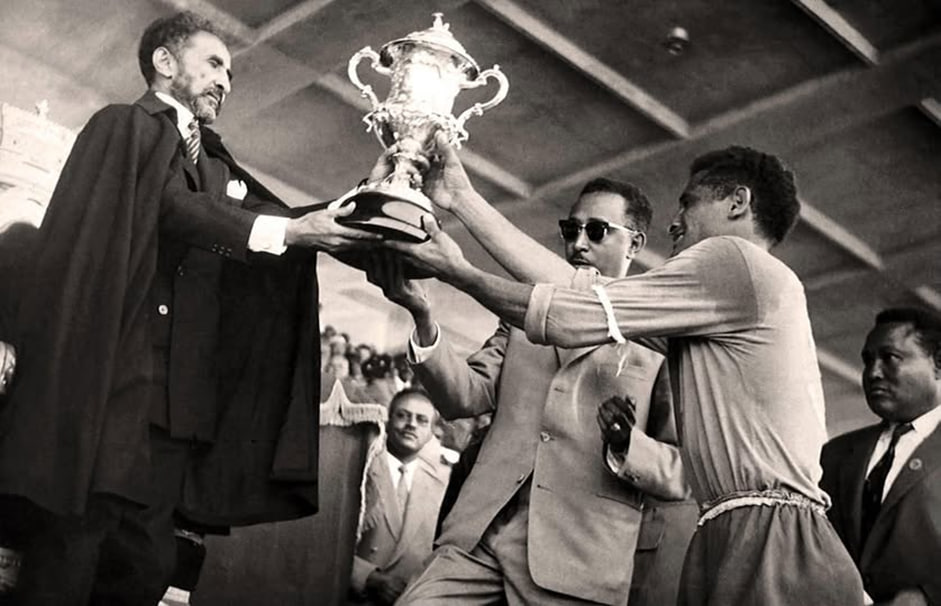
The trophy’s minimalist design perfectly matched the era: humble, hopeful, historic.
The Salem Trophy (1963–1978): Ambition, Elegance And A Lost Relic
The first chalice was soon replaced by the Abdelaziz Abdallah Salem Trophy, named after CAF’s founding president.
More polished and commanding, its design reflected a growing sense of continental ambition and confidence.
This era marked the rise of giants Ghana, the Democratic Republic of Congo, Sudan as AFCON grew in size, competition and global identity.
In 1978, Ghana’s historic third title allowed them to keep the trophy under the “win-it-to-keep-it” rule. What followed was the greatest mystery in African football history: the Salem Trophy later vanished from the Ghana FA headquarters and has never been found.
A relic lost, but a legend gained.
The African Unity Trophy (1980–2000): A Continent Coming Of Age
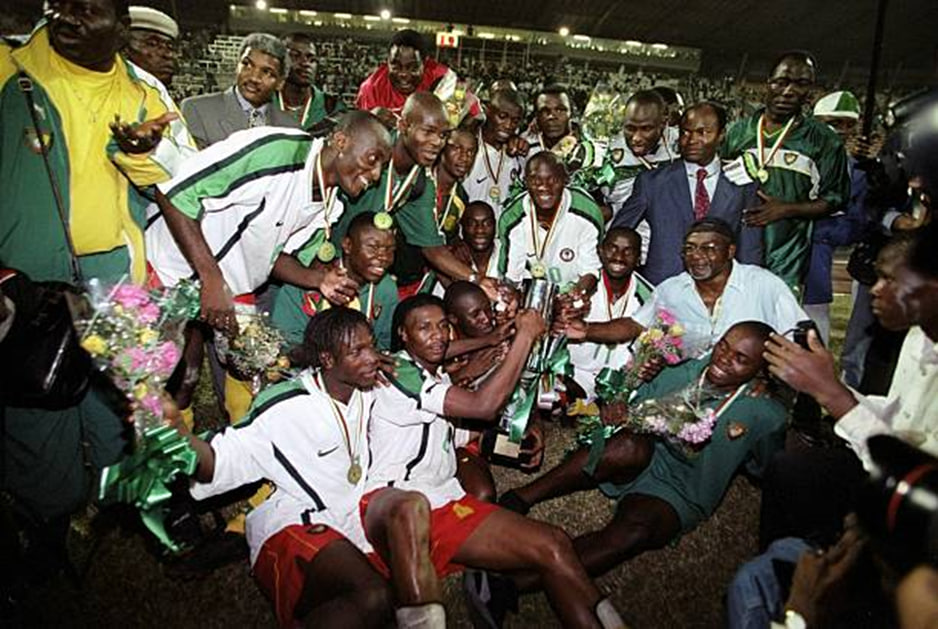
With the 1980s came a new trophy and a new footballing identity. The African Unity Trophy was larger, bolder and more sculptural, capturing the spirit of a tournament that had matured into a continental spectacle.
This was the era of iconic teams and unforgettable rivalries, dominated by Nigeria, Egypt, Algeria and especially Cameroon. Stadiums filled, broadcasting expanded and AFCON became the heartbeat of African sport.
Cameroon’s third triumph in 2000 meant they kept the trophy permanently a fitting close to a golden era.
The Golden Glove (2002–Present): Modern Africa, Modern AFCON
In 2002, CAF introduced a trophy that instantly became an icon: a gleaming golden globe supported by a sculpted base, unmistakable on television and symbolic of a modern continental identity.
This era coincided with a broadcasting revolution led by DStv and SuperSport. For the first time, fans from Cape Town to Kisangani could watch live matches, expert analysis and multilingual commentary from their homes.
The trophy became a shared symbol part of childhoods, family memories and national celebrations.
As Yaya Touré said after lifting it in 2015, “When you win with your club, it’s amazing. With your country, it’s unbelievable.”
And Didier Drogba captured the sentiment that defines AFCON, “The African Cup of Nations is the celebration of African football… the most beautiful competition for all Africans.”
To preserve its legacy, CAF changed the rules: no nation would ever keep the trophy again. Champions now receive an official full-size replica, while the original golden globe remains a timeless symbol of continental unity.
The Media Revolution: How DStv, Super sport & Canal+ Took AFCON To Every Corner Of Africa
AFCON’s modern identity including the famous image of captains lifting the golden globe is inseparable from television’s transformation of African sport.
DStv, through SuperSport, became the continent’s storytelling engine: HD broadcasts, expert panels, warm-up shows, player features, fan-zone reports and commentary in multiple African languages.
Football became communal. Rural villages, capital cities and diaspora communities all experienced the same trophy moments in real time.
The reach, quality and shared emotion redefined how Africans experienced their premier tournament. And now a new chapter begins.
Looking Ahead: AFCON 2025 Morocco — A New Era Begins

In November 2025, CAF announced a landmark broadcast partnership for TotalEnergies AFCON Morocco 2025 uniting SuperSport and CANAL+ to deliver all 52 matches in multiple languages across the continent.
CAF President Dr Patrice Motsepe described the moment powerfully, “When the AFCON takes place in Morocco in December, Africans everywhere on the continent and across the diaspora will be watching with pride.”
SuperSport CEO Rendani Ramovha echoed this, “Fans can expect unparalleled coverage of all 52 matches, delivered in multiple African languages and to audiences across the continent.”
AFCON has never been more accessible, more polished or more unifying.
The Golden Globe Awaits
As Morocco prepares to host AFCON 2025, excitement builds. New heroes will emerge, legends will rise again, and a new chapter will be added to a continental story nearly 70 years in the making.
The trophies have changed. Nations have risen and fallen. Generations of players have carried the hopes of millions. But the emotion remains unchanged.
This is Africa’s tournament. This is Africa’s trophy. And in December 2025, the continent will watch together. Just tell me!
