
By Samuel Abate
Ethiopia Reforests Over 15 Million Hectares as Green Legacy Drive Expands
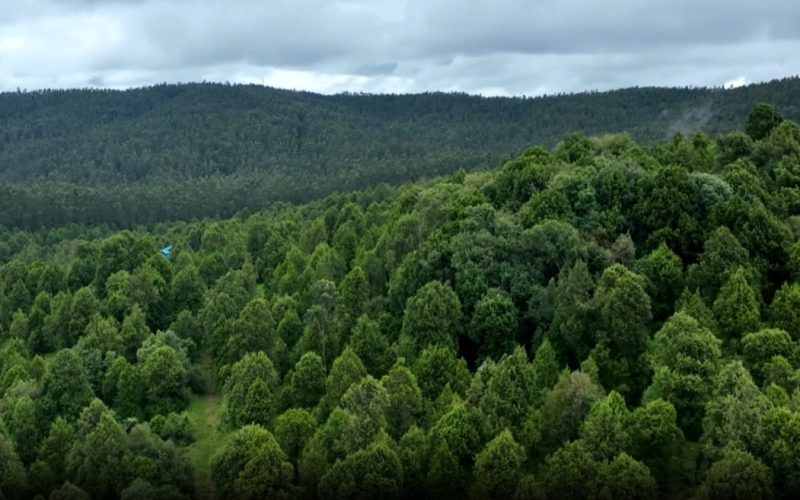
Ethiopia has restored more than 15 million hectares of degraded and deforested land through its nationwide environmental rehabilitation efforts, according to the Ethiopian Forestry Institute.
Aberu Tena, Executive Director for Green Legacy and Artificial Forest Development, told Ethio Negari that the country has planted more than 48 billion forest and agroforestry seedlings over the past seven years as part of the Green Legacy Initiative.
He said 25 billion seedlings were planted during the first phase of the initiative between 2018 and 2022, while the remaining seedlings were planted during the second phase from 2023 to 2025.
According to Aberu, about 84 percent of the planted seedlings are currently surviving, contributing to the restoration of over 15 million hectares of degraded land.
Ethiopia plans to further expand its forest cover to 30 percent by 2030, with a target of reforesting 22 million hectares of deforested land over the next five years, he added.
Major restoration efforts have been carried out in areas such as Atsbi Wemberta and the Desse’a Forest in the Tigray Region; Kodo Kanko Kebele in Humbo Woreda and Metela Embecho Kebele in Sodo Woreda in the South Ethiopia Region; Ezja Woreda in the Gurage Zone of Central Ethiopia; and Lake Haramaya in East Hararge, Oromia Region.
Aberu noted that Lake Haramaya, which had dried up due to prolonged drought, has been restored through environmental protection measures, allowing communities to resume irrigation and fishing activities.
Additional restored areas include Dengego near Dire Dawa, as well as Amba Giorgis and Dejen kebeles along the border of the Amhara and Oromia regions.
Aberu said preparations are underway to plant more than four billion seedlings during the 2025/26 planting season, with increased emphasis on seedling quality, care, and suitability to local soil and water conditions.
The initiative also promotes the widespread planting of edible trees to enhance food security alongside environmental protection. Key fruit species include avocado, mango, papaya, and apple.
The Green Legacy Initiative also aims to prevent the release of 297 million tons of carbon dioxide into the atmosphere by 2030 through large-scale forest restoration.
Beyond tree planting, Ethiopia is implementing watershed development and management practices, including terracing, trenching, flood drainage, and soil and water conservation technologies in mountainous and erosion-prone areas.
These measures help reduce soil erosion, improve groundwater recharge, and restore degraded landscapes.
Other restoration approaches include area closures, afforestation and reforestation (AR), assisted natural regeneration (ANR), farmer-managed natural regeneration (FMNR), and agroforestry systems that allow farmers to grow crops while maintaining fruit trees.
As a result of these combined efforts, Ethiopia’s forest cover has increased from 17.2 percent five years ago to 23.6 percent today.
Officials say springs and streams that had previously dried up are flowing again, while soil erosion in highland areas has significantly declined.
Urban projects such as Entoto Park, Sheger Park, and corridor developments have also contributed to environmental protection while transforming city landscapes.
The restoration of degraded lands has generated economic benefits for local communities. Fruit trees planted under the Green Legacy program are now bearing produce, providing farmers with additional income through domestic sales and exports.
Improved grazing lands have also increased livestock productivity, while thousands of youth and women have found employment through “green jobs” in seedling nurseries and forest management.
Adefris Worku (PhD), Chair of the Green Legacy Technical Committee, said Ethiopia currently has about 54 million hectares of deforested land, warning that more than 11 million hectares could face desertification if restoration efforts are not sustained.
He added that Ethiopia is increasingly generating income from carbon markets, as carbon credits are now traded globally as ecosystem services.
Ethiopia has already received $12 million from a carbon project in the Bale Mountains implemented by Farm Africa, signed a $40 million carbon agreement with the World Bank, and secured a $75 million carbon purchase deal with Norway covering Oromia, Central Ethiopia, Gambella, and southern regions.
According to Adefris, more carbon brokers are showing interest in Ethiopia, creating opportunities for increased revenue through environmental conservation. A national study is currently underway to assess the country’s total income potential from carbon sales.
Ethiopia’s environmental efforts have also attracted international recognition, including $100 million in budget support from the Climate Investment Fund.
In addition, the government approved the Deforested Lands Fund Proclamation last year to ensure sustainable financing for land restoration, expand green jobs, and guarantee long-term care for planted seedlings.
“The Deforested Lands Fund is a strong demonstration of Ethiopia’s national commitment to environmental protection,” Adefris said.
This story was produced under the African Forests Story Grant 2025, supported by the Global Landscapes Forum (GLF) initiative and the Reducing Emissions from Deforestation and Forest Degradation (UN-REDD+) programme.
