
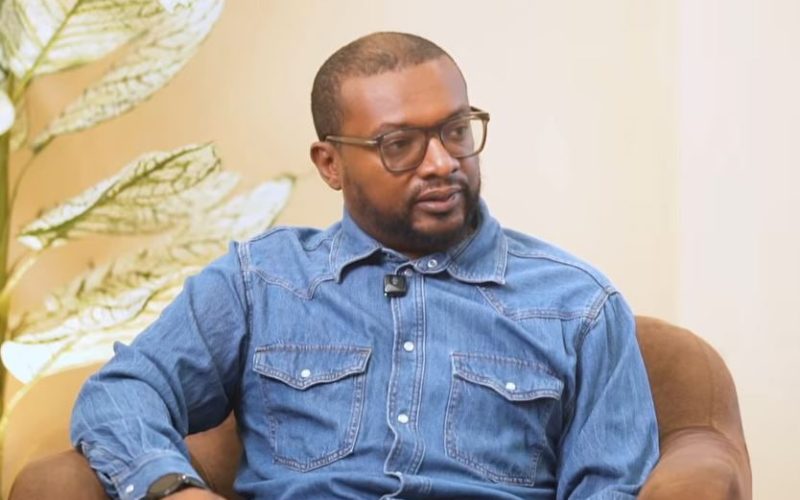
A Conversation with Sophonyas Taddese
The Ethiopian television industry is undergoing a significant transformation, marked by a shift toward original storytelling and more ambitious production models. At the center of this evolution is Sophonyas Taddese, a director, producer, and writer whose work continues to shape the direction of modern Ethiopian TV drama. His latest project, Bemistir (“In Secret”), airing on Abol TV, stands as Ethiopia’s longest original local telenovela and a bold attempt to redefine the scale and discipline of television production in the country.
In this extended conversation with Ethio Negari, he speaks candidly about his journey, the realities of filmmaking, and the future of Ethiopia’s creative industry.
Ethio Negari: Good day and welcome. It’s a pleasure to have you with us. You are widely recognized for your contributions to Ethiopian television drama, and now you are presenting Bemistir, the first and longest original local telenovela in the country. Let me begin with your journey, particularly your time in South Africa. Many filmmakers look beyond Africa for education, yet you chose South Africa, a country with a strong film and television ecosystem. How did that experience come about, and how did it shape you?
Sophonyas Taddese: Thank you. It’s a pleasure. My move to South Africa was not originally planned for film studies. My family, especially my mother, has lived there for nearly 30 years, so I went there at their request. Once I arrived, I felt I should take advantage of the opportunity to study something meaningful.
Since childhood, I’ve always been drawn to literature, and I was also a passionate film viewer. At that time, I didn’t even think filmmaking could be a viable career path, I imagined myself becoming a novelist or journalist. But when I discovered that film was offered as a field of study, I decided to pursue it seriously.
However, one thing I always emphasize is this: school teaches you how to learn film, not necessarily how to make films. The real learning came later, through practical experience when I returned to Ethiopia. That hands-on process is what truly shaped me as a filmmaker.
In South Africa, I observed a very advanced television industry. Their level of development is far ahead, and it may take us decades of consistent effort to reach that stage. What stood out most was their professional discipline and their ability to sustain long-running dramas. Shows like Generations, Isidingo, Rhythm City, and Scandal run for years while maintaining audience engagement.
Another remarkable aspect is their multilingual storytelling. Different characters speak different languages, Zulu, Xhosa, Afrikaans, English and everything is seamlessly integrated with subtitles. That inclusivity and coordination left a lasting impression on me. It made me think that one day, we could achieve something similar in Ethiopia.
Ethio Negari: Is Bemistir the realization of that vision? Would you say this project is your most ambitious attempt to bring those lessons into practice?
Sophonyas Taddese: Yes, absolutely. There is a strong sense of ambition behind Bemistir. There’s a common perception that Ethiopians lack the capacity for long-term storytelling, and I’ve heard that many times. This project is my response to that assumption.
I want to demonstrate that we can create stories that last, not just for a few episodes, but for hundreds, even years if necessary. Even if Bemistir concludes at 200-plus episodes, I would consider that a success. But personally, I believe the story has the potential to go much further.
The narrative itself demands that scale. It begins with a young girl who dreams of becoming a doctor, but due to unforeseen challenges, she is forced off that path. As a writer, I feel responsible for guiding her back to that dream. That journey requires time, it cannot be compressed without losing its emotional depth and authenticity.
We also approach production with a high level of precision. Every episode is structured with careful attention to pacing, act breaks, and cliffhangers. On platforms like DStv, the audience has complete control, if they lose interest, they switch immediately. That reality forces us to maintain discipline at every stage of storytelling.
Ethio Negari: You’ve worked on several notable productions before. How does Bemistir differ from your earlier works?
Sophonyas Taddese: I see Bemistir as the culmination of everything I’ve learned throughout my career. It is, in many ways, the “child” of my previous works.
In earlier projects, even the successful ones, I could identify gaps, whether in script development or production quality. Bemistir gave me the opportunity to correct those mistakes and apply a more refined approach.
It’s not based on a single true story, but it reflects real-life experiences. Many of the characters are inspired by people I’ve encountered. For instance, there is a character who works as a counselor, helping others, while struggling deeply with herself. That idea came from observing real individuals who dedicate themselves to helping others while carrying their own unresolved challenges.
At its core, the story is built around a simple but powerful concept: what we do in secret eventually reveals itself in public. That theme resonates strongly with everyday life.
Ethio Negari: Let’s talk about the realities of production. A daily telenovela is a demanding format. What does that experience look like behind the scenes?
Sophonyas Taddese: It is extremely demanding, physically, mentally, and emotionally. There are times when we sleep in the office just to keep up with the schedule.
One of the biggest challenges is infrastructure. We don’t have a dedicated film studio, so we often shoot in residential areas. There might be a wedding happening nearby or construction noise, but we have to continue filming regardless.
There are also moments that test you as a person. I remember an actor once told me, with tears in his eyes, that his mother had passed away. And in that moment, I found myself asking when he would return to set. That’s the level of pressure we operate under, it forces you into difficult situations that you never imagined.
But we are pioneers in this space. We are building a system that didn’t exist before, and that comes with sacrifices.
Ethio Negari: Looking at the bigger picture, where do you think the Ethiopian film industry stands today? And what needs to change?
Sophonyas Taddese: The industry has enormous, untapped potential. We are a country of more than 130 million people, with a large youth population and growing media platforms. Yet, the number of consistent, high-quality drama productions is still limited.
One of the biggest challenges is that the industry is driven primarily by creatives. We lack professionals in areas like business strategy, marketing, and investment. Film is not just about creativity, it’s also about building a sustainable business model.
We need an ecosystem where different professionals come together, filmmakers, investors, marketers, and administrators. Without that, growth will remain limited.
At the same time, we as creatives must also take responsibility. Before we blame investors or external factors, we need to ask whether we are delivering quality work consistently and making the most of the opportunities we have.
Ethio Negari: Finally, what should audiences expect from Bemistir going forward?
Sophonyas Taddese: We will continue developing the story and expanding its scope. Our immediate goal is to take Bemistir to a larger stage and ensure it reaches its full potential.
I also want to encourage audiences to support local production. The success of this industry depends not only on creators but also on viewers, investors, and stakeholders. If we all play our part, Ethiopian cinema and television can grow into something truly remarkable.
Ethio Negari: Thank you for your time and for sharing these insights. Bemistir is clearly more than just a television series, it represents a new direction for Ethiopian storytelling.
Sophonyas Taddese: Thank you. I truly appreciate the conversation.
