
By Sintayehu Girma Aytaged
Ethiopia’s Coffee Legacy Must Go Beyond Export Numbers
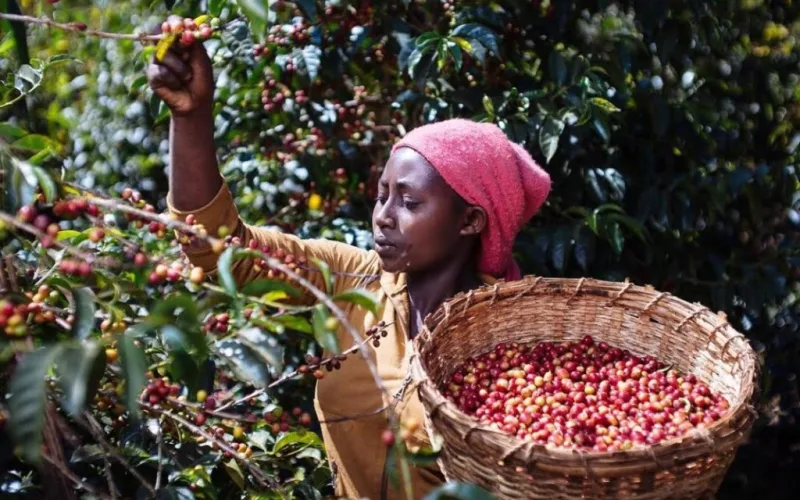
For Ethiopians, coffee is more than a beverage. It is identity, culture, diplomacy, livelihood, and history woven together across generations. From the traditional coffee ceremony performed daily in millions of homes to the country’s growing role in the global coffee market, coffee remains one of Ethiopia’s most powerful national symbols and economic pillars.
Today, Ethiopia is celebrating major milestones in the coffee sector, including surpassing two billion dollars in coffee export earnings for the first time in history. While this achievement deserves recognition, it should also encourage deeper reflection on the long and complex institutional journey that shaped the modern Ethiopian coffee industry.
The success of Ethiopia’s coffee sector did not emerge overnight. It is the result of decades of policy reforms, institutional restructuring, research, farmer engagement, and market transformation carried out under different governments and administrations. Understanding this history is important because it demonstrates how strategic institutional support can transform a traditional agricultural product into a globally competitive commodity.
Ethiopia’s first formal attempt to systematically manage the coffee sector began in 1957 with the establishment of a Coffee Department under the Ministry of Agriculture. A year later, the government created the National Coffee Board of Ethiopia through Decree No. 25/1958. The institution was tasked with improving coffee quality, introducing grading systems, reducing post-harvest losses, and supporting producers and traders.
Over the following decades, the sector underwent multiple structural changes. The Coffee Processing and Development Corporation was established in 1976 with expanded authority over coffee purchasing, processing, and export activities. Shortly afterward, Ethiopia created the Coffee and Tea Development and Marketing Authority in 1978 to strengthen oversight of both coffee and tea sectors and to introduce modern agricultural practices.
By 1979, the sector had gained enough strategic importance to warrant the creation of a full Ministry of Coffee and Tea Development. This reflected the central role coffee played in Ethiopia’s economy and foreign exchange generation. Later institutional reforms eventually led to the establishment of the current Ethiopian Coffee and Tea Authority under Proclamation No. 927/2016.
The sector’s recent achievements are significant. Improvements in quality control, market linkage systems, vertical integration, and digitalized trading platforms have helped Ethiopian coffee become more competitive internationally. These reforms have also created opportunities for farmers and exporters to benefit from improved pricing systems and stronger access to international markets.
However, Ethiopia’s coffee story should not focus solely on export earnings and production statistics. The country must also prioritize sustainability, biodiversity protection, value addition, and fair economic benefits for smallholder farmers who remain the backbone of the industry.
Climate change, deforestation, land degradation, and volatile global market prices continue to threaten the long-term sustainability of coffee production. Ethiopia, which is widely recognized as the birthplace of Arabica coffee, carries not only economic responsibility but also ecological and cultural responsibility to preserve its unique coffee heritage for future generations.
There is also a need to expand Ethiopia’s presence beyond exporting raw coffee beans. While the country produces some of the world’s finest coffee varieties, much of the global profit from coffee continues to be captured by international processors, roasters, and brands outside Ethiopia. Building stronger domestic value chains through processing, branding, packaging, and specialty coffee markets could significantly increase national economic benefits and create more jobs for young Ethiopians.
At the same time, Ethiopia’s coffee diplomacy should be strengthened further. Coffee can serve as a soft-power instrument that promotes tourism, culture, heritage, and international engagement. Around the world, Ethiopian coffee already represents authenticity, origin, and tradition. The challenge now is transforming that reputation into broader economic and strategic opportunities.
The institutional history of Ethiopia’s coffee sector demonstrates that progress is possible when long-term vision, policy continuity, and farmer-centered development approaches are prioritized. As Ethiopia continues modernizing the sector, future reforms should focus not only on increasing exports but also on protecting biodiversity, empowering farming communities, promoting innovation, and preserving the cultural identity connected to Ethiopian coffee.
Coffee built Ethiopia’s global image for generations. The responsibility today is ensuring that the sector’s future becomes just as sustainable, inclusive, and transformative as its proud history.
Editor’s note: – views in the article reflect the views of the writer only!!
