
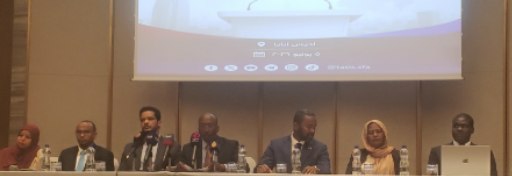
Sudanese Political Groups Agree in Addis Ababa on Roadmap for Peace Process
Sudanese political parties and civil society organizations have agreed on a common vision to launch a political process aimed at ending Sudan’s devastating civil war and establishing a framework for lasting peace, following two days of consultations in Ethiopia’s capital, Addis Ababa.
The June 3–4 meeting brought together a range of civilian and political actors seeking to revive dialogue amid a conflict that has plunged Sudan into one of the world’s worst humanitarian crises since fighting erupted in April 2023 between the Sudanese Armed Forces (SAF) and the Rapid Support Forces (RSF).
In a joint statement issued at the end of the consultations, participants announced a consensus on creating a Sudanese-led peace initiative that would begin with the formation of a preparatory committee tasked with laying the groundwork for an inclusive political dialogue.
The proposed process aims to end the conflict, address the root causes of Sudan’s recurring crises, ensure justice and accountability, and preserve the country’s unity, sovereignty, and stability.
“The agreement reflects a growing political will among Sudanese civilian and political forces to work together to stop the war and alleviate the suffering of citizens,” the statement said.
The participants emphasized that ending the war remains an urgent national priority and called for a comprehensive political project capable of addressing the humanitarian, economic, and social consequences of the conflict.
They also stressed the importance of expanding civic space, combating hate speech and racism, and promoting dialogue and peaceful coexistence.
The groups said the envisioned political process should lead to broad societal reconciliation and a new social contract founded on social justice, equality, and equal citizenship.
It should also tackle longstanding issues of political and economic marginalization, particularly in rural and underdeveloped regions.
The statement further underscored the need to protect human rights, prosecute those responsible for war crimes, establish transitional justice mechanisms, and address the social and psychological trauma caused by the conflict.
The signatories called on Sudanese citizens, as well as regional and international partners, to intensify efforts to end the war and support conditions for an inclusive political settlement that can pave the way for peace, freedom, justice, and sustainable development.
The agreement was signed by the Civil Democratic Alliance of the Revolution Forces (Somoud), the Democratic Bloc–Forces of Freedom and Change, the Original Arab Socialist Ba’ath Party, the Popular Congress Party, the Umma Party, and several civil society, women’s, and youth organizations.
The Addis Ababa consultations come as diplomatic efforts to end the Sudan conflict have largely stalled despite repeated mediation attempts by regional and international actors, including the African Union, the Intergovernmental Authority on Development (IGAD), and the United States and Saudi Arabia-led Jeddah talks.
The war has killed tens of thousands of people, displaced more than 14 million others, and devastated critical infrastructure across large parts of the country.
The United Nations has repeatedly warned that Sudan is facing an unprecedented humanitarian catastrophe, with millions in need of emergency assistance and famine conditions reported in some areas.
While previous peace initiatives have struggled to secure a lasting ceasefire, participants in the Addis Ababa meeting expressed hope that a Sudanese-owned political process could help bridge divisions among civilian forces and create momentum toward a negotiated end to the conflict.
