
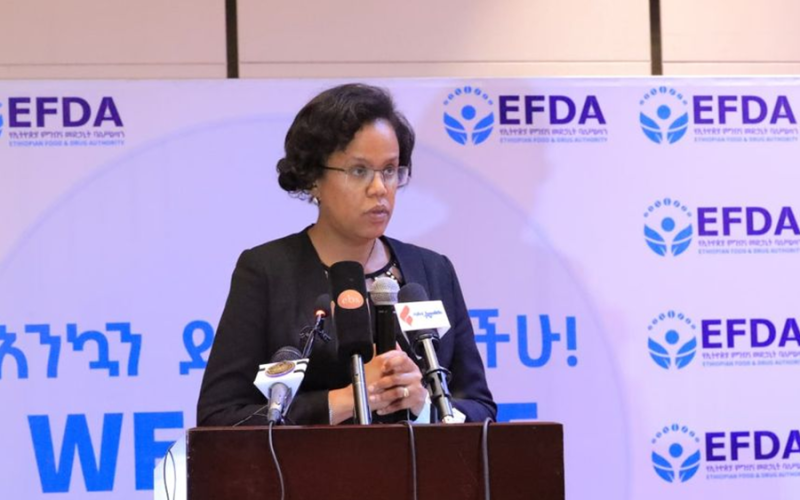
Ethiopia is finalizing the design work for a vaccine manufacturing plant, a major step toward boosting domestic vaccine production and strengthening the country’s pharmaceutical sector, the Ethiopian Food and Drug Authority (EFDA) has announced.
EFDA Director General Heran Gerba said the facility will be developed under Ethiopian Investment Holdings (EIH) with the objective of increasing vaccine availability, improving health security, and reducing the country’s reliance on imported vaccines.
According to Heran, the project aligns with the African Union’s target of enabling Africa to produce 60 percent of its vaccine requirements by 2040.
The authority also said it has introduced new digital systems to strengthen the safety and quality of vaccines and other medical products. Among the reforms is a digital platform for closely monitoring clinical research involving human participants.
EFDA is also streamlining licensing procedures to facilitate research and innovation.
Heran said that once the national laboratory currently under construction in the Qaliti area of Addis Ababa is completed, Ethiopia will gain the capacity to conduct vaccine testing domestically, further supporting the country’s vaccine manufacturing ambitions.
She added that local vaccine production is expected not only to improve Ethiopia’s immunization capacity but also to enhance the international recognition and competitiveness of its pharmaceutical products.
Earlier this week, Prime Minister Abiy Ahmed told parliament that Ethiopia’s pharmaceutical manufacturing capacity has increased from 4 percent to 45 percent during his administration.
He also said the country has risen to third place in Africa in meeting international pharmaceutical regulatory standards, improving the prospects for locally manufactured medicines to access foreign markets.
The Prime Minister noted that the government’s strengthened regulatory system has helped expand domestic pharmaceutical production while improving export competitiveness.
Abiy also revealed that the government allocated more than 60 billion birr for medical equipment during the current 2018 Ethiopian fiscal year.
While acknowledging that most medical equipment is still imported, he said Ethiopia plans to significantly expand local production by establishing modern medical manufacturing facilities over the next five years.
