
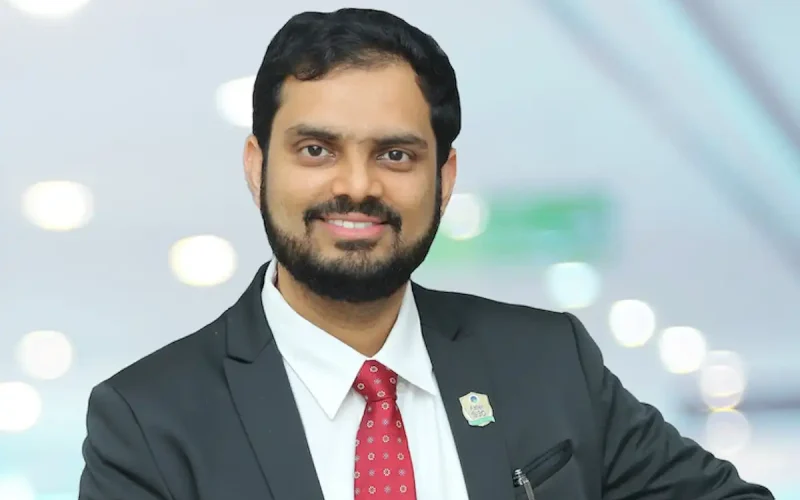
Ethiopia could benefit from expanded access to advanced medical treatment, specialist training and rehabilitation technology as Aster DM Healthcare explores opportunities to strengthen its engagement with the country, the company’s CEO, Dr Sherbaz Bichu, said.
Speaking to journalists during a visit to Ethiopia, Bichu said Aster DM Healthcare initially plans to facilitate referrals of Ethiopian patients to its hospitals in the Gulf Cooperation Council (GCC) countries, particularly Oman, where he said treatment costs are relatively affordable. He said the company also plans to establish a structured referral system through which Ethiopian patients can have their medical reports assessed before travelling abroad. “We wanted to make it organized,” Bichu said, explaining that the company wants to ensure patients are directed to appropriate facilities and receive suitable treatment.
According to Bichu, Aster operates hospitals across several GCC countries, including Oman, the United Arab Emirates, Qatar, Bahrain and Saudi Arabia, as well as a significant presence in India. He said the company sees opportunities to support Ethiopia’s healthcare sector by transferring expertise and technology while helping train local medical professionals.
“Initially, our phase one will be to help people to refer patients to our facility,” he said. “And then refer these patients back and also train Ethiopian doctors who are referring.” Bichu identified in-vitro fertilization (IVF), complex oncology procedures and neurosurgery among the areas where the company could provide specialized treatment to Ethiopian patients.
He also highlighted robotic rehabilitation technology, which he said is particularly designed to support patients recovering from strokes, spinal injuries and other conditions that can leave people with limited mobility. He said the technology uses signals from the brain to stimulate muscles and relies on repeated exercises to support neuroplasticity, the brain’s ability to reorganize neural connections.
Aster currently has robotic rehabilitation facilities in Oman and is developing another facility in Dubai, according to Bichu. Bichu said training Ethiopian doctors and other healthcare professionals would be an important part of the company’s engagement with the country. He said local professionals would need to be trained to operate advanced technologies and provide follow-up care for patients returning to Ethiopia after treatment abroad.
“We cannot bring in technology all of a sudden; we will not have people to operate,” he said. “We want locals to operate.” He said Ethiopian doctors could initially be trained through patient referrals and subsequently participate in procedures under the mentorship of Aster specialists.
In the longer term, Bichu said the company could consider operating a hospital in Ethiopia under an operations-and-management model, bringing in technology, personnel and expertise.Bichu said Aster DM Healthcare is not currently planning a direct investment in Ethiopia.
Instead, he said the company is initially interested in opportunities to provide operations and management services and could consider a broader presence once its activities in the country become established.
He also said Aster already treats Ethiopian patients, although he described the existing referral process as largely unorganized.Bichu said Aster’s engagement with Ethiopia also includes charitable activities through its Aster Volunteers initiative.He said the organization operates a medical van equipped with medical equipment that provides free screening and treatment in communities across Ethiopia.
He added that the company’s broader objective is to establish clearer channels for Ethiopian patients seeking specialized treatment abroad while building local capacity through training and knowledge transfer.
