
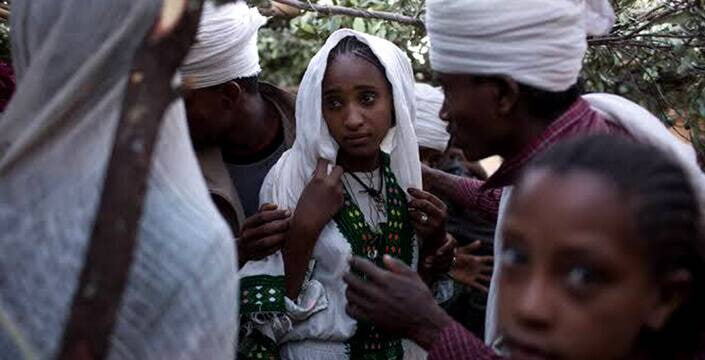
The proportion of young women in Ethiopia who were married before the age of 18 declined from 40 percent in 2016 to 32 percent in 2025, according to UNICEF, which has called for sustained investment to accelerate efforts to end child marriage.
In a statement marking the International Day of the Girl, UNICEF welcomed the progress, attributing it to government leadership, community engagement and continued support for girls.
“Ethiopia’s progress shows what strong leadership, community support and continued action can achieve. Every girl deserves to stay in school, reach her full potential and choose her own future,” said Dr Aboubacar Kampo, UNICEF Representative in Ethiopia.
He added that UNICEF would continue supporting Ethiopia to build on the gains and reach more girls.
The government is preparing its second National Costed Roadmap to End Child Marriage and Female Genital Mutilation for 2026–2031. The roadmap is expected to establish priority actions, define institutional responsibilities and introduce mechanisms to monitor progress.
The government-led National Alliance to End Child Marriage and Female Genital Mutilation brings together public institutions, community organizations, development partners, religious leaders and women’s groups to coordinate efforts against the practices.
Through the UNFPA–UNICEF Global Programme to End Child Marriage, UNICEF supports initiatives to keep girls in school, strengthen their skills and decision-making capacity, improve access to protection and essential services, and engage communities in addressing social norms that contribute to child marriage.
The organization is also working with the government and development partners to mobilize funding for the new roadmap and expand effective interventions. Support from the Children’s Investment Fund Foundation, the Gates Foundation and other partners is contributing to these efforts.
Despite the decline in child marriage, UNICEF said sustained investment in girls’ education, health, protection and participation will be essential to maintaining progress.
The organization called for continued action by families, communities, government institutions, civil society and development partners to ensure that every girl can remain in school, make decisions about her future and live free from child marriage.
