
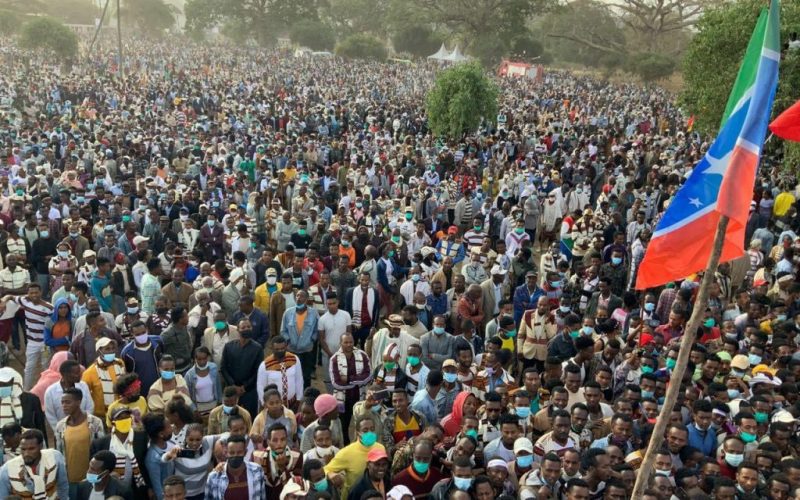
Sidama Region Residents Highlight Challenges in Corruption and Governance
Residents of the Sidama Region have expressed dissatisfaction with the progress made since the area became Ethiopia’s 11th regional state in 2020.
Many claim they have not seen the tangible changes they expected, despite significant sacrifices to achieve regional status.
While the Sidama Regional Government asserts that it creates over 60,000 job opportunities annually, critics argue that the region’s development has not matched the aspirations of its people.
Political parties have also noted a shift in the Sidama people’s priorities from demanding a referendum to be an autonomous region to seeking meaningful development and economic growth.
The Journey to Regional Status
The Sidama Zone, formerly part of the Southern Nations, Nationalities, and Peoples’ Region (SNNPR), achieved regional statehood following a historic referendum in 2019.
The referendum was the culmination of decades of struggle dating back to the 1970s, as Sidama activists and communities fought for self-governance.
Four years later, Ethio Negari spoke to residents, political leaders, and government officials to assess the region’s progress.
Resident Concerns: Unmet Expectations
A resident of Hawassa City, who wished to remain anonymous for safety reasons, shared their disappointment: “Many young people, including my family, made sacrifices for Sidama to become a regional state. However, only a few are benefiting from it. Job opportunities remain scarce, and I haven’t been able to find work since graduating from university four years ago. I had hoped to start a family by now, but without stable employment, that dream remains out of reach.”
Another resident from Yirgalem city expressed similar frustrations: “The number of jobs being created is not proportional to the number of job seekers. The high hopes we had during the formation of the region have not materialized.”
In Hawassa, residents have also noted a decline in economic activity. A shopkeeper from Village 4 stated: “The cost of living is unbearable. During the SNNPR era, there was more business activity and a larger customer base. Now, with fewer people and less market activity, it’s difficult to provide for my children.”
Concerns over governance and corruption also surfaced. A resident near Hawassa City said:
“Government leaders talk about developing corridors and other projects, but when we seek services, we encounter corruption. Offices like the Revenue, Trade, and Transport Bureau are riddled with inefficiencies, forcing many traders to close their businesses.”
Political Perspectives: Mixed Progress
Mr. Lemma Oyate, chairman of the Sidama Unity Party, highlighted the historical significance of Sidama’s regional status: “The Sidama people fought for this for decades. Achieving regional statehood was not a gift but the result of their sacrifices. While some argue that Sidama has lost certain benefits, this is not true.”
However, Mr. Lemma acknowledged ongoing challenges, such as corruption, unequal wealth distribution, and unmet development expectations.
“We expected corruption to be eliminated and opportunities to be created for the youth. While some progress has been made, much remains undone. The demands and expectations of the people far outweigh what has been delivered.”
Mr. Belete Tsigimo, chairman of the Ethiopian Social Democratic Party, also expressed concerns about the region’s economic capabilities: “Some believed Sidama was rich in resources, but the challenges residents face have surpassed their expectations. Questions about jobs, infrastructure, and basic services dominate the public discourse.”
Government Response: Promises of Growth
Mr. Wosenyeleh Semeon, head of the Sidama Regional State Government Communication Affairs Bureau, emphasized that the government is working to address public concerns.
“After the referendum, we held discussions to identify the public’s primary demands, which centered on development. In response, we prepared a strategic plan focused on creating jobs, boosting exports, and improving governance.”
The regional government claims it creates over 60,000 permanent jobs annually and has launched projects in tourism, agriculture, and mining to further stimulate economic activity.
Officials also note that Sidama has become a region where all Ethiopians can live peacefully.
Mr. Wosenyeleh added: “Sidama is exporting products beyond the region’s population, contributing to national markets. We are committed to addressing governance issues and continuing to implement development projects.”
Despite the challenges, the Sidama Regional Government and political leaders remain optimistic about the region’s future.
They call for continued dialogue and collaboration to meet the people’s demands and unlock Sidama’s potential. For many residents, however, the question remains: will the sacrifices made for regional status translate into meaningful change?
