
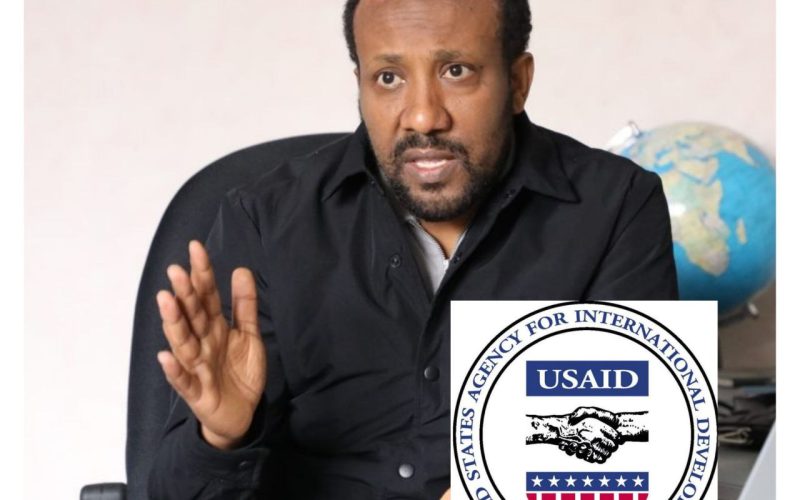
Ethiopian Civil Society Organizations Council Calls for Government Diplomatic Intervention on USAID Suspension
The Ethiopian Civil Society Organizations Council has urged the government to engage in diplomatic efforts to address the recent suspension of USAID funding, warning that the decision could severely impact civil society organizations operating in the country.
It is worth noting that former U.S. President Donald Trump, who returned to power a month ago, has imposed a ban on the United States Agency for International Development (USAID), restricting its operations solely to emergency humanitarian assistance.
This policy shift has significantly affected Ethiopia, one of the major beneficiaries of USAID funding.
The Ethiopian Civil Society Organizations Council highlighted that a substantial number of civil society organizations in Ethiopia have been collaborating with USAID for years.
The sudden decision to halt funding threatens to disrupt ongoing and planned projects in crucial sectors such as peacebuilding, healthcare, and social services.
Ahmed Hussein, President of the Ethiopian Civil Society Organizations Council which represents over 5,000 civil society organizations emphasized that the abrupt 90-day suspension of USAID funding has created widespread uncertainty and operational challenges.
According to Ahmed, numerous initiatives, including reintegration programs for displaced communities, healthcare services, and conflict resolution efforts, have been severely affected. Many projects that were in progress or scheduled to launch have now been put on hold.
Additionally, he revealed that thousands of employees working for various civil society organizations have lost their jobs due to the funding freeze.
“This decision has not only halted essential programs but has also led to significant layoffs, further exacerbating the country’s economic and social challenges,” Ahmed stated.
Ahmed also noted that the Ethiopian government has not yet established alternative budgetary measures to mitigate the impact of the USAID funding cut.
“We recognize that this crisis also presents an opportunity for Ethiopia to rethink its financial dependency on foreign aid. However, the immediate consequences are severe, and urgent action is needed,” he added.
When asked about the possibility of the 90-day suspension being lifted, Ahmed expressed hope that adjustments could be made before the period ends.
“Even the U.S. courts have opposed the decision, and while we do not expect a complete reinstatement of funding, we anticipate some modifications. However, we must prepare for potential reductions,” he explained.
Ahmed called on the Ethiopian government to take diplomatic action to address the issue, emphasizing that the suspension could cause significant harm, particularly in a country dealing with ongoing conflicts.
“At the very least, diplomatic engagement is necessary to ensure that some level of support continues,” he stressed.
Attempts to obtain a response from the Ministry of Foreign Affairs on the matter were unsuccessful.
Meanwhile, the Ethiopian Ministry of Health confirmed that it received official notification from the U.S. government stating that all activities and payments processed through the Centers for Disease Control and Prevention (CDC) and USAID would be suspended effective January 24, 2025.
Ethiopia has been one of the largest recipients of U.S. foreign aid. According to the U.S. Foreign Assistance Organization’s 2023 report, Ethiopia receives over $1.6 billion in annual assistance from the United States.
In 2020, under the previous Trump administration, Washington had also reduced Ethiopia’s health budget as part of broader policy shifts.
In response to the current situation, Ethiopia’s Civil Society Organizations Authority has issued a directive warning organizations receiving USAID funding not to sell, transfer, or dispose of their assets.
The authority emphasized that any organization ceasing operations due to the funding cut must hand over its assets to the government, as stipulated by Ethiopian Civil Society Proclamation regulations.
Furthermore, the authority warned that legal action would be taken against any civil society organizations found to be violating these directives.
With the suspension in place, civil society organizations in Ethiopia face an uncertain future, prompting urgent calls for diplomatic intervention and alternative funding solutions to sustain critical humanitarian and development programs.
