
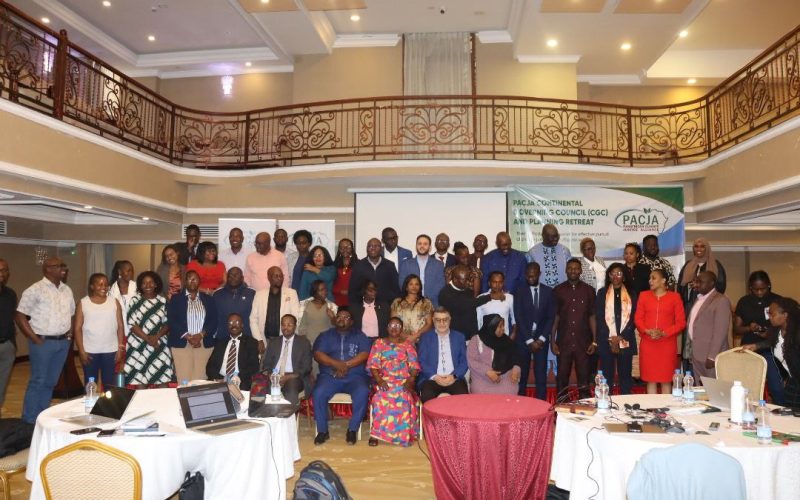
Pan-African Climate Justice Alliance Hosts Critical Review Meeting for COP29 and the Road to Belem
The Pan-African Climate Justice Alliance (PACJA) convened an important Non-State Actors Review Meeting, focusing on COP29 and the forthcoming road to Belem.
The event, which was co-hosted by PACJA alongside the Designated National Platform (DNP) of PACJA, the Civil Society Coalition for Climate Change (CCCE), marked a key moment for African civil society to engage in discussions about strengthening climate advocacy in global negotiations.
Dr. Mithika Mwenda, the Executive Director of PACJA, delivered the opening remarks, emphasizing Africa’s unique position in the global climate landscape.
He reminded the attendees that while Africa is the least responsible for global carbon emissions, it is ironically the most vulnerable to the impacts of climate change.
Dr. Mwenda sharply criticized the current U.S. administration under President Donald Trump, particularly for the decision to withdraw from the Paris Climate Agreement.
He expressed concern over the U.S. government’s insufficient attention to the climate crisis, which is already affecting millions of Americans.
Dr. Mwenda called for more robust action from COP30, which will be held in Brazil in November 2025, to address these pressing challenges.
The meeting was attended by key climate actors from across the African continent and focused on developing strategies to amplify Africa’s collective voice in international climate negotiations.
The discussions were aimed at ensuring that Africa’s climate priorities are heard and addressed at COP30 and beyond. The key outcomes from the meeting included:
Strengthening Africa’s collective climate voice to advocate for just and equitable policies at COP30.
Holding global financial institutions accountable for their climate finance commitments.
Ensuring that grassroots and indigenous communities are included and not sidelined in climate discussions.
Linking the outcomes of COP29 to future climate processes, such as Belem 2025 and the 2nd Africa Climate Summit.
By fostering these critical conversations, PACJA reaffirmed its commitment to an African-led climate agenda—one that is centered on equity, resilience, and justice for vulnerable communities.
The aim is to influence global climate negotiations with a unified and powerful African voice, ensuring that the continent’s climate needs are addressed and that global agreements reflect Africa’s unique challenges.
Following the review meeting, PACJA also conducted a Climate Governance Coalition (CGC) and Planning Retreat, where CCCE, as a partner organization, played a key role in facilitating discussions.
This event brought together climate justice actors from across Africa to evaluate the existing governance structures, track the progress made, and refine strategies for 2025 and beyond.
The retreat focused on the following critical issues:
Reinforcing governance frameworks to ensure that climate action remains inclusive, transparent, and responsive to the needs of all stakeholders.
Strengthening accountability mechanisms to ensure that governments and financial institutions uphold their climate commitments.
Enhancing regional coordination to create a unified approach to addressing Africa’s climate challenges and to ensure a more effective response to the continent’s climate crisis.
As the continent continues to grapple with the devastating impacts of climate change, the African climate justice movement remains steadfast in its commitment to partnership, governance, and accountability.
The meetings emphasized that only through collective action and global solidarity can Africa’s climate future be secured, ensuring that vulnerable communities are not left behind in the fight for a sustainable and just world.
The discussions during this pivotal gathering set the stage for ongoing collaboration and advocacy as Africa looks towards the critical climate summits ahead, including COP30 and Belem 2025.
