
Ethiopia Establishes a Fund for Disaster Victims Across 15 Sectors, Including Employees
Ethiopia is set to create a comprehensive fund to provide financial support to disaster victims, affecting various sectors across the nation, including employees.
The newly proposed fund, named the “Disaster Risk Response Fund,” will facilitate the collection of resources from both public and private institutions.
The government has submitted a bill to Parliament that mandates government and private institutions to contribute revenue generated from the services they provide to this fund.
The proposed law, titled the “Ethiopian Disaster Risk Management Proclamation,” is designed to strengthen the country’s ability to respond to natural disasters and emergencies.
According to the draft bill, any organization or institution failing to collect the required revenue or transfer it to the fund’s designated bank account will incur a penalty.
This fine will be 10% of the interest accrued on the bank account balance, in addition to the original amount owed.
The bill was submitted to Parliament on March 18, 2025, and consists of multiple sections, one of which focuses specifically on the collection of funds to support disaster risk management.
The fund will primarily be used for disaster risk reduction, response, and recovery activities during all stages of a disaster—pre-disaster, disaster, and post-disaster.
It is designed to address the immediate needs arising from emergencies, enabling rapid response when a disaster occurs.
The fund will finance the procurement and production of daily humanitarian assistance, including food and non-food supplies, and will support the expansion of storage facilities and related infrastructure.
The new institution managing the fund will be held accountable to the Ethiopian Disaster Risk Management Commission.
The draft bill outlines various sources from which the funds will be collected, ensuring a steady and diverse flow of resources.
Among these sources are contributions from the federal government, as well as from the city administrations of Addis Ababa and Dire Dawa, which will allocate a portion of their annual budgets to the fund.
Additional revenue will come from aid organizations, charities, and individual donors. Domestic fundraising efforts will also play a role in replenishing the fund.
One significant source of income outlined in the bill is the net salary paid to employees of both government and private organizations. This will be one of 15 sources of income that will be utilized to generate funds for disaster response.
The draft proclamation specifies that the revenue collected will not negatively impact the competitiveness of institutions.
To this end, fees will be levied on services provided by both government and private entities. For instance, telecommunications service providers will be required to contribute a portion of the money collected from voice and data charges to the Disaster Risk Response Fund. Similarly, fuel sales companies must contribute a set amount from their earnings.
Other contributors include agencies that generate revenue through services such as the sale of airline tickets, passport and visa fees, business license issuance and renewal fees, and federal document verification and registration services. Even digital banking services will be expected to contribute through fees collected from users.
The bill also includes revenue from the financial sector, stating that the money collected from loans provided by banks and microfinance institutions will be directed to the fund.
Additionally, premiums paid to insurance companies, as well as dividends from shares, will also be allocated to disaster risk management.
The Federal Customs Commission will also play a role in generating funds by selling goods seized from contraband operations.
Revenue from sales of chemical products, tobacco, alcohol, and maritime transport services will further contribute to the fund’s growth.
The draft bill indicates that additional sources of income for the fund may be defined through regulations issued by the Council of Ministers.
These regulations will determine the precise contribution amount for each sector and ensure timely collection and deposit into the fund’s account.
The proclamation warns that any delay in depositing the funds, failure to collect the required revenue, or failure to report on the progress of fund collection is strictly prohibited.
Organizations or institutions that fail to comply with the regulations will face severe consequences, including paying both the principal amount and any accumulated bank interest, along with a 10% fine.
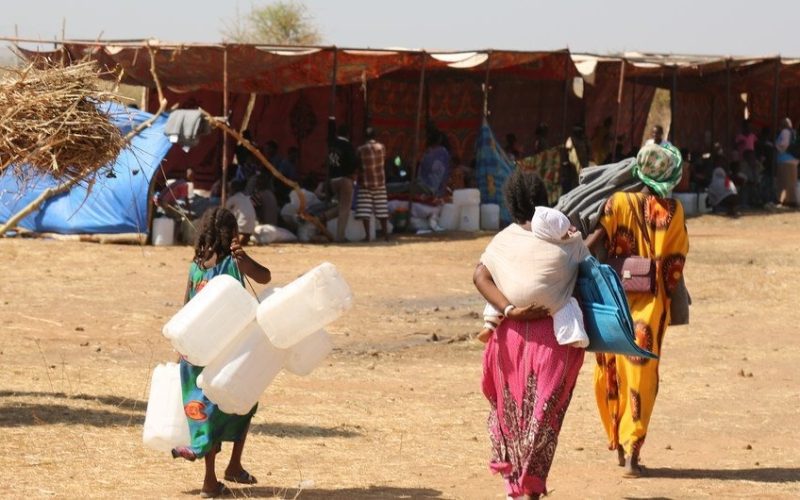
The need for this fund is pressing. According to UNICEF’s Humanitarian Action report, over 21 million people in Ethiopia are in need of humanitarian assistance.
This includes 16.7 million children and women, nearly 4.5 million displaced individuals, and over 1 million refugees and asylum seekers. The establishment of the Disaster Risk Response Fund is seen as a critical step in addressing these urgent needs and ensuring that resources are available to respond swiftly to crises.
Through this new initiative, Ethiopia aims to bolster its disaster response capabilities and ensure a more efficient, organized, and sustainable approach to managing disaster risks and recovery efforts in the face of growing humanitarian challenges.

I am interested online job
How to start this platform