
Moyale Border Opens to Trade Under AfCFTA Agreement
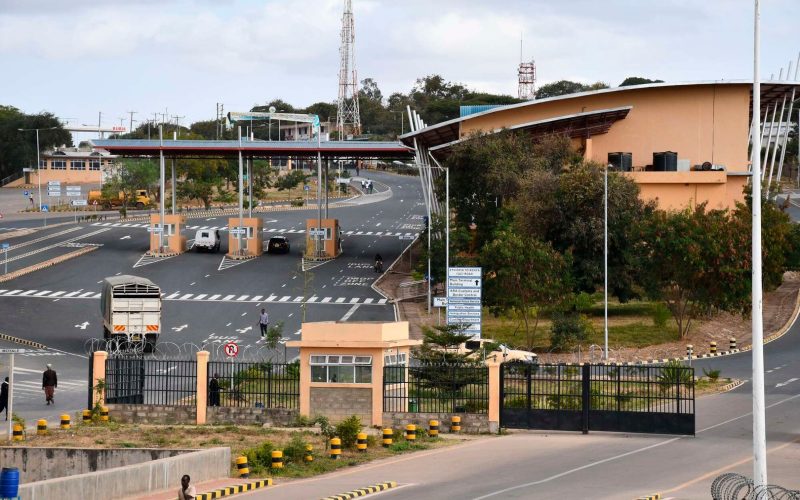
Ethiopia and Kenya have signed a Memorandum of Understanding (MoU) to initiate formal cross-border trade at the Moyale border, setting a trade ceiling of $1,000 under the framework of the African Continental Free Trade Area (AfCFTA).
This agreement marks the culmination of two years of bilateral negotiations aimed at fostering economic cooperation and improving trade facilitation between the neighboring countries.
According to the agreement, traders will be allowed to conduct transactions worth up to $1,000 up to four times per month, based on a mutually agreed list of eligible goods.
The designated border trade zone extends 50 kilometers into Ethiopia and 100 kilometers into Kenya from the Moyale border town.
The MoU, signed in Mombasa, is expected to ease trade procedures and stimulate economic growth, especially in communities along the shared border.
The negotiations that led to the agreement explored critical aspects such as the trade value ceiling, frequency of cross-border movement, and the definition of border trade zones.
This initiative reflects the broader effort by both countries to enhance regional integration and economic collaboration under AfCFTA.
In a separate but related development, Kenya recently announced plans to construct a $14 billion high-speed electric railway line that will link the port of Lamu on the Indian Ocean to Ethiopia and South Sudan.
According to reports by Bloomberg, the proposed 3,000-kilometer rail line will run from Lamu through the central Kenyan city of Isiolo, connect with Nairobi and Addis Ababa, and ultimately reach Juba, the capital of South Sudan.
The project is expected to be operational by 2025.
This major infrastructure development aims to reduce Ethiopia’s dependence on traditional ports such as Djibouti, Assab, and Mtwara by providing alternative trade routes.
The railway is anticipated to offer numerous economic, social, and political benefits for all three participating countries.
Additionally, the project will give South Sudan access to a second seaport, enhancing its trade capacity and regional connectivity.
Kenya, Ethiopia, and South Sudan initially agreed to develop and utilize the Lamu Port through a trilateral accord signed in 2001 by then-Kenyan President Mwai Kibaki, Ethiopian Prime Minister Meles Zenawi, and South Sudanese President Salva Kiir Mayardit.
While Kenya has consistently pushed forward with plans to develop the port and accompanying infrastructure, Ethiopia has historically shown limited engagement.
However, under Prime Minister Abiy Ahmed, Ethiopia is now actively seeking alternative ports to support its growing import-export trade, and has identified Lamu Port as one of its key strategic options.
Following Ethiopia’s renewed interest, Kenya has reiterated its commitment to developing a modern railway network linking Lamu Port to Moyale and Addis Ababa.
This ambitious initiative is poised to transform the Horn of Africa’s trade landscape and strengthen regional integration through improved logistics and infrastructure.
