
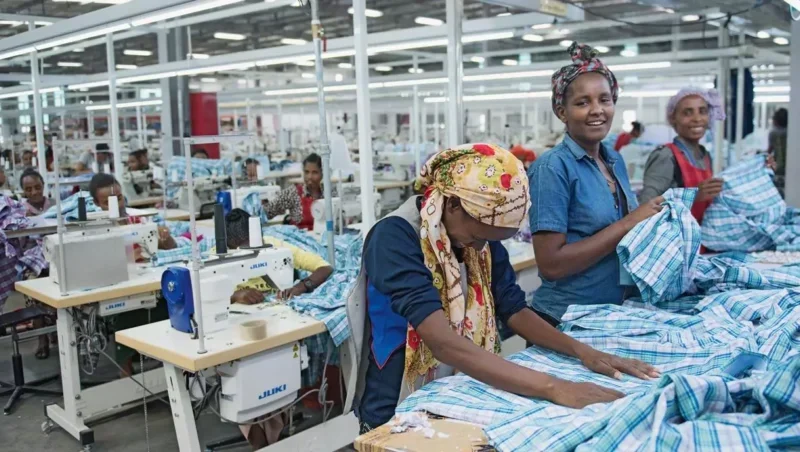
Ethiopia Plans to Establish Industries in Every District
Ethiopia has launched an ambitious initiative to establish industries in all districts across the country.
According to recent reports, construction efforts have already begun to realize this goal.
The initiative aims to reduce the need for rural citizens to travel to urban centers in search of essential goods by making products more accessible locally.
The Ethiopian Enterprise Development Agency (EEDA) announced that each district is being planned to accommodate up to three industries, depending on the availability and type of local raw materials.
The agency revealed that 206 industries have been established in rural areas over the past nine months, and efforts are underway to continue expanding this number.
In addition to improving access to goods, the strategy is also designed to generate employment opportunities and curb the rising trend of rural-to-urban migration.
Deputy Director General of the EEDA, Abdulfatah Yousuf, stated that small and medium-sized enterprises (SMEs) have created jobs for approximately 151,000 people across the country within the last nine months.However, the industrial expansion faces several challenges.
Abdulfatah highlighted key issues such as limited access to electricity, financial constraints, the absence of regulatory enforcement, low-quality production standards, and inadequate infrastructure.
He assured that the agency is collaborating with relevant stakeholders to address these obstacles and enhance industrial productivity.
Despite these challenges, the agency has recorded notable achievements.
A total of 518 previously non-operational industries have been revived, and 2,752 new SMEs have been launched.
Furthermore, the development of domestic industries has contributed significantly to the national economy by reducing reliance on imported goods, saving an estimated $1.6 billion in foreign currency.
In addition, Ethiopia earned $57 million from the export of domestically manufactured products.
The report also indicated that producers received 6 billion birr in loans during this nine-month period, with an impressive repayment rate of 95 percent.
