
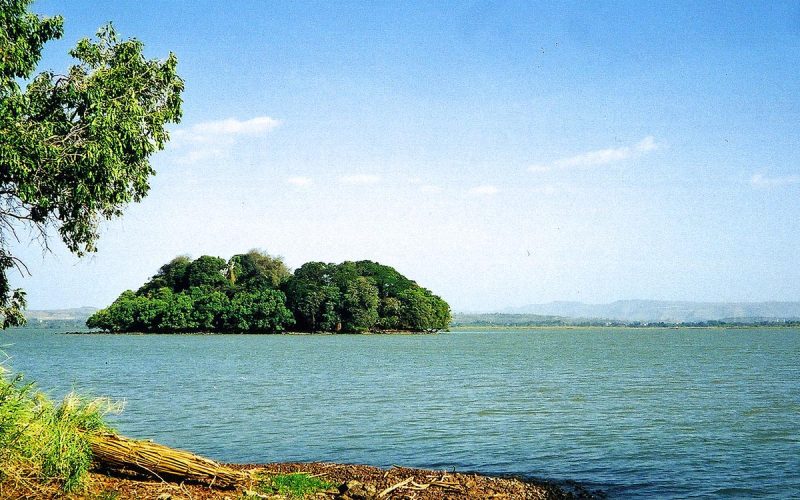
Ethiopia Launches Campaign to Register Lake Tana Islands and Monasteries as a UNESCO World Heritage Site
The Ethiopian government has officially submitted a proposal to UNESCO to register Lake Tana’s islands and their historic monasteries as a World Heritage Site.
The Amhara Regional Culture and Tourism Bureau confirmed that the documentation necessary for the nomination has been finalized and forwarded to the United Nations Educational, Scientific and Cultural Organization (UNESCO).
According to Mr. Abebe Embiale, Public Relations Officer at the Bureau, the campaign is part of broader efforts to enhance and promote cultural heritage and tourism in the Amhara Region.
The initiative aims to ensure that local communities benefit socially and economically from the preservation and recognition of their cultural assets.
Mr. Abebe stated that Lake Tana and its surrounding landscape are home to numerous attractions of historical, ecological, and spiritual significance.
He noted that while the Lake Tana Islands had previously been recognized as a World Biodiversity Heritage Site, the current submission has been revised to support their inclusion on the World Cultural and Natural Heritage List.
“The document has undergone several rounds of expert review, incorporating comments and additional data to meet UNESCO’s stringent criteria,” he explained.
He added that the process is now well-advanced and in a promising stage.
The Bureau, in collaboration with the Ethiopian Heritage Authority, has been working to have the Lake Tana monasteries, islands, and surrounding wetlands inscribed on the World Heritage List.
After the necessary evaluations and recommendations from national and international experts, the nomination dossier was officially submitted to UNESCO.
Reports indicate that UNESCO has confirmed receipt of the application and acknowledged that all required documentation has been fulfilled. A decision is expected to be announced in the coming months.
To date, Ethiopia has successfully registered 11 sites on the UNESCO World Heritage List, placing it ahead of South Africa, which has 10 listed sites. Morocco follows with nine, while Tunisia has eight. Egypt, Senegal, and Tanzania each have seven.
In September 2023, during its annual conference held in Riyadh, Saudi Arabia, UNESCO inscribed two additional Ethiopian sites—the Gedeo Cultural Landscape and Bale Mountains National Park.
These areas are recognized as biodiversity hotspots due to their rich flora, fauna, and traditional agricultural practices.
Ethiopia has actively been submitting heritage nominations to UNESCO for the past decade, as part of a long-term cultural preservation and tourism development strategy.
