
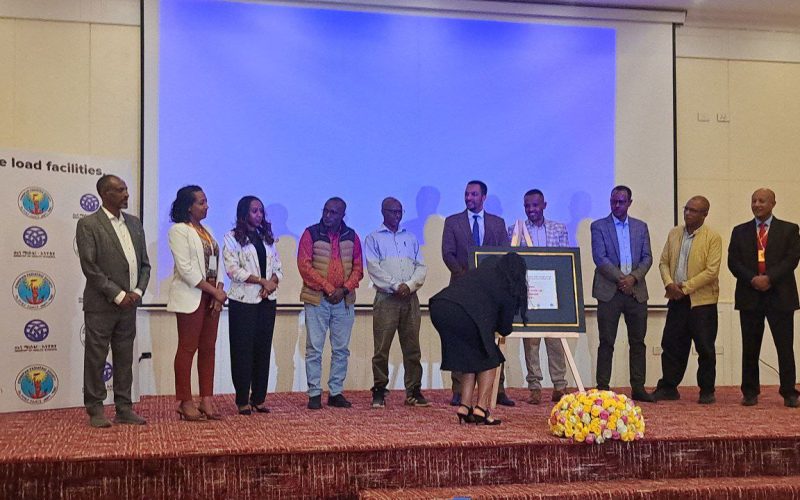
The Spanish government has announced a reproductive health initiative in Ethiopia, committing €700,000 (equivalent to approximately 101.5 million Ethiopian birr at the current exchange rate) to improve family planning and reproductive health services.
This initiative is being carried out through the Spanish Development Cooperation and will be implemented over a two-year period in selected areas of the Afar and Somali regions—two zones with some of the lowest reproductive health coverage in the country.
According to Mr. Abebe Kebede, Director of the Consortium of Reproductive Health Service Associations (CORHA), the program aims to significantly enhance the availability and utilization of family planning and reproductive health services in the targeted regions.
The intervention will address not only service delivery but also the deep-rooted sociocultural and religious barriers that hinder access to reproductive healthcare.
The Ministry of Health reports that family planning coverage currently stands at just 14% in the Somali region and 30% in the Afar region.
A key contributing factor to this low uptake is widespread misconceptions tied to religious beliefs, which discourage the use of family planning methods.
These misconceptions have perpetuated harmful traditional practices, including child marriage and female genital mutilation (FGM), which further restrict women’s and girls’ access to reproductive health services.
Dr. Alemayehu Hunduma, Head of the Reproductive Health, Adolescent, and Family Planning Program at the Ministry of Health, emphasized that the government is engaging tribal and religious leaders to shift public perception and challenge these cultural and religious misconceptions.
“We believe that by involving influential community leaders, we can foster a more supportive environment for reproductive health services,” he said.
Sister Hawa Abdu, a maternal and child health specialist at the Afar Regional Health Bureau, echoed these concerns.
“There is a common belief that family planning contradicts our cultural and religious values.
However, these beliefs are based on misunderstandings. Five years ago, coverage in Afar was below 10%; today, it has increased to 30%, but challenges like child marriage and severe forms of FGM still persist,” she explained.
“Projects like this one are vital in pushing back against those practices and increasing access to essential health services.”
In an effort to ensure the success of the program, experiences from predominantly Muslim countries with successful family planning initiatives—such as Indonesia, where 99% of the population is Muslim and access to family planning is high—are being used as models.
The project will specifically focus on the Awash and Amibara zones in the Afar region and the Fafen and Siti zones in the Somali region.
By leveraging international cooperation, local engagement, and evidence-based strategies, this project aims to transform reproductive health outcomes in some of Ethiopia’s most underserved communities.
