
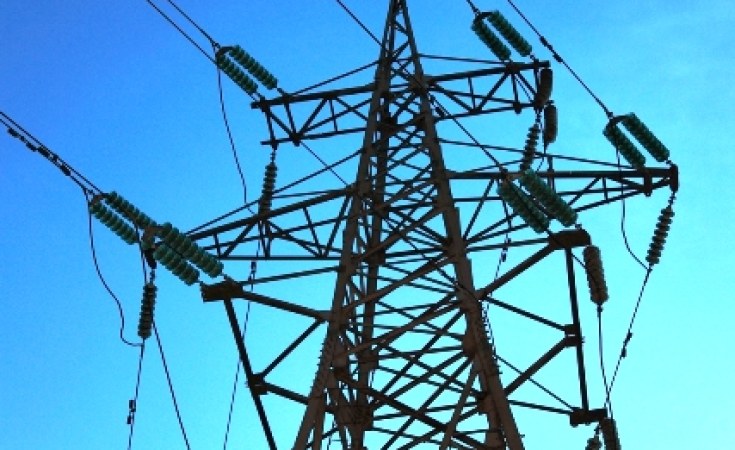
Ethiopia, Djibouti Sign Agreement for Second Power Transmission Line
Ethiopia and Djibouti have signed an agreement to construct a second cross-border power transmission line, strengthening their long-standing energy partnership and supporting regional electricity integration in the Horn of Africa.
According to the agreement signed in Djibouti, the new line will connect Ethiopia’s Galafi substation to Djibouti’s Nagad substation through a 230-kilovolt (kV) transmission line. The project will span a total of 292 kilometers, of which 190 kilometers will be built within Djibouti’s territory.
Construction is expected to be completed within 18 months.
The World Bank will provide a $55 million loan to finance the project, while Transrail Limited, an Indian engineering company, has been awarded the construction contract.
Speaking at the signing ceremony, Djibouti’s Minister of Energy and Natural Resources, Younis Ali Gudi, said the project aligns with Djibouti’s commitment to renewable and sustainable energy.
“This project will help us implement a national energy policy based on the use of renewable resources, enabling us to achieve our goal of 100 percent clean energy,” he stated.
The new power line marks another milestone in the energy cooperation between Ethiopia and Djibouti, which began in 2013 with the first interconnection line.
That initial project allowed Djibouti to import electricity from Ethiopia, significantly reducing its reliance on fossil fuels and electricity generation costs.
Ethiopia currently exports electricity to Kenya, Sudan, Tanzania, and Djibouti, and is working to expand power sales to other neighboring countries.
Somalia and South Sudan are conducting feasibility studies to import electricity from Ethiopia, while Burundi has also expressed interest in becoming a customer.
In addition to its export operations, Ethiopian Electric Power (EEP) recently announced that it earned $82 million in revenue from electricity sales to cryptocurrency mining companies over the past three months.
According to EEP, around 30 percent of Ethiopia’s total power generation is currently used by crypto-related industries.
The government has increased electricity tariffs for such companies since November to regulate energy consumption and ensure stability in domestic supply.
During the 2024/25 fiscal year, Ethiopia earned approximately $182 million from electricity exports to neighboring countries a figure expected to rise as new transmission projects, like the Ethiopia–Djibouti II line, come online.
The second transmission line project is seen as a key step in strengthening regional power integration, enhancing Ethiopia’s role as an emerging energy hub in East Africa, and supporting Djibouti’s clean energy transition.
