
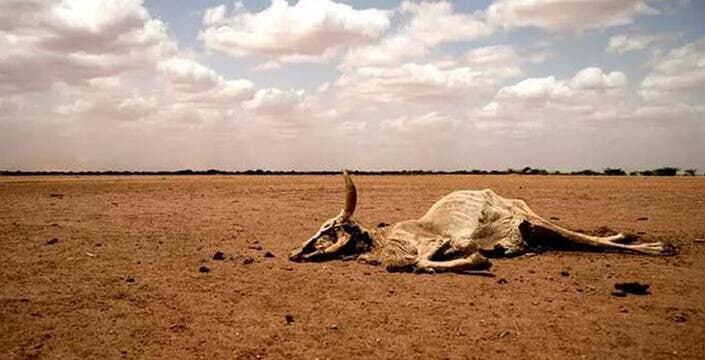
A new report warns that 85 percent of the population living in the Ethiopia–Kenya border region, including Borena, faces a high risk of severe drought and famine in the coming year.
According to the findings, rainfall in Borena (Ethiopia) and Marsabit (Kenya) two of the most drought-prone areas along the border is expected to be short, irregular, and intermittent, increasing the likelihood of both flooding and prolonged dry spells.
Experts caution that these conditions could further undermine food security and livelihoods, especially among pastoralist communities.
The warning was issued during the closing ceremony of the first phase of a joint project conducted by several civil society organizations, including Voluntary Service Overseas (VSO), Horn of Africa Development Initiative (HODI), Australian Development Cooperation, and the Centre for Development and Good Governance. The event was held in Addis Ababa.
Dr. Temesgen Alemu, VSO Ethiopia Representative, noted that the Ethiopia–Kenya border region is affected not only by conflict, drought, and famine, but also by widespread drug trafficking, human trafficking, and gender-based violence.
He emphasized the need for coordinated efforts to address the complex and overlapping challenges affecting communities on both sides of the border.
Civil society organizations said they have submitted a comprehensive study to the government outlining the causes of drought, conflict, and famine, as well as proposed solutions to address these recurring crises in Borena and the adjacent Kenyan border areas.
Abera Deresa, Chairman of the Board of the Center for Development and Good Governance and an advisor at the Oromia Agricultural Research Institute, urged the government to adopt stronger policy measures to prevent drought-related disasters, mitigate conflict, and curb human trafficking.
He stressed that protecting communities in Borena and the Kenya border areas requires a more strategic and long-term approach.
Abera also warned that if Rift Valley Fever emerges especially due to increased livestock movement along the border during drought Ethiopia could face restrictions on its meat exports, dealing a significant blow to the economy.
He recalled that more than two million livestock died during the severe drought that struck the region two years ago and called on the government to prioritize the development of groundwater resources to strengthen drought resilience.
Experts further highlighted that the reluctance of local pastoralists to sell livestock during drought periods is one of the factors worsening the impact of drought, as herders often lose their animals when conditions deteriorate.
According to the report, 70 percent of the population in the Ethiopia–Kenya border area is currently living in poverty linked to recurrent drought and conflict.
The participating civil society organizations called on the Ethiopian and Kenyan governments to implement stronger, more institutionalized, and coordinated interventions to address the longstanding problems facing border communities and to build long-term resilience.
