
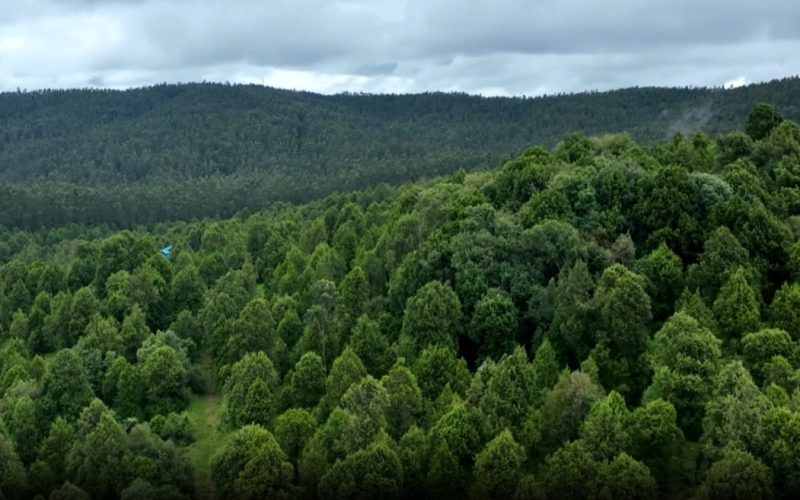
By Samuel Abate
When Werdaba Bekele lost her husband to a sudden illness in 2021, her life changed overnight. Left alone to raise four children, the 47-year-old mother from Bale, in Ethiopia’s Oromia Region, faced a daily struggle to put food on the table.
“With no other option, I went into the forest,” Werdaba recalls. She cut trees and carried the wood to nearby markets to survive. “It was the only way I knew to feed my children.”
That cycle ended when the REDD+ (Reducing Emissions from Deforestation and Forest Degradation), a UN-backed framework that incentivizes developing nations to conserve forests and manage them sustainably to combat climate change program arrived in her community.
Designed to curb deforestation while supporting forest-dependent communities, the program introduced Werdaba to alternative livelihoods. Instead of cutting trees, she began raising sheep and chickens. The income transformed her household. “Now I can feed my family without destroying the forest,” she says.
Today, Werdaba is one of more than 300 members of a Community Forest Conservation Association in her area. Together, they patrol and protect nearby forests. Many members, like her, have shifted from forest clearing to beekeeping, livestock rearing, and sustainable agriculture.
Hundreds of kilometers away in southwestern Ethiopia, Tabot Sholu tells a similar story.
The 30-year-old father of two from Gebetu Kebele in Maji Woreda once depended on cutting trees and selling wood products. “I used to clear forests to build houses and expand farmland,” he says. “But the forest was shrinking, and climate change made things worse.”
Since joining the REDD+ program in 2020, Tabot has focused on forest conservation while earning a living through poultry farming, beekeeping, and raising sheep. He has also expanded forest cover on his land to reduce environmental damage.
According to Dr. Ericho Berhanu, Coordinator of the REDD+ Program for Southwestern Ethiopia, forests cover more than 45 percent of the region’s 3.9 million hectares of land.
“Our approach is simple,” he explains. “We organize farmers to protect forests, provide alternative income sources, and plant new trees.” The strategy rests on three pillars: development, protection, and sustainable use.
At the national level, Dr. Yitebtu Moges, Coordinator of Ethiopia’s REDD+ Secretariat, says the program targets developing countries with significant forest resources. Before REDD+ was introduced, Ethiopia was losing around 92,000 hectares of forest annually. Over the past five years, that figure has dropped to about 27,000 hectares.
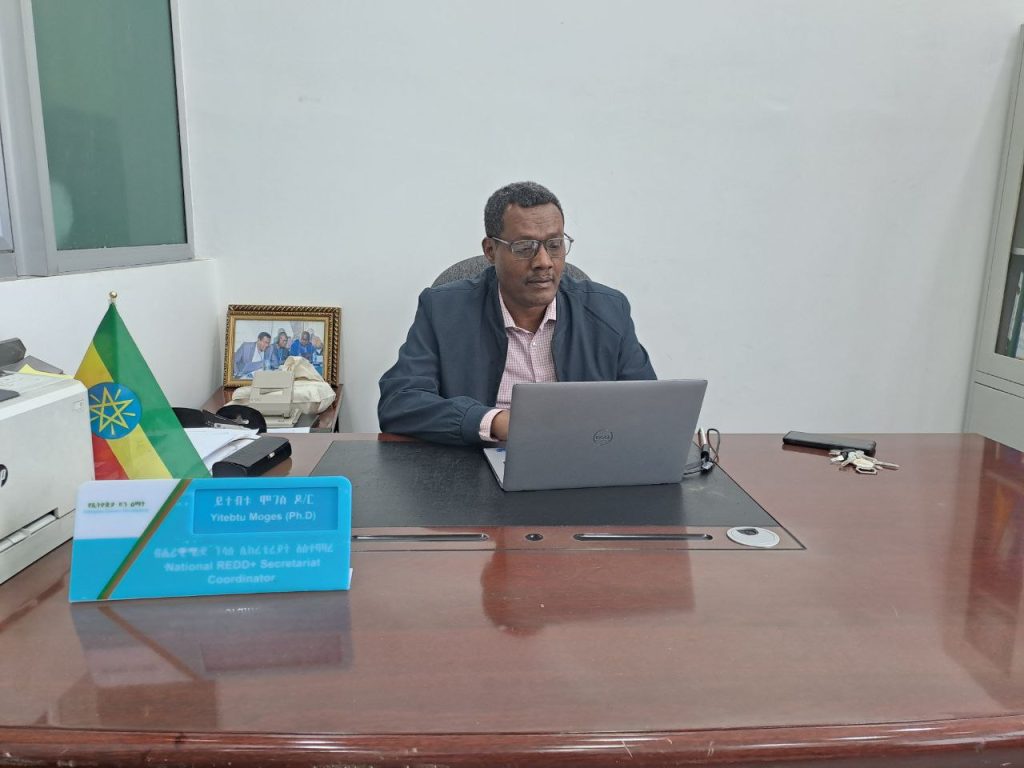
“Our long-term goal is zero deforestation,” he says, adding that the program has already prevented millions of tons of greenhouse gases from entering the atmosphere each year.
More than 1.5 million hectares of land have been preserved across over 200 districts, particularly in Oromia, Southwest Ethiopia, Gambella, and other forested regions. In return, farmers receive support to improve their livelihoods through better seeds, livestock, beekeeping, renewable energy, and food-producing seedlings.
Farmers who once cultivated crops inside forests often clashing with wildlife are gradually being supported to move production to designated farmland.
Each year, around two billion birr is invested through the REDD+ program to support forest protection and seedling planting. So far, about 90,000 hectares of artificial forests have been established, and one million hectares of degraded forest land have been restored. More than 100,000 households, including women and youth, have benefited nationwide.
Beyond conservation, the program is also opening doors to carbon markets. Dr. Yitebtu says 75 percent of revenue from carbon credit sales goes directly to communities that protect forests. Ethiopia, he notes, has the potential to earn up to USD 1.5 billion from carbon credits every four years.
Green Legacy Takes Root
Complementing REDD+ is Ethiopia’s flagship Green Legacy Initiative. Aberu Tana, Executive Director for Green Legacy and Artificial Forest Development at the Ethiopian Forest Development, says the country has planted more than 48 billion forest and agroforestry seedlings over the past seven years.
Of these, 25 billion were planted during the first phase (2018–2022), with the remainder planted during the ongoing second phase (2023–2025). More than 84 percent of the seedlings have survived, contributing to the restoration of over 15 million hectares of degraded land.
By 2030, Ethiopia aims to raise national forest cover to 30 percent and reforest 22 million hectares of degraded land.
Major restoration efforts span regions including Tigray’s Atsbi Gheretta and Dessé’a forests, Humbo and Sodo in South Ethiopia, Ezja Woreda in Gurage Zone, and Lake Haramaya in Oromia, which has been revived after years of drought. Communities around the lake have resumed irrigation and fishing.
Other restored areas include Dengego near Dire Dawa and border kebeles such as Amba Giorgis and Dejen between Amhara and Oromia.
This year alone, Ethiopia plans to plant more than four billion seedlings, with a stronger focus on quality, soil suitability, and post-planting care. Fruit trees such as avocado, mango, papaya, and apple are being prioritized to strengthen food security alongside environmental protection.
By 2030, Ethiopia aims to prevent 297 million tons of carbon emissions by restoring degraded lands.
Ethiopia’s forest cover has increased from 17.2 percent five years ago to 23.6 percent today. Springs and streams once dried up are flowing again, thanks to terracing and forest restoration.
For farmers, the benefits go beyond ecology. Fruit trees planted under the Green Legacy program are now bearing fruit, providing new income streams. Some farmers have begun exporting avocados and mangoes. Improved grazing land has boosted milk and meat production, while thousands of youth and women have found green jobs in nurseries and seedling care.
Despite the progress, challenges remain. Adefris Worku, Chair of the Green Legacy Technical Committee, warns that 54 million hectares of land in Ethiopia are currently deforested. Without intervention, an additional 11 million hectares could face desertification.
Still, he sees hope. Recent environmental efforts have not only expanded forest cover but also created new income through carbon markets. The newly approved Deforestation Fund Proclamation ensures annual budget allocations for land restoration, protects green initiatives from funding gaps, and expands green jobs nationwide.
“This fund shows Ethiopia’s strong national commitment to environmental protection,” Adefris says.
For women like Werdaba Bekele, that commitment is deeply personal. “The forest is no longer my enemy or my last resort,” she says. “It is our future and we are protecting it together.”

[…] Ethiopia’s Fight Against Deforestation, Rooted in Communities […]