
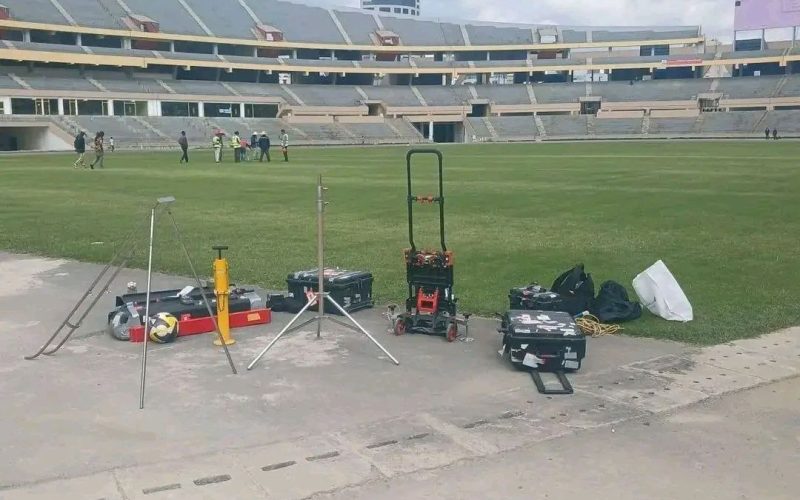
Addey Ababa Stadium Pitch Earns FIFA International Quality Certification
The main pitch at the Adey Ababa Stadium, currently under construction, has received FIFA International Quality certification after successfully passing a comprehensive technical assessment by world football’s governing body.
According to officials, the pitch met FIFA’s strict standards across a range of criteria, including grass quality, ball speed and bounce, and player safety.
FIFA experts also tested the pitch’s water absorption and drainage capacity, confirming its reliability in all weather conditions, particularly during heavy rainfall.
The certification is seen as a major milestone for Ethiopian football, signaling that the stadium meets the basic requirements to host high-profile international matches such as FIFA World Cup qualifiers, the Africa Cup of Nations (AFCON), and other major continental competitions.
It also strengthens hopes that the Ethiopian national team could soon play its home matches on domestic soil.
Once completed, the Adey Ababa Stadium is expected to accommodate more than 60,000 spectators and feature modern facilities for athletics and other sporting events in addition to football.
The FIFA recognition is viewed as validation that the stadium’s construction is progressing in line with international standards and could position the venue as a leading sports hub in East Africa.
Ethiopia currently does not have a stadium that meets the Confederation of African Football (CAF) requirements, a situation that has forced the national team to host qualifying matches outside the country.
While Ethiopia has at least one stadium in each regional state, none are yet compliant with CAF standards.
The country has officially submitted a bid to host AFCON 2029, a tournament that requires a minimum of six CAF-approved stadiums.
However, significant infrastructure gaps remain a challenge. The Adey Ababa Stadium, has faced construction delays, and its completion date is still uncertain.
Despite these challenges, Ethiopia’s bid reflects an ambitious vision to revive its football heritage.
The country was one of the founding members of AFCON, hosted the tournament in 1962, and won its only continental title that year after defeating Egypt in the final.
While recent decades have brought limited success on the pitch, hosting AFCON 2029 could help Ethiopia reignite its football legacy and enhance its international sporting profile.
The CAF decision on the 2029 hosts will be closely watched, with Ethiopia’s progress in stadium development and infrastructure upgrades expected to play a decisive role in the final outcome.
