
AFRICOM Chief Highlights Ethiopia, East Africa Engagement, Links Security With Economic Development
The head of U.S. Africa Command (AFRICOM), General Dagvin Anderson, has underscored the strategic importance of Ethiopia and the wider East African region in U.S–Africa security cooperation, emphasizing closer partnerships to counter terrorism and align security with economic development.
Speaking during a U.S. State Department Africa Regional Media Hub press briefing the first of 2026 General Anderson pointed to a recent trip to Ethiopia, Kenya, and Djibouti alongside U.S. Deputy Secretary of State Christopher Landau as a key step in strengthening regional ties.
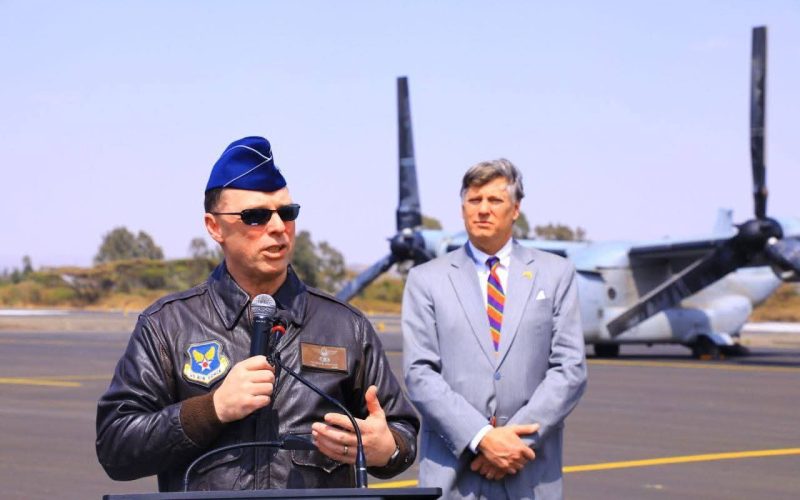
General Anderson highlighted his visit to Ethiopia, where he attended the Black Lion Air Show marking the 90th anniversary of the Ethiopian Air Force.
He noted the long history of U.S–Ethiopia cooperation, recalling how American aviator Colonel John Robinson supported the establishment of Ethiopia’s air force in 1935 and later helped lay foundations for Ethiopian Airlines.
He described this history as an early example of how security cooperation can evolve into broader economic and development gains.
“It was a great opportunity to talk about our long history of working together,” Anderson said, adding that such partnerships show how security and economic development can reinforce each other.
In meetings with Ethiopian, Kenyan, and Djiboutian leaders, Anderson said discussions centered on shared security threats, particularly al-Shabaab, ISIS affiliates, and what he described as growing links between militant groups and external actors such as Yemen’s Houthi movement.
He said regional leaders, including Ethiopian Prime Minister Abiy Ahmed, Kenyan President William Ruto, and Djiboutian President Ismail Omar Guelleh, agreed on the need for coordinated responses.
“Everyone concurred that it has to be done together,” Anderson said, stressing joint efforts to apply pressure on extremist groups operating in the region.
AFRICOM also outlined several multinational exercises involving East African countries. These include, a maritime security exercise bringing together East African coastal states to improve coordination against piracy, smuggling, and illegal fishing.
Another big event was called Justified Accord, hosted in Kenya with additional activities in Tanzania and Djibouti, focusing on joint readiness and counterterrorism cooperation.
A recurring theme in the briefing was AFRICOM’s growing focus on the connection between security and economic development.
Anderson said stability enables investment, which in turn supports long-term prosperity.
He pointed to infrastructure and trade corridors across Africa as examples where security and economic interests intersect, suggesting that future U.S. engagement may increasingly combine defense cooperation with support for development and investment.
While much of the briefing addressed continent-wide concerns including rising extremist threats in the Sahel and West Africa East Africa featured prominently due to ongoing counterterrorism efforts and the strategic importance of the Red Sea and Gulf of Aden.
Anderson said AFRICOM’s approach is to support “capable and willing partners” with training, intelligence sharing, and targeted assistance, rather than large-scale direct interventions.
He added that his first five months in command have focused heavily on listening to African partners and understanding their priorities.
“I continue to be very impressed with our partners,” he said, noting that African perspectives are shaping how the U.S. plans future cooperation.
