
Artificial Intelligence Creating New Human Rights Challenges in Ethiopia, Says EHRC
The Ethiopian Human Rights Commission (EHRC) has warned that the rapid expansion of Artificial Intelligence (AI) is generating new human rights challenges in Ethiopia, particularly in relation to hate speech and other harmful online activities.
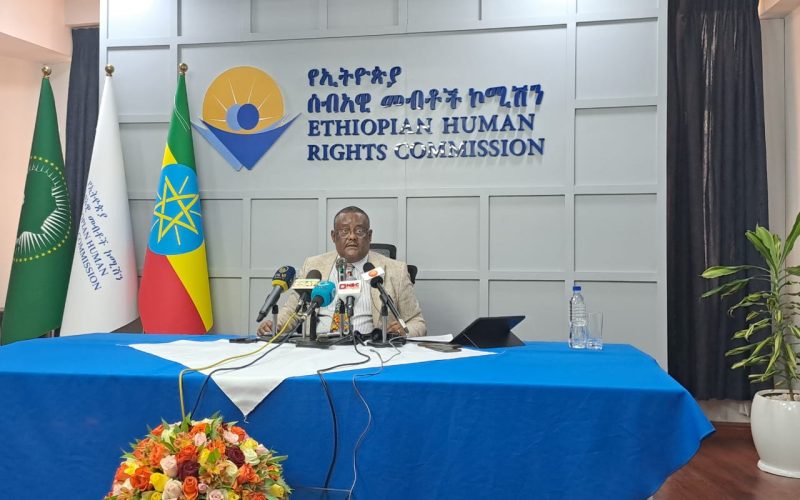
Speaking to journalists, EHRC Chief Commissioner Berhanu Adelo said emerging technologies are increasingly being used in ways that can undermine fundamental rights.
He noted that AI-driven platforms have amplified hate speech and misinformation, creating complex human rights concerns that existing legal and institutional frameworks are struggling to address.
According to Berhanu, although Ethiopia has introduced modern legal frameworks to safeguard human rights, the pace of technological advancement especially in the field of AI has outstripped regulatory developments. “The speed at which artificial intelligence is evolving is not matched by the development of corresponding legal safeguards,” he said.
The commissioner added that the growing impact of AI will require the Commission to revise its institutional strategy. “Our current five-year strategic plan ends in June this year,” he stated. “As we prepare the next plan, we will incorporate measures aimed at minimizing the impact of artificial intelligence on human rights violations.”
Beyond AI-related risks, the Commission also identified broader human rights concerns, including environmental protection, business-related human rights violations, and workplace injustices.
Key priorities highlighted include ensuring equal pay for equal work, improving occupational safety, addressing gender-based wage disparities, and integrating climate change considerations into human rights protection efforts.
The EHRC further stated that enforced disappearances and extortion have been common human rights concerns in Ethiopia, although the Commission believes such incidents have shown signs of decline in recent months.
Responding to questions about enforced disappearances, Berhanu said the Commission investigates cases when complaints or credible information are submitted, including working closely with families of the missing. However, he acknowledged challenges in identifying perpetrators.
In some reported cases, alleged perpetrators were described as “red-bonneted” individuals. “It is unclear whether these actors are government entities or other groups,” Berhanu said, adding that investigations have at times failed to conclusively identify responsible parties.
He also noted that coercion where individuals are detained in undisclosed locations and money is demanded for their release has been reported in the past, though he emphasized that such practices have recently decreased.
Despite some improvements, the Commission underscored that serious human rights violations persist, particularly in conflict-affected regions.
Berhanu pointed to ongoing concerns over arbitrary arrests and broader violations in areas experiencing instability, including Oromia Region, Amhara Region, and Tigray Region. “We are operating in a conflict context,” he said, noting that the volatile security situation poses significant challenges to effective human rights monitoring and protection. “These are national problems that we have yet to overcome.”
The commissioner also raised concerns about human rights violations linked to mining activities, particularly in Gambella Region and South West Ethiopia Region. He cited reports of deadly clashes between miners and indigenous communities, describing the situation as alarming and in need of urgent attention.
The EHRC further expressed concern over arbitrary arrests related to freedom of expression. Berhanu said the Commission has observed cases involving the detention and harassment of bloggers and media professionals, allegedly by security forces.
He noted that the Commission monitors such cases and works toward securing the release of detainees. According to Berhanu, there has been relatively better performance in facilitating releases in Addis Ababa, where information about arrests is received more quickly, enabling faster intervention.
The EHRC concluded by reiterating its commitment to strengthening its oversight mechanisms and adapting its strategic priorities to address both traditional and emerging human rights challenges in Ethiopia.
