
By Demeke Kebede
In recent years, Ethiopia’s creative industry has experienced remarkable growth. The rise of digital filmmaking, music production, television programming, and online storytelling has created new opportunities for Ethiopian artists and producers to reach audiences both at home and across the diaspora. Ethiopian films increasingly fill cinemas, television series attract large audiences, and local musicians are gaining regional and global attention.
Yet alongside this progress lies a persistent and damaging challenge: content piracy.
Illegal streaming, unauthorized redistribution of films and television programs, and the rapid circulation of pirated content across social media platforms continue to undermine the economic sustainability of Ethiopia’s creative sector. While digital technologies have made content more accessible than ever before, they have also made it easier for intellectual property to be stolen and redistributed without compensation.
Addressing this challenge requires more than sporadic enforcement actions. Ethiopia must move toward building a coordinated national anti-piracy ecosystem, one that brings together government institutions, industry stakeholders, technology partners, and the public to protect creative work and ensure that artists are fairly rewarded.
The Changing Face of Piracy in Ethiopia
Piracy is not a new phenomenon in Ethiopia. In the past, pirated DVDs and CDs were widely sold in informal markets. Today, however, the landscape has shifted dramatically toward digital piracy.
Pirated Ethiopian films, music, and television programs are increasingly circulating through a range of digital platforms, making unauthorized content widely accessible to the public. Many Telegram channels now distribute full movies and television series without permission, while unauthorized IPTV streaming services broadcast copyrighted content illegally to large audiences. In addition, several social media platforms host illegally uploaded films, music, and shows, allowing them to spread quickly among users. Numerous websites also offer free downloads of Ethiopian films and music, further contributing to the rapid and widespread distribution of pirated content.
In some cases, Ethiopian films appear online within hours of their theatrical release. For TV companies and producers who rely on revenue to recover production costs, such piracy can be devastating.
The consequences are felt across the entire creative value chain. Producers lose income, actors and crew members miss potential royalties, cinemas lose ticket sales, and television investors become more hesitant to fund future productions. Ultimately, piracy reduces the incentive to produce high-quality content and slows the development of the industry.
The Economic Impact on Ethiopia’s Creative Industry
The creative economy is increasingly recognized worldwide as a driver of economic growth. Film, television, music, and digital media generate employment, stimulate tourism, and promote national culture internationally.
In Ethiopia, the creative sector supports thousands of professionals, including actors, directors, cinematographers, editors, musicians, costume designers, and technical crews. Each film or television production creates a chain of economic activity involving equipment suppliers, marketing professionals, distributors, and exhibition venues.
However, piracy significantly weakens this ecosystem.
When audiences access content through illegal platforms, revenue that should sustain the industry disappears. This loss not only affects individual creators but also discourages investors and broadcasters from funding new projects.
Across Africa, media companies have repeatedly warned that piracy threatens the sustainability of local productions. Organizations such as MultiChoice Group (a Canal+ company) have emphasized that illegal streaming and decoder piracy undermine investments in local storytelling and reduce the resources available to commission African content.
Without strong intellectual property protection, the long-term growth potential of Ethiopia’s creative sector remains constrained.
The Need for a National Anti-Piracy Ecosystem
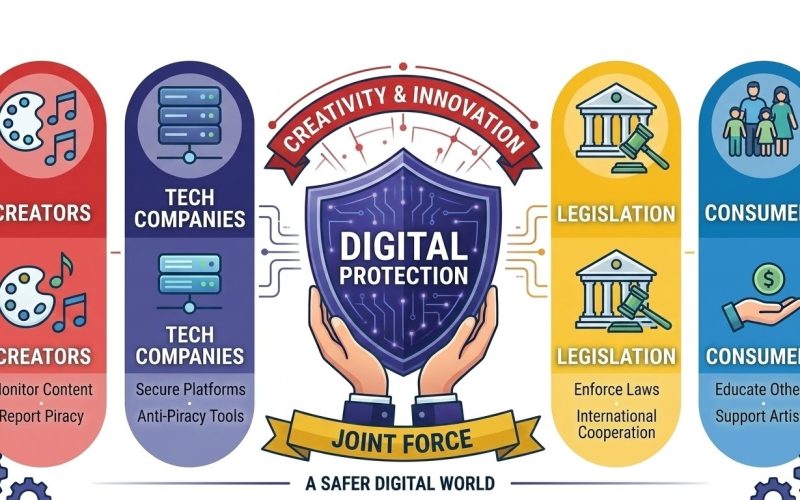
Piracy is a complex challenge that cannot be solved by any single institution. Effective responses require a comprehensive ecosystem approach in which multiple actors collaborate to protect intellectual property and promote legal consumption.
A national anti-piracy ecosystem in Ethiopia should be built on five key pillars that work together to effectively combat intellectual property violations. These pillars include strong policy and regulatory frameworks, improved enforcement and institutional coordination, and enhanced industry collaboration among content creators, distributors, and regulators. In addition, the system should incorporate technology-driven protection mechanisms to monitor and prevent illegal distribution of content, as well as sustained public awareness and cultural change initiatives to discourage the consumption of pirated materials. Together, these interconnected pillars can create a resilient and comprehensive system capable of addressing piracy both online and offline.
Strengthening Policy and Regulatory Frameworks
A robust legal framework is the foundation of any anti-piracy strategy. Ethiopia has made important progress in this area through institutions such as the Ethiopian Intellectual Property Authority, which oversees copyright protection, and the Ethiopian Media Authority, which regulates broadcasting and media activities.
However, the rapid growth of digital media has created new challenges that require the continued modernization of intellectual property regulations. Existing legal frameworks need to evolve to effectively respond to emerging forms of digital piracy, including online streaming of copyrighted content without authorization, the widespread unauthorized digital distribution of films and music, cross-border theft and sharing of creative content, and the operation of illegal IPTV platforms that broadcast protected media without the consent of rights holders.
Strengthening and updating these laws is essential to ensure that intellectual property protection keeps pace with the changing digital landscape. Updating regulatory frameworks and ensuring effective enforcement mechanisms will be essential for protecting Ethiopian creators in the digital era.
Coordinated Enforcement and Institutional Collaboration
Strong laws must be accompanied by effective enforcement. Combating piracy requires coordination among multiple government institutions, including law enforcement agencies, regulatory bodies, and judiciary.
Organized piracy networks often operate across digital platforms and national borders. Addressing them therefore requires intelligence sharing, technical expertise, and collaboration between public institutions and private rights holders.
Industry stakeholders, including broadcasters, production companies, and streaming platforms, can assist authorities by identifying piracy sources and providing technical evidence for enforcement actions.
Industry Collaboration and Collective Action
The private sector plays a critical role in combating piracy. Media companies, producers, distributors, and broadcasters must work together to monitor piracy activities and protect content.
Across Africa, companies such as MultiChoice Group (a Canal+ company) have invested heavily in anti-piracy initiatives to safeguard sports broadcasting and local programming. These efforts often involve partnerships with technology firms specializing in content protection.
One such partner is Irdeto, a global cybersecurity company that provides advanced anti-piracy technologies and monitoring systems. These systems help identify illegal streaming sources and enable rapid takedown of pirated content online.
By strengthening collaboration between Ethiopian broadcasters, filmmakers, and international technology partners, the country can significantly improve its capacity to combat digital piracy.
Leveraging Technology to Protect Content
While technology has enabled piracy to spread more easily, it also offers powerful tools to combat it.
Modern anti-piracy efforts increasingly rely on advanced technological solutions to protect creative content from illegal distribution. These include digital watermarking, which embeds invisible identifiers in films, music, and broadcasts to help trace the source of leaks, as well as automated monitoring systems that scan the internet to detect unauthorized streams. In addition, artificial intelligence tools are being used to identify pirated content across social media platforms, enabling faster detection and response. Real-time takedown mechanisms also play a crucial role by allowing authorities and rights holders to remove illegal streams while live broadcasts are still ongoing. As Ethiopia’s digital media market continues to grow and more content is distributed through online platforms, adopting such technologies will be essential to strengthen anti-piracy protection.
Public Awareness and Cultural Change
Legal enforcement and technological tools alone cannot eliminate piracy. Public attitudes toward intellectual property must also evolve.
In many cases, consumers access pirated content without recognizing its impact on the livelihoods of artists and creators. Building awareness about the value of intellectual property is therefore essential.
Public campaigns can help communicate a simple message: when audiences support legal platforms, they directly support Ethiopian creativity.
Encouraging ethical consumption of media will help ensure that filmmakers, musicians, and producers can continue to create high-quality content for local and global audiences.
The Economic Opportunity of Protecting Creativity
Reducing piracy is not only about protecting intellectual property—it is about unlocking Ethiopia’s economic potential.
A vibrant creative industry can generate thousands of jobs and contribute significantly to national GDP. Countries with strong copyright protection often attract international investment in film production, television programming, and digital media.
With its rich storytelling traditions, diverse cultures, and growing pool of creative talent, Ethiopia has the potential to become a leading creative hub in Africa.
Companies such as MultiChoice Group (a Canal+ company) have demonstrated across the continent how investment in local content can transform media industries and elevate African stories to global audiences.
Strengthening intellectual property protection will encourage similar investments in Ethiopia’s creative sector.
Toward a National Anti-Piracy Framework
To effectively address piracy, Ethiopia could consider establishing a national anti-piracy framework that brings together key stakeholders across government and industry.
Such a framework could be structured around several coordinated measures to effectively combat digital piracy. It might include the establishment of a national task force on digital piracy to lead enforcement and policy efforts, alongside partnerships between regulators, broadcasters, and technology or internet service providers to ensure collaborative oversight. Implementing industry-wide monitoring and reporting mechanisms would help track and respond to illegal activity, while public education campaigns could encourage audiences to consume content legally and responsibly. In addition, stronger enforcement actions against organized piracy networks would be necessary to deter large-scale operations and protect the rights of creators. Together, these elements would create a comprehensive approach to safeguarding Ethiopia’s digital media ecosystem.
By institutionalizing collaboration, Ethiopia can build a sustainable system for protecting creative works.
A Collective Responsibility
Building a national anti-piracy ecosystem requires commitment from all stakeholders. Government institutions must strengthen legal frameworks and enforcement mechanisms. Media companies must collaborate to protect their content. Technology providers must deliver innovative monitoring solutions. And audiences must recognize the importance of supporting legitimate platforms.
When these efforts align, Ethiopia can create an environment where creativity thrives, innovation is rewarded, and the country’s rich cultural stories can reach the world.
The fight against piracy is therefore not simply a legal issue, it is a strategic investment in Ethiopia’s cultural identity, economic development, and creative future.
Editor’s note: – views in the article reflect the views of the writer only!!
