
Investors in Ethiopia’s Industrial Parks Cite Finance, Infrastructure Challenges
Investors operating in special economic zones and industrial parks across Ethiopia say they are facing major challenges, including limited access to finance, high banking service charges, and inadequate infrastructure.
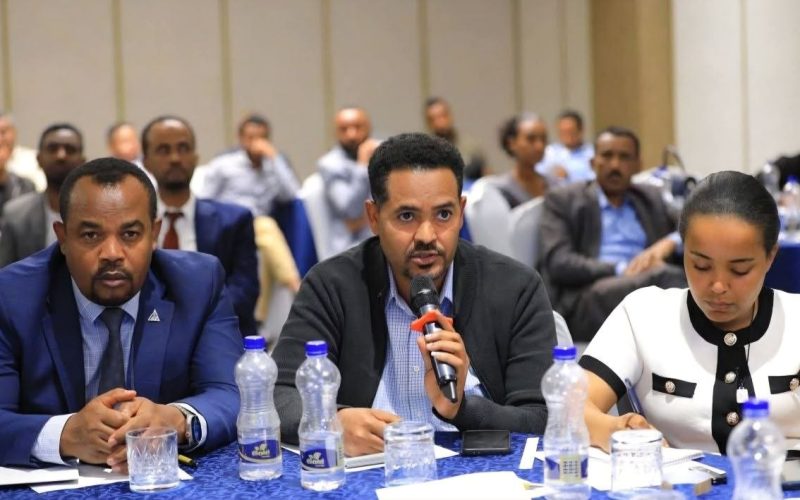
The concerns were raised during a discussion held in Addis Ababa on March 21, 2026, by the Industrial Parks Development Corporation (IPDC) to strengthen the participation of financial institutions in special economic zones.
According to investors who took part in the discussion, one of the main challenges is the limited availability of banking services in industrial parks and special economic zones. They said banks operating in zones such as Dire Dawa have not been well organized to provide efficient and appropriate financial services.
Investors also complained about the high costs associated with opening and maintaining foreign currency accounts in Ethiopia. They said that, beyond standard service charges, additional costs can exceed 10 percent, placing further pressure on their operations.
Some participants warned that unless the tripartite agreement linking manufacturers, banks, and buyers is strengthened, local manufacturers may struggle to survive once free trade zones become fully operational.
They argued that the high cost of raw materials, combined with the low price of imported finished goods, could threaten the competitiveness and survival of domestic producers.
The investors further noted that the National Bank of Ethiopia’s guidelines for banks seeking to operate in special economic zones are too restrictive, allowing only five to seven banks to qualify. They added that, under the current criteria, no bank appears to fully meet the requirements.
Labor retention was also raised as a major concern. Investors said most industrial parks are located far from major urban centers, making it difficult to attract and retain workers.
Even when employees are recruited, many leave after a short time. Although employers recognize the need to raise salaries or provide additional benefits, they said doing so increases operating costs and weakens their competitiveness.
Participants also pointed to exchange rate volatility as another major burden, saying fluctuations in the value of the birr are creating uncertainty and cost pressures.
To address this, they called for greater attention to local sourcing of raw materials and stronger linkages with domestic factories.
In addition, investors said the current fuel shortage is disrupting transport and logistics, with many vehicles left idle and business operations delayed. They urged the government to take urgent measures to resolve the problem.
Responding to the concerns, National Bank of Ethiopia Statistics Director Abebayew Dufera said service disruptions in special economic zones were partly caused by the fact that only one bank had been operating there.
He said the central bank has prepared a new directive to address the problem and is holding discussions with banks on reducing service charges.
Abebayew also said the central bank is working to ease difficulties related to foreign currency transactions. Under a new guideline, he explained, businesses will be able to transfer money between domestic accounts, and a system similar to the birr-based RTGS payment platform will soon be introduced.
He added that while banks have operational autonomy, the National Bank can only issue guidelines and cannot directly interfere in a free market environment.
He said the entry criteria for banks in industrial parks were intentionally set high to ensure quality service, with stronger institutions expected to enter first and others to follow gradually.
For his part, IPDC Operations and Park Management Executive Fitsum Ketema said local investor participation in industrial parks has now reached 68 percent.
He attributed the increase to the government’s flexible distribution policy and a recent amendment allowing investors to supply up to 50 percent of their products to the domestic market.
Fitsum said the corporation’s primary goal is not to generate lease revenue, but to encourage investment and maximize the country’s benefits from industrial development.
He added that IPDC has reached an understanding with the Ethiopian Maritime Transport and Logistics Service Enterprise to facilitate the integrated use of the railway terminal and the Dire Dawa Dry Port under one management system.
On the issue of fuel supply, Fitsum said the corporation is working closely with the relevant oil and energy authorities and expects a response soon.
