
A new round of high-level logistics coordination in the United Arab Emirates is sending positive signals for Ethiopia and other African economies reliant on Gulf-linked trade corridors, amid ongoing efforts to strengthen supply chain resilience and ensure uninterrupted trade flows.
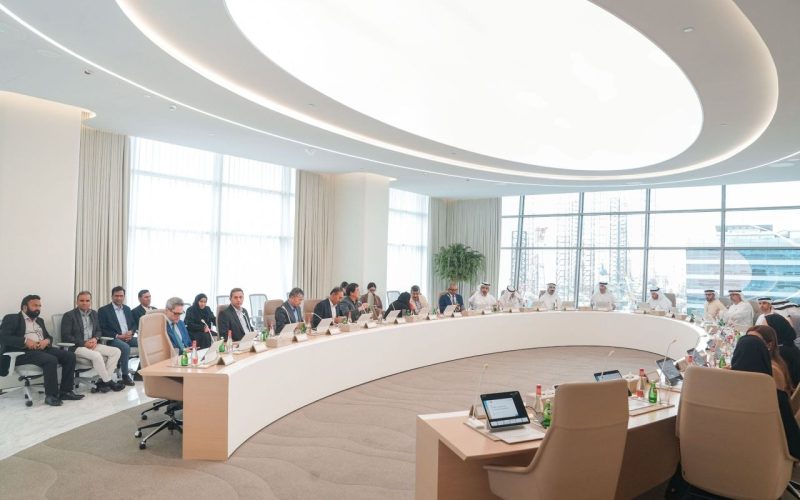
The meeting, chaired by UAE Minister of Foreign Trade Dr. Thani bin Ahmed Al Zeyoudi in Dubai, brought together senior leaders from global shipping lines, maritime associations, and key logistics institutions.
Hosted by the Ports, Customs and Free Zone Corporation, the discussions focused on addressing regional supply chain challenges and enhancing coordination among stakeholders.
Although the talks centered on regional logistics, their implications are particularly significant for corridor-dependent economies such as Ethiopia, where access to stable maritime routes is critical for imports, exports, and the movement of essential goods.
Officials reaffirmed the UAE’s commitment to maintaining trade continuity through stronger partnerships and adaptive logistics solutions.
Dr. Al Zeyoudi emphasized that ongoing coordination aims to improve the efficiency, flexibility, and responsiveness of supply chains, while ensuring the steady flow of strategic commodities.
He also highlighted efforts to expand alternative trade corridors and implement advanced customs systems to reinforce the UAE’s position as a global logistics hub.
The developments come at a time when Ethiopia is actively diversifying its trade routes and strengthening supply chain resilience.
Over recent years, economic ties between Ethiopia and the UAE have deepened significantly, evolving into a strategic partnership spanning trade, investment, finance, and technology.
Since 2018, cooperation between the two countries has included a USD 3 billion concessional loan, multiple bilateral agreements, and a currency swap arrangement between their central banks.
Initiatives such as large-scale digital skills programs and renewable energy partnerships have further expanded the scope of collaboration.
According to official data, more than 113 UAE investment projects valued at nearly USD 2.9 billion were active in Ethiopia as of 2023, while bilateral trade exceeded USD 6 billion, underscoring the growing economic interdependence.
During the meeting, Ports, Customs and Free Zone Corporation Chairman Abdulla bin Damithan pointed to progress made in strengthening alternative logistics routes, including the use of Fujairah and Khorfakkan ports, to ensure smooth cargo movement.
He stressed the importance of continued public-private coordination to address rising costs and operational challenges.
Dubai Customs Director General Dr. Abdulla Busenad also outlined a series of initiatives designed to facilitate trade, including streamlined customs procedures, expanded “green corridor” transit systems, and pilot programs such as Advance Cargo Information (ACI) to improve cargo handling efficiency.
Additional measures under consideration include extending re-export grace periods, expanding secured land transport corridors, and strengthening regional connectivity through new maritime links.
Analysts say these coordinated efforts are likely to bolster confidence in Gulf-linked logistics networks, which remain vital for Ethiopia’s trade continuity and broader economic transformation.
As global supply chains continue to face disruptions, the UAE’s proactive approach to logistics coordination and infrastructure development is expected to play a key role in supporting stable trade flows across Africa and beyond.
