
By Demeke Kebede
On April 26, the world marks World Intellectual Property Day, a global moment dedicated not only to celebrating creativity and innovation, but also to critically examining how ideas, content, and knowledge increasingly shape modern economies.
In 2026, the theme “IP and Sports” brings a sharper analytical focus: sport is no longer merely physical competition, it is a structured global industry fundamentally driven by intellectual property rights. For Ethiopia, this shift is strategically significant.
The country is already globally recognized for its sporting excellence. However, the central question is no longer about talent production; it is about strategicownership, protection, and monetization of that talent. In the modern sports economy, intellectual property stands as the ultimate determinant of power, influence, and financial sustainability.
Modern sport today rests on an often unseen but highly valuable economic foundation: intellectual property (IP). Far beyond the action on the field, IP has transformed sport into a multi-billion-dollar global industry. One of its most powerful components is broadcast rights, which shape how games are distributed, who can access them, and how revenues are shared. In advanced markets, these rights are the primary driver of league sustainability, ensuring that every match generates measurable economic value.
Equally important is media content ownership. Highlights, documentaries, and digital clips are not just by-products of sport; they are long-term assets that can be licensed, repurposed, and monetized across global platforms for years. At the same time, clubs themselves have evolved into commercial brands. With strong trademark protection, they expand beyond the pitch into merchandising, international sponsorships, and digital engagement, significantly increasing their market reach.
Athletes, too, have become central to the IP landscape. Modern players are personal brands whose names, images, and identities carry substantial commercial value. Protecting these rights ensures that their on-field performance translates into lasting financial benefits. Meanwhile, data and digital assets are emerging as the newest frontier in sports IP. Performance analytics and fan engagement data are increasingly shaping how sports are consumed, analyzed, and monetized in today’s mobile-first global environment, reinforcing IP as the backbone of modern sports.
Beyond the visible action on the field, intellectual property functions as the legal “connective tissue” binding athletes, fans, and investors. Without a clearly defined ownership structure for moments of sporting brilliance, there is no basis for commercial exchange. In international sports markets, the value of a league is determined not only by the quality of its players, but also by the legal robustness of its IP portfolio. This portfolio enables leagues to commercialize their “story,” transforming local competitions into globally consumable assets.
Furthermore, the evolution of IP in sports has significantly democratized access to wealth creation within the industry. By shifting focus from physical ticket sales to intangible rights, sports organizations can generate revenue continuously, 24 hours a day, regardless of match schedules. This transition is essential for any nation seeking to establish a resilient sports economy that is not vulnerable to attendance fluctuations or broader economic shocks.
The Power of Ethiopian Athletics: A Global Brand Without Full Ownership
Ethiopia’s athletics history remains one of the most successful in global sport. The country has consistently produced world champions and marathon legends whose achievements have fundamentally shaped international athletics over several decades. However, while Ethiopia has mastered performance excellence, it has yet to fully achieve value ownership.
In global athletics systems, success is amplified through structured ecosystems such as sponsorship rights, media contracts, and digital storytelling frameworks. In Ethiopia’s case, a significant portion of this value is captured externally. This creates a structural imbalance: the nation produces world-class champions, while the commercial frameworks, including content rights and branding structures, remain underdeveloped.
“Access to high-quality sports broadcasting contributed significantly to my global exposure and my understanding of what it takes to compete at the elite level. It was SuperSport that made me a super star. My exposure to television played a vital role in amplifying my publicity across the continent and the world; by bringing my performance into millions of homes with professional analysis, they helped transform my athletic achievements into a global brand. Media is not just entertainment; it is a tool for professional development and international visibility.”
Haile Gebrselassie, Legendary Athlete (Statement delivered during the DStv Media Showcase in Ethiopia)
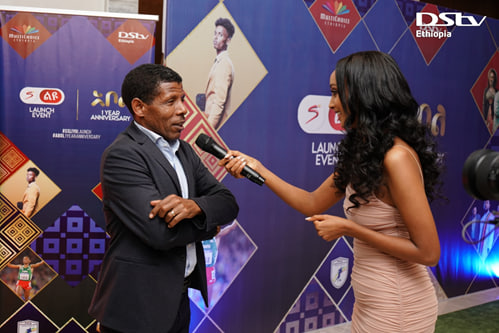
The historical reliance on race appearance fees and prize money alone is no longer sufficient to sustain the global stature of Ethiopian athletics. While Ethiopian athletes continue to win in Berlin, London, and Tokyo, the “narrative rights” to those victories, the documentaries, digital highlights, and archival footage, are frequently controlled by external entities. This results in long-term residual value generated by Ethiopian athletic excellence flowing largely outside the domestic economy.
To address this structural gap, Ethiopia must develop a domestic sports-media ecosystem that prioritizes the creation and ownership of content. By producing, archiving, and trademarking the narratives of its athletes locally, Ethiopia ensures that global recognition of its sporting excellence is channeled through Ethiopian-owned platforms. This transition from participation in the global sports economy to proprietorship of national sporting narratives represents a critical evolution in Ethiopia’s sporting identity.
The Rise of Ethiopian Football: Passion, Potential, and the IP Gap
Football in Ethiopia is deeply collective and culturally embedded. The Ethiopian Premier League serves as a major platform for national fan engagement. In global sports markets, such loyalty constitutes the foundational driver of commercial value.
However, Ethiopia is still in the early stages of converting this passion into structured economic value. Revenue models are still evolving, and clubs are gradually transitioning into fully commercial entities with strong brand identities. Platforms like DStv and SuperSport have played a pivotal role in this evolution, elevating production standards and introducing professional broadcasting norms. This exposure is progressively shifting the ecosystem from informal structures toward an organized, rights-based sports economy.
“The professional coverage of the Ethiopian Premier League over the past five years has been a catalyst for growth. It has directly improved club performance, tactical discipline, and the overall strength of our national team.”
Wubetu Abate, Former Ethiopian National Football Team Head Coach
(Statement delivered during the DStv Media Showcase in Ethiopia)
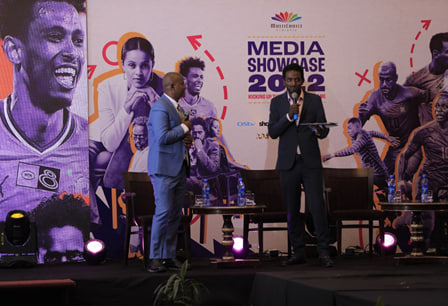
The commercialization of football necessitates a fundamental shift from a “membership-based” mindset to a “consumer-driven” mindset. For decades, clubs have relied primarily on local enthusiasm; however, long-term sustainability requires the protection of trademarks and brand identities as core commercial assets. Without IP protection, clubs cannot effectively negotiate exclusive merchandising agreements or high-value sponsorships, as their identities remain exposed to duplication and unauthorized use. Intellectual property protection is therefore a prerequisite for clubs to evolve into financially bankable institutions.
Additionally, the digitization of league content presents a significant opportunity for revenue diversification. By securing digital rights, the league can engage the global Ethiopian diaspora through subscription-based models and premium digital experiences. This approach not only generates foreign currency inflows but also expands the international footprint of Ethiopian football, transforming a locally rooted passion into a globally monetized sports asset.
One of the most pressing structural challenges facing Ethiopia’s sports sector is digital piracy. In the digital era, unauthorized streaming and content theft act as a “silent drain” on the sports economy, quietly eroding its financial and institutional foundations.
Piracy significantly undermines revenue generation by diverting income away from leagues and clubs. This loss of revenue limits the ability of sports organizations to reinvest in critical areas such as infrastructure, youth development programs, and athlete support systems. As a result, the overall growth and competitiveness of the sector are weakened.
The impact extends beyond immediate financial losses. Weak enforcement of intellectual property rights discourages broadcasters, sponsors, and commercial partners from investing in the industry. In environments where content cannot be adequately protected, the risks often outweigh potential returns, slowing the inflow of capital and innovation.
Moreover, widespread piracy contributes to the cultural devaluation of sports content. When audiences access content for free through illegal channels, it undermines public appreciation of its true economic value. Over time, this weakens the foundation for building a sustainable sports and creative industry, where content is recognized, respected, and fairly compensated.
Piracy is often mistakenly perceived as a “victimless” activity or a means of improving access; however, it functions as a direct economic extraction mechanism from the future of Ethiopian sport. When broadcast rights are pirated, the value intended for reinvestment into the sports ecosystem disappears. This loss cascades downward, resulting in weaker infrastructure, reduced player compensation, and limited grassroots development.
Furthermore, insufficient enforcement against piracy creates a structural “glass ceiling” for domestic media innovation. Emerging Ethiopian tech and media companies are unable to compete fairly in an environment where content is freely extracted and redistributed without consequence. Strengthening IP enforcement would therefore unlock a new generation of sports-tech entrepreneurs, fostering innovation, job creation, and long-term industry sustainability.
Ethiopia’s Paradox: Global Talent, Limited Value Capture
Despite its global achievements, Ethiopia’s sports ecosystem reflects a fundamental structural paradox: high performance vs. low monetization. This imbalance is driven not by talent deficiencies, but by systemic limitations, including underdeveloped commercialization frameworks, limited stakeholder awareness, and fragmented media structures. As a result, the economic value generated by Ethiopian sporting excellence is often realized outside a structured national system.
This paradox persists because sport has historically been treated primarily as a social and cultural domain rather than a high-value economic sector. While its social impact is undeniable, the absence of a strong economic framework prevents the sector from achieving sustainability. At present, funding burdens largely fall on government and limited partners, while the intellectual property generated within the system is monetized externally.
To address this imbalance, Ethiopia must integrate intellectual property strategy directly into national sports policy. This requires a paradigm shift from “winning medals” to “winning markets.” By aligning legal frameworks with international IP standards, Ethiopia can ensure that every athletic achievement and league milestone contributes directly to national economic value creation.
Ethiopia stands at a critical strategic juncture in its effort to transform sport into a sustainable and economically viable sector. Unlocking this potential requires a coordinated approach built on several key pillars.
First, there is a need for a regulated, rights-based system that ensures sports content is properly valued, protected, and monetized. Without clear structures for ownership and revenue generation, the economic benefits of sport cannot be fully realized. Alongside this, strong anti-piracy enforcement is essential to safeguard the value of sports content and build confidence among investors, broadcasters, and commercial partners.
Equally important is the professionalization of sports institutions. Clubs and federations must evolve into well-structured, commercially driven entities capable of operating in a competitive global environment. Finally, expanding intellectual property awareness is crucial. Athletes, administrators, and other stakeholders need the knowledge and tools to understand, manage, and protect their rights, ensuring that the value they create is preserved and translated into long-term benefits.
The implementation of these pillars requires coordinated action between public institutions and private sector stakeholders. Government must provide strong legal and regulatory frameworks, while the private sector contributes expertise in commercialization, marketing, and distribution. This synergy will establish a functional marketplace where sports assets are treated as investable economic instruments rather than informal cultural outputs.
Furthermore, IP education must begin at the grassroots level, particularly within youth academies. Young athletes must be empowered to understand that their careers extend beyond physical performance, they are also building brands, rights portfolios, and long-term economic identities. Early awareness will help prevent historical patterns of value extraction and ensure that sporting success translates into sustainable personal and national wealth.
SuperSport’s Working Model of IP in Action
Across Africa, SuperSport, a subsidiary of MultiChoice, a Canal+ company, demonstrates how intellectual property can be successfully transformed into a structured sports economy. Their model, built on the acquisition of exclusive and key broadcast rights, enforcement mechanisms, and investment in local content production, converts sporting passion into a sustainable economic ecosystem that benefits the entire value chain.
This model operates as a closed-loop system in which rights generate revenue, revenue enhances production quality, and improved production increases market value. For Ethiopia, this represents a practical blueprint for building a professional sports media economy where exclusivity becomes the foundation of value creation.
Through engagement with such platforms, Ethiopia has gained exposure to global standards in sports broadcasting, production, and commercialization. This interaction has functioned as a benchmark for domestic stakeholders, highlighting the operational requirements of a world-class sports economy and setting the foundation for future IP-driven industry development.
Own the Game and Act Now or Fall Behind
Ethiopia stands at a defining moment. Without structured intellectual property systems, the country risks continued value erosion and constrained global competitiveness. With them, Ethiopia has the potential to develop a resilient, investment-ready sports economy capable of generating long-term national value.
Globally, the sports industry is rapidly evolving toward IP-centered economic models. Nations that fail to adapt will increasingly remain consumers of sports value rather than producers of it.
The cost of inaction extends beyond economics, it affects national influence, cultural narrative ownership, and international soft power. In an era where sport and media shape global perception, losing control over sporting narratives equates to losing a dimension of national identity.
Ethiopia does not lack greatness; it lacks ownership of that greatness. World Intellectual Property Day serves as a critical reminder that the future of sport will be determined not only in the field of play, but within the systems that govern, protect, and monetize performance.
Ethiopian sport personalities have already proven their capacity to win at the highest levels. The next imperative is ensuring that Ethiopia also wins in value creation, ownership, and leadership of its sports economy.
