
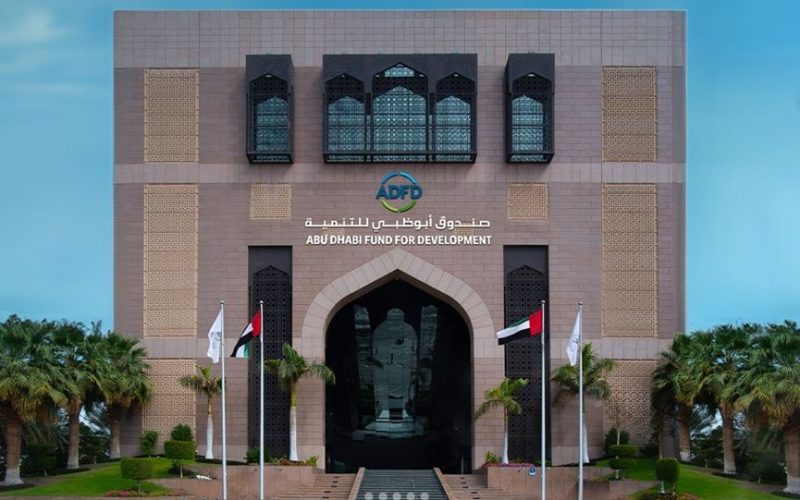
Abu Dhabi Fund Reports Progress on Major African Infrastructure Projects, Highlights Ethiopia Partnership
The Abu Dhabi Fund for Development (ADFD) has reported significant progress in the implementation of key infrastructure projects across Africa, while reaffirming its long-standing commitment to supporting economic development and infrastructure growth in Ethiopia and other partner countries.
According to a statement released by the Fund, the rehabilitation of the Sokodé–Bassar Road in Togo has reached 92 percent completion, while a major road infrastructure project in Madagascar stands at 80 percent completion. In Nigeria, construction of the Minna–Bida Road has achieved a 45 percent completion rate.
ADFD said the projects reflect its ongoing efforts to strengthen transport infrastructure, improve connectivity, and promote sustainable economic and social development across the continent.
Mohammed Saif Al Suwaidi, Director General of ADFD, said the Fund continues to closely monitor project implementation to ensure that development initiatives are delivered efficiently and according to approved timelines.
“At Abu Dhabi Fund for Development, we are committed to continuously monitoring the progress of our development projects to ensure their efficient and high-quality implementation,” Al Suwaidi said. “Our efforts reflect the Fund’s mission to support partner countries in developing their infrastructure and stimulating economic growth.”
The Fund highlighted Ethiopia as one of its most significant development partners in Africa, citing more than a decade of cooperation in infrastructure, economic stabilization, and humanitarian support.
Since 2012, ADFD has financed several strategic projects in Ethiopia, including the construction of the 80.5-kilometer Gedo–Fincha–Lemlem Bereha Road in Oromia Regional State through a financing package worth AED 36.7 million (approximately USD 10 million).
The partnership expanded significantly in 2018 when the United Arab Emirates announced an economic support package worth USD 3 billion during a state visit to Addis Ababa. The package included a USD 1 billion deposit into the National Bank of Ethiopia to strengthen foreign currency reserves and USD 2 billion earmarked for investments in sectors such as agriculture, renewable energy, and tourism.
ADFD also played a humanitarian role during Ethiopia’s recent crises. In 2022, the Fund provided USD 60 million through the United Nations World Food Programme to support approximately 1.6 million people affected by drought and conflict in the Afar, Amhara, and Tigray regions.
More recently, Ethiopia and ADFD explored opportunities to deepen cooperation during meetings held on the sidelines of the World Bank Group and International Monetary Fund Annual Meetings in October 2025. Ethiopian Finance Minister Ahmed Shide and ADFD Director General Mohammed Saif Al Suwaidi discussed expanding investments in priority sectors, including green growth, job creation, and sustainable development.
In Togo, the Sokodé–Bassar Road rehabilitation project, financed by ADFD with approximately AED 37 million, is nearing completion. The project includes the rehabilitation of 62 kilometers of roadway, flood protection works, and supervision services aimed at improving transport connectivity between the capital Lomé and inland regions.
In Madagascar, ADFD is financing the construction of a 117-kilometer dual-lane road and seven bridges through a concessional loan exceeding AED 110 million. The project is expected to improve access to rural communities, reduce transportation costs, and support economic sectors such as agriculture, tourism, and industry.
Meanwhile, in Nigeria, the Fund’s first development project in the country involves the construction of the 82-kilometer Minna–Bida Road in Niger State. Financed with AED 165 million, the project is expected to cut travel time between the two cities by half and reduce vehicle operating costs by 31 percent once completed.
ADFD said the progress achieved across its African portfolio demonstrates its commitment to supporting resilient infrastructure and delivering measurable development outcomes.
The Fund emphasized that investments in transport networks and other strategic infrastructure projects are critical to promoting economic growth, improving access to essential services, and enhancing the quality of life for communities across the continent.
As Africa continues to invest heavily in infrastructure development, ADFD said it remains committed to working with governments and development partners to advance sustainable economic transformation and strengthen regional connectivity.
