
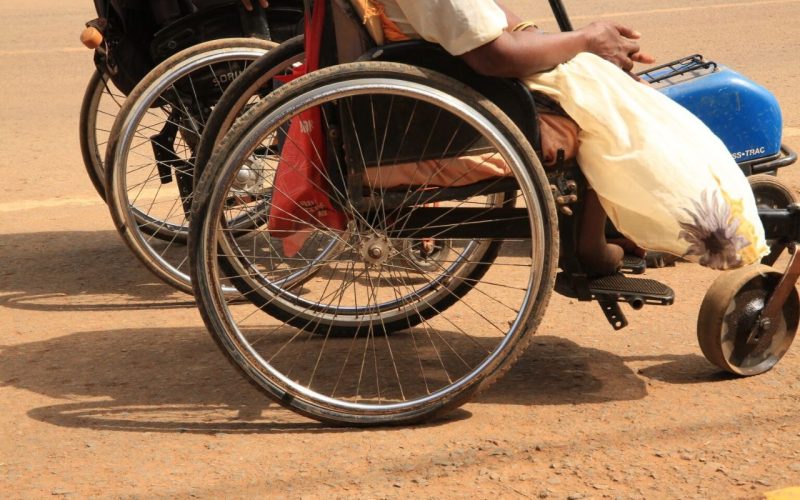
A national survey has found that 5.8 percent of Ethiopia’s population about 6.3 million people have a disability, while one in five households has at least one member with a disability.
The findings are contained in the National Survey on Persons with Disabilities in Ethiopia, conducted in 2024/25 using internationally recognized Washington Group tools. The survey covered 9,200 households and 40,311 individuals across the country, with data collected between October 21 and December 8, 2024.
The survey found that disability prevalence varies significantly depending on how disability is measured. Under the broadest definition, which includes people reporting at least some difficulty in one functional domain, the prevalence reaches 19.7 percent. Using the Washington Group-recommended threshold of “a lot of difficulty” or “cannot do at all,” the rate is 5.8 percent, while the strictest definition places it at 0.7 percent.
The survey identified significant differences across regions. At the household level, Tigray recorded the highest prevalence at 30.1 percent, followed by Amhara at 25.8 percent and Gambela at 22 percent. Dire Dawa recorded 20.5 percent, while Sidama had the lowest rate at 9.1 percent. Rural households also recorded a higher prevalence than urban households, at 22 percent compared with 17 percent.
At the individual level, disability prevalence was slightly higher in rural areas, at 5.97 percent, compared with 5.18 percent in urban areas. The rate also increased significantly with age, reaching 7.19 percent among adults aged 18 and above.
The survey found almost no overall difference between men and women, with prevalence standing at 5.77 percent among males and 5.79 percent among females.
The report highlights significant disparities in education. Children with disabilities are 24 percent less likely to be enrolled in school than children without disabilities, while only half of people with disabilities reported being able to read and write, compared with 79 percent among people without disabilities.
The gap is wider in rural areas, where children with disabilities are 30 percent less likely to be enrolled in school. Physical inaccessibility, long distances to schools and shortages of appropriate teaching and learning materials were among the barriers identified.
The survey also found major disparities in access to healthcare. Eighty-six percent of people with disabilities reported facing at least one barrier when seeking healthcare, compared with 54 percent of people without disabilities.
Health-related spending was also 2.7 times higher for people with disabilities, while only 13 percent of those experiencing functional difficulties reported using assistive devices.
Employment outcomes were similarly uneven. Unemployment among people with disabilities stood at 40 percent, compared with 27 percent among people without disabilities. Among urban women with disabilities, unemployment reached 64 percent.
Financial inclusion also remains a challenge, with only 41 percent of people with disabilities reporting having a bank account, compared with 50 percent among people without disabilities.
The survey found that only 22 percent of people with disabilities reported having social security coverage, while just 1.5 percent of the 2,062 people with disabilities identified in the survey reported receiving a disability allowance.
The report recommends stronger disability-responsive social protection, improved access to healthcare and assistive devices, inclusive education, accessible infrastructure and stronger employment programmes.
It also calls for disability-disaggregated data to be integrated into government information systems to improve monitoring and planning.
