
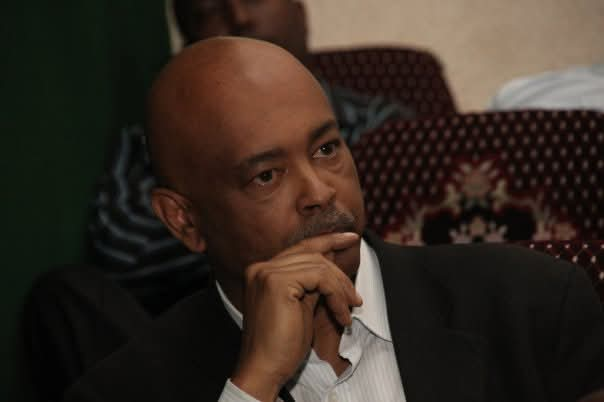
By Kebour Ghenna
They call it growth. The IMF says Ethiopia’s economy grew by 7.1% in 2022/23.
That’s impressive – on paper. The powers that be in Washington, Addis Ababa, and the ivory towers of international finance are quick to applaud such numbers.
They tell us Ethiopia is on the brink of an economic renaissance. But as always, there’s more to the story.
Numbers can be massaged. Context can be ignored. And the truth? Well, it often hides in plain sight.
Ethiopia, a country still grappling with conflict, displacement, and inflation that makes wallets look like they’re on a diet, claims it’s among the fastest-growing economies in the world.
Yet, for the average Ethiopian, that growth feels like a distant rumor – something heard in the hushed corridors of power but never seen in their own lives.
Let’s dig a little deeper, shall we?
The War That Never Ended
First, a little reality check. Ethiopia hasn’t “emerged” from conflict – it’s knee-deep in it.
The peace agreement signed in Pretoria may have silenced guns in Tigray, but the Amhara and Oromo regions are now aflame.
Displacement, destruction, and despair have become the norm. Roads are blocked, crops go unharvested, and families are torn apart.
Yet somehow, the IMF’s spreadsheets overlook this messy detail. War, it seems, isn’t bad for GDP – at least not in their calculations.
The IMF’s report barely acknowledges the ongoing conflict. It’s as though the suffering in Amhara and Oromo is a minor footnote in the grand tale of economic progress. But for millions, it’s the headline.
How can an economy grow when its people are at war? How can GDP rise when fields lie fallow, factories shutter, and families flee?
The Inflation Conundrum
Inflation, they tell us, is on the decline. It was 32.5% last year, and by next year, it’ll be a mere 20.7%. A cause for celebration? Hardly.
Even at 20%, inflation erodes the purchasing power of the average Ethiopian like termites in a wooden house. Bread costs more.
Fuel costs more. Life costs more. And wages? Well, they lag behind, as always.
The IMF calls this progress, thanks to “tight monetary policy.” Translation: the government turned off the money taps, hoping to control prices.
But what about the people who need those taps? Small businesses can’t get loans. Farmers can’t buy seeds.
Tight money helps the numbers look good, but it chokes the life out of the economy.
Debt: The Elephant in the Room
Ah, debt – the uninvited guest at every economic feast. Ethiopia owes billions, and while the IMF praises the government for its progress on debt restructuring, the reality is grim.
Public debt is expected to hit 45.6% of GDP by 2024/25. Meanwhile, foreign reserves sit at less than a month’s worth of imports.
Debt restructuring may soothe the IMF, but it doesn’t grow food or build schools. And let’s not forget: debt isn’t free.
Ethiopia’s creditors – be they governments, banks, or bondholders – expect repayment. That money will come from somewhere, and it won’t be the pockets of the elite. It’ll come from ordinary Ethiopians, already stretched to their limits.
The GDP Illusion
Ah, GDP – the great magician of modern economics. Ethiopia’s growth rate seems robust, but the composition of that growth raises questions.
The federal government has slightly increased its capital budget, from 35.5% in 2023/24 to 38.6% in 2024/25.
These funds are earmarked for roads, social service infrastructure, and the reconstruction of conflict-damaged facilities. Sounds promising – until you dig deeper.
Public debt remains the single largest expenditure in the federal budget, at 19% of total spending.
While its share has declined from 27.8% in the previous year, debt repayment continues to swallow resources that could otherwise be used for transformative projects.
Even within the capital budget, much of the focus is on repairing past damage rather than building new opportunities.
Debt repayment and recurrent spending dominate fiscal priorities, leaving little room for the bold investments needed to truly transform the economy.
The growth celebrated by the IMF is fragile, built on repairing yesterday’s wounds rather than paving tomorrow’s pathways.
The Unseen Reality
Here’s what the IMF doesn’t say: Ethiopia is a nation where over 31 million people need humanitarian aid.
It’s a country where youth unemployment hovers at 23.1%, where rural families struggle to access education and healthcare, and where inflation turns everyday purchases into luxury items.
Economic growth that doesn’t lift people out of poverty is a hollow victory. It’s a headline without substance, a promise without delivery.
The Way Forward
If the Government of Ethiopia wants real progress – not just numbers on a spreadsheet – it needs to change course. Growth must be inclusive, not exclusive.
The government must invest in its people: better schools, affordable healthcare, and robust social safety nets. Conflict must end, not just in Tigray but across the nation.
And the economy must diversify, reducing its reliance on debt-financed projects and opening opportunities for small businesses and local industries.
The IMF can applaud Ethiopia’s reforms, but the real test lies in the streets of Addis, the fields of Amhara and Oromo, and the homes of millions of ordinary Ethiopians. Until their lives improve, the numbers mean little.
The Final Word
The story of Ethiopia’s economy is one of contrasts: growth without prosperity, reforms without equity, and progress without peace.
For now, the numbers tell one story. The people tell another. Which one will we believe?
