
CBE Warns Majority of Remittances Bypass Ethiopia’s Economy
Ethiopia is losing the vast majority of its remittance inflows to informal and illegal channels, with only 22 percent of total remittances entering the country through formal systems, according to the Commercial Bank of Ethiopia (CBE).
CBE President Abe Sano disclosed that Ethiopia earned $7.2 billion in legally recorded remittances last year, while an estimated 78 percent of remittance flows never reached the formal economy.
He noted that if the full potential of the diaspora’s financial contribution were harnessed, Ethiopia could generate over $35 billion annually.
The bank chief is currently on a global tour to strengthen ties with the Ethiopian diaspora.
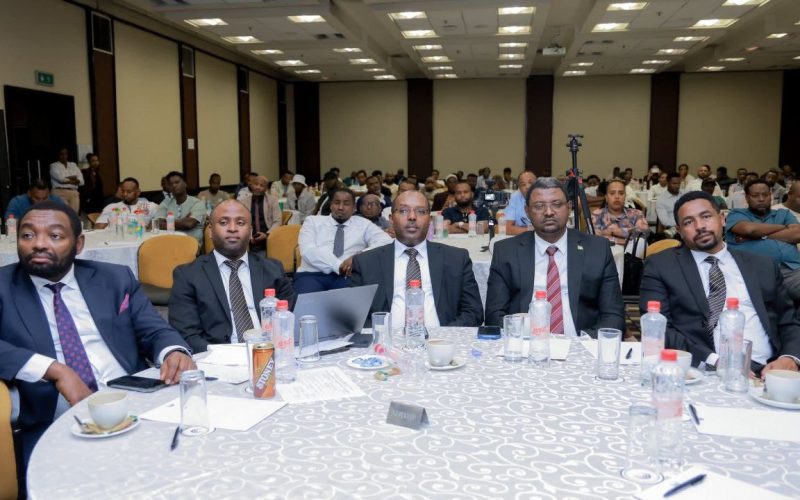
After holding discussions in the United Arab Emirates and Saudi Arabia, he met this week with Ethiopians and people of Ethiopian descent in Pretoria, South Africa.
To demonstrate the government’s commitment to the diaspora, CBE announced plans to provide 50 billion birr in loans during the 2025/26 fiscal year.
These loans will be made available for investment, housing, automobile purchases, and other business activities.
Abe Sano added that the bank is developing a simplified and efficient system to ensure diaspora members can access these services without bureaucratic hurdles.
In a bid to encourage formal remittance flows, the Commercial Bank has also signed a bilateral agreement with Botim, a popular money transfer app in the UAE, enabling Ethiopians in Abu Dhabi and Dubai to easily send money back home.
According to the International Organization for Migration (IOM), more than three million Ethiopians live abroad, with large communities in the Middle East, North America, Europe, South Africa, and the U.S..
These diaspora communities play a critical role in supporting families and the national economy.
However, Ethiopia continues to grapple with illegal foreign exchange transfers.
The National Bank of Ethiopia recently issued a warning to organizations in the U.S. and UAE involved in unauthorized remittance operations, cautioning that accounts could be frozen and funds confiscated if they fail to comply with regulations.
Experts argue that while remittances remain one of Ethiopia’s largest sources of foreign currency, addressing the leakage through informal channels will require a mix of better incentives, stronger regulation, and digital financial solutions.
