
Ethiopia Acknowledges Recruitment of Its Citizens as Soldiers in Foreign Countries
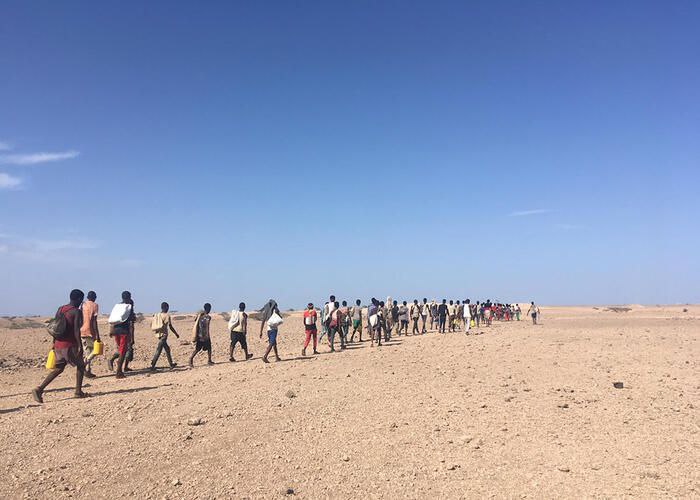
The Ethiopian government has acknowledged that some of its citizens who migrate illegally are being recruited to serve as soldiers in foreign countries they do not even know.
According to Ms. Huriya Ali, State Minister for Women and Social Affairs, illegal Ethiopian migrants are increasingly falling victim to organized criminal networks that exploit their vulnerability for forced military service abroad.
However, she did not specify the countries involved in recruiting Ethiopian nationals for such purposes.
Speaking during the launch of a new service delivery guideline designed to assist returnees, the State Minister revealed that many irregular migrants face severe human rights abuses, including imprisonment, sexual slavery, rape, physical torture, disability, and even the forced removal of internal organs such as kidneys.
Beyond physical abuse, Ms. Huriya emphasized that illegal migration often leads to mental health challenges and psychological trauma, as migrants experience distressing conditions during their journeys and in detention centers.
While acknowledging that migration is a natural part of human existence driven by economic and social needs, she warned that illegal and irregular migration poses far greater risks than benefits.
“The government is working in a coordinated manner to control irregular human trafficking,” she said, urging citizens to follow legal migration routes and to protect themselves from organized criminal networks.
The State Minister also called on communities to expose illegal brokers, noting that such actors are well-known within society. “Citizens must do their part by reporting and preventing illegal activities to help the government take appropriate measures,” she added.
Ms. Huriya highlighted that the government is providing rehabilitation and reintegration support for vulnerable migrants and returnees.
With financial backing from the European Union, the Ministry of Women and Social Affairs—working in collaboration with the Ministry of Health and the International Organization for Migration (IOM)—is offering mental health and psychosocial support to returnees in accordance with newly established national guidelines.
According to the Ministry of Foreign Affairs, these guidelines aim to improve the effectiveness of psychological and social support services for victims of human trafficking, while also strengthening national rehabilitation programs for returnees.
The IOM’s 2024 report revealed that more than 200,000 Ethiopians leave the country irregularly each year, with the Middle East remaining the primary destination. Many endure harsh living conditions, exploitation, and violence.
Recently, over 2,000 Ethiopians who had been trafficked to Myanmar and Thailand through illegal brokers were repatriated after enduring serious abuses, including forced labor and inhumane treatment.
The Ministry of Foreign Affairs clarified that Ethiopia has not signed any formal employment agreements with Asian countries, including Myanmar, and warned citizens to beware of illegal brokers who promise job opportunities abroad.
The government reiterated its commitment to combating human trafficking, protecting vulnerable migrants, and strengthening international cooperation to ensure the safe return and rehabilitation of Ethiopian citizens.
